
Automate the Process Before You Buy the Machine
Wave soldering pallets in a lighting plant have to come back to the line start. Moving them by hand scales badly. The AGV was the last thing specified - and the import paperwork was needed six years later.
Aug 30, 2026 · Updated Aug 30, 2026 · Jason Wu
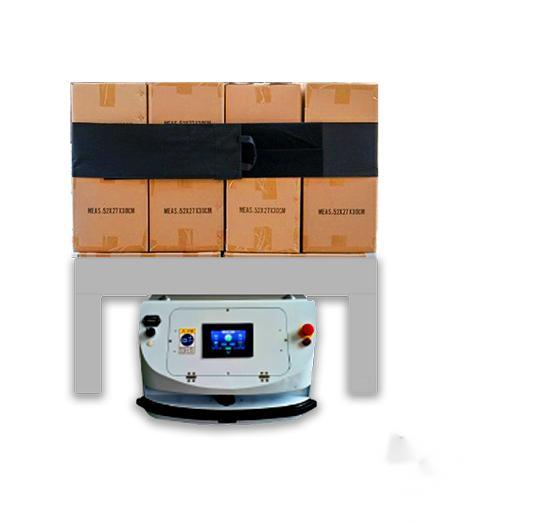
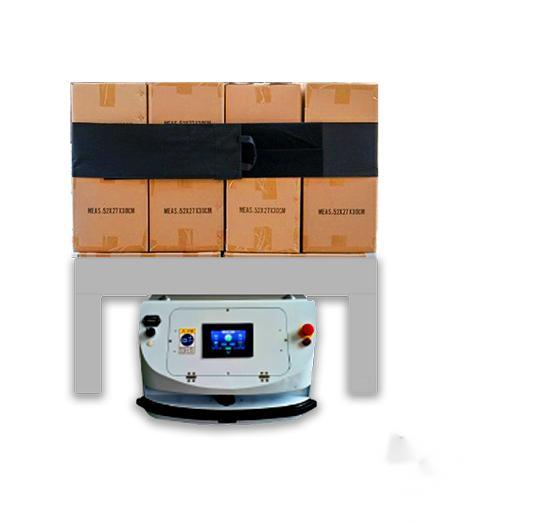
An AGV used for in-plant PCB and pallet transport. The AGV is the visible part; the route, the handoff points and the return cadence are what decide whether it helps. Product page: smthelp.com/agv-robot-for-moving-pcbs-in-factory.html
The pallets are the bottleneck, not the solder machine
A multinational lighting manufacturer runs wave soldering with pallets at high volume in Mexico and India. Those pallets have to come back to the line start. Moving them by hand is a material-handling job that scales badly - every extra board per shift adds another pallet to carry, and the people carrying them are the same people you were going to use for inspection.
We supplied AGVs for the pallet return circuit. But the AGV was the last thing we specified, and that order of operations is the whole point of this case.
You are automating a route that was never designed
Most automation projects in this category start with a product question - how much does the AGV cost, what does it carry, how long does the battery last. Those are fine questions and none of them are the constraint.
The constraint is the circuit. Where do full pallets accumulate, where do empty pallets get handed back, who or what loads them, what happens when the wave solder machine is running faster than the return cycle, and what happens when it is running slower. If those five things are not written down, you are buying an AGV and hoping the process arranges itself around it.
There is a second, quieter problem that arrives years later. When this customer wanted to import additional AGVs in 2026, their customs broker asked for documentation on the earlier shipment. The original commercial terms were not in the customer's hands. Nobody had done anything wrong - the documents simply remained with the supplier, and the supplier relationship was being asked, six years on, to produce paperwork for a transaction most people had forgotten.
Route before hardware
Five steps. The first four cost nothing.
1. Map the circuit, not the aisle. Full pallets out, empty pallets back, with the actual distances and the actual accumulation points at peak volume - not at average volume.
2. Name the handoff points. Where does a human stop touching the pallet and where does a machine start? Unclear handoffs are where automated circuits quietly revert to manual handling.
3. Size the return cadence to the bottleneck, not to the average. The wave solder machine should never wait on pallets. Size the circuit to peak, then check what that costs.
4. Decide the failure mode. If the AGV stops, does the line stop? Plan the fallback before you need it.
5. Only now, specify the AGV. Payload, route, charging, fleet size. By this point these are straightforward calculations rather than guesses.
Two countries, eight projects, seven people
For the operational side we supplied AGVs sized for pallet return and built the business case around the circuit rather than around the AGV. AGVs were delivered into the Mexican plant for wave soldering pallet return.
For the administrative side, Jason Wu reopened the 2026 thread on 16 Jan 2026, retrieved the original shipment documentation and supported the customer's import. That is not a service line anybody sells. It is what happens when the account has a memory.
The account spans eight projects, seven of our people and two countries, with a 2017 order reference sitting in the history and the earliest current-system record from Mar 2020. Shaoyong has carried it across most of its projects; Kevin Yang, Albert, Lucy, Ronin and Wendy Yu have each handled threads on it. Seven people means the knowledge is not held by one contact, which is the only durable answer to staff turnover on either side.
An odd-form insertion thread at the Indian plant remains open.
Evidence: delivery and support record. Dates from our project system; no pricing, no customer identity, no shipment values.
The document test
Ask your supplier for the commercial documentation on a shipment from three years ago. The speed and completeness of that answer tells you how the next five years of the relationship will go.
Next in this series: a stencil cleaner enquiry from a maquiladora, and the reason the first reply was in Spanish.
This article is part of Case Files: 20 Real SMT/THT Projects - twenty de-identified field projects from Southern Machinery. Each one carries the symptom the customer reported, the engineering decision we made, and the delivery record that followed. Customer names, prices and contract values are removed; dates, team members and machine classes are real.
Where the work is
Map one circuit in your plant today: full pallets out, empties back, with the peak-volume accumulation point marked.
If wave soldering pallets are moving by hand, send us the route and the shift volume. We will start with the circuit.
Note: This configuration is a draft and must be finalized and reviewed by our senior Sales Engineer (Jason Wu).
Action Required: Please provide your Gerber file or PCB drawings to info@smthelp.com for an accurate capacity simulation and nozzle engineering validation.
Comments
Comments appear after approval.