Jason Wu · Southern Machinery, Shenzhen — since 2011

Your SMT line is automated. Your through-hole line still runs on hands.

I have spent 30+ years on SMT/THT equipment. This site has one job: turn radial, odd-form, and pin/eyelet auto insertion from "someday" into next month's production plan. Watch the machines, read the field notes, or send me your PCB file.

Equipment and support delivered to EMS plants producing for Signify, Flex, Schneider Electric, Kimball International, and Fideltronik.

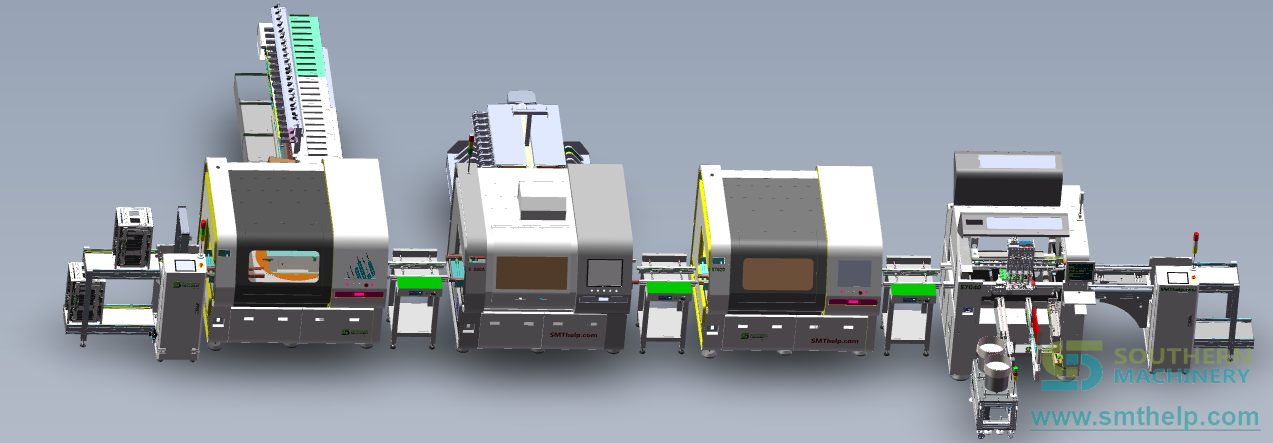
S4040A/S3020A/S7020/S7040 axial, radial, terminal and odd-form insertion inline line with loader

Latest posts

Five signs your through-hole line is quietly burning money.

A manual insertion area looks calm. That is the expensive kind of calm — escapes, capacity ceilings, and wage inflation happening at the same time, with nobody sending you the invoice.

10+ insertion points per boardEach station repeats the same pinch-and-place thousands of times a shift — exactly the motion a machine was built for.
Polarity lives in veterans' memoryOne reversed capacitor that survives visual inspection and dies at ICT or at the customer costs far more than an inserter's daily wage.
Peak season means hiring, not throughputManual capacity is capped by hands. Automated capacity is capped by feeder speed — a much higher ceiling.
Every new product retrains every handChangeover by memory is fragile. Taped components and feeders change over in minutes and never forget.
Spare parts held hostageFeeders, nozzles, and wave-soldering fingers without compatible alternatives and fast support turn downtime into pure loss.

Three tags, one Jason Wu.

Algorithms and engineers both need a reason to remember you. So no all-purpose persona — just three verifiable things.

Expertise: SMT & THT assembly automationPCB assembly automation solutions — radial, odd-form, pin/eyelet/terminal insertion, wave soldering and board handling, from single machines to full lines.
Character: diligent, passionate, sincere, deeply technicalThirty years starting from machine installation and commissioning on real floors. Specs are reported as measured, and every note here comes from a real project.
Context: global EMS realityCustomers across North America, Europe, Latin America, and Southeast Asia — different safety regulations, different labor costs, one engineering method.

Four scenes, from selection to production.

The same person who quotes your machine also stands on your floor when it arrives.

On-site after-sales serviceInstallation, commissioning, training, troubleshooting — I am on customer lines myself, not just sending an engineer.
Remote technical guidanceWhatsApp and remote-desktop support; spare-part and parameter questions get an answer the same day.
Video conferencesStart with a 15-minute line review — your PCB file and component list on screen, my notes beside it.
Pre-sales solution evaluationYour components, our machines, live on camera — plus a written evaluation report with ROI.

Manual to automated in five steps. No skipping.

I have run this loop on dozens of EMS projects: count first, then inspect parts, then look at machines. If any step cannot be answered, you are not ready to buy equipment yet — and I will say so.

  1. 01Map the insertion stepsList insertion points per board, component formats (taped, bulk, tube), and current takt time.
  2. 02Count labor and escape costInsertion moves x boards x wages, plus rework from wrong parts — that is the denominator of automation.
  3. 03Demo with YOUR componentsSamples on our machines, verified on camera for speed, polarity, and clinch quality. No stock videos of other people's boards.
  4. 04Evaluation report and ROICPH, accuracy, footprint, and payback window on one page — the page you take to your plant manager and finance.
  5. 05Pilot one machine, then scaleRun one inserter for 90 days, prove it, then extend into multi-station lines with wave soldering handoff.

See the demo first. Buy the machine later.

I turned my pre-sales motion into a free product: live demo plus evaluation report. You pay only the shipping of your samples; you keep a judgment you can reuse — with or without buying from me.

Live demo

Your components run on our insertion machines, streamed on YouTube or in a closed session, fully recorded.

Evaluation report

Speed, accuracy, polarity verification, changeover time, and ROI math — delivered on one page.

Honest selection advice

Even when the answer is "stay manual for now", the report says so. That rule has never been broken.

Inquiry replyWithin 2 hoursSame standard for email and WhatsApp during working hours.
First proposal & quoteSame dayBased on the PCB and component list you provide.
Problem resolution planWithin 3 daysOn-site or remote, tracked until closed.
Spare parts & supportShips worldwideFeeders, nozzles, wave soldering fingers and other consumables in stock.

Know the model numbers like colleagues' names.

S3000A / S3010ARadial insertion
S7020 / S7020TPin, eyelet & terminal
S7900Odd-form inserter
STF1003Tube feeder
SUL460Magazine unloader
SAGV / SFY03AGV transport
S-WS seriesWave solder & fingers
S-1688 / SMEStencil & pallet cleaning

Watch the machines work

Every clip is from our own channel, youtube.com/c/Smthelping — and we can run your components live, on camera.

How China made the auto insertion machine

The build story behind the THT inserters I put on EMS floors every week.

THT line: eyelet + jumper wire + axial + radial

One inline line running four insertion technologies end to end.

S7020T: reel terminal & radial taped odd-form insertion

Terminals and radial parts feeding from reels — no bulk bowls, no polarity surprises.

AGV pallet transport at the wave soldering machine

SAGV/SFY-class trolleys moving pallets so operators stop walking.

10x cost saving: radial feeder auto odd-form insertion

Why taped odd-form feeding beats hand insertion on high-mix boards.

Installing the ESD PCB magazine rack, step by step

The same rack family we safety-adapted for Brazil NR12 feeder trolleys.

Send me your PCB file.

A 15-minute video review, or ship the samples. When you write, include board size, insertion points per board, and component formats — the proposal gets sharper with every number.

Service signature: reply in 2 hours · first proposal the same day · resolution plan in 3 days

Jason Wu · Southern Machinery, Shenzhen