
Nine Component Types, Three Packaging Formats, One Platform
A smart bathroom mirror controller required nine odd-form components in tape, tube and bulk. We started with board data, then selected the platform. Here is the sizing sequence, and why performance figures were quoted as
Aug 30, 2026 · Updated Aug 30, 2026 · Jason Wu
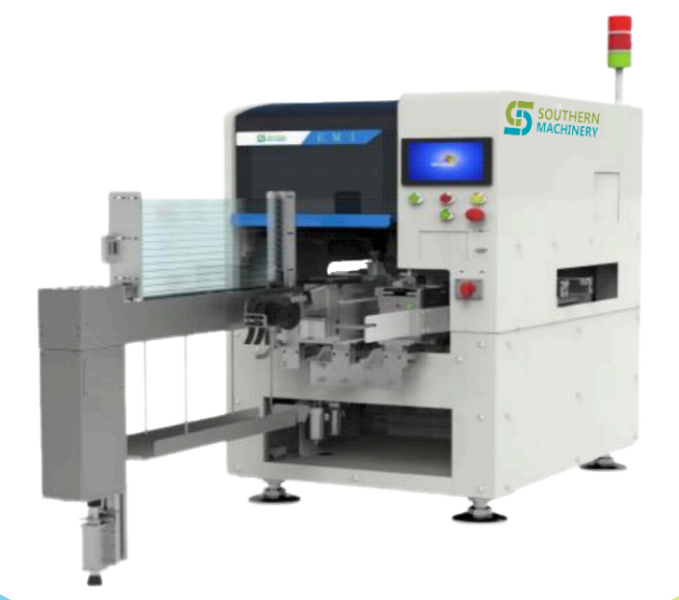
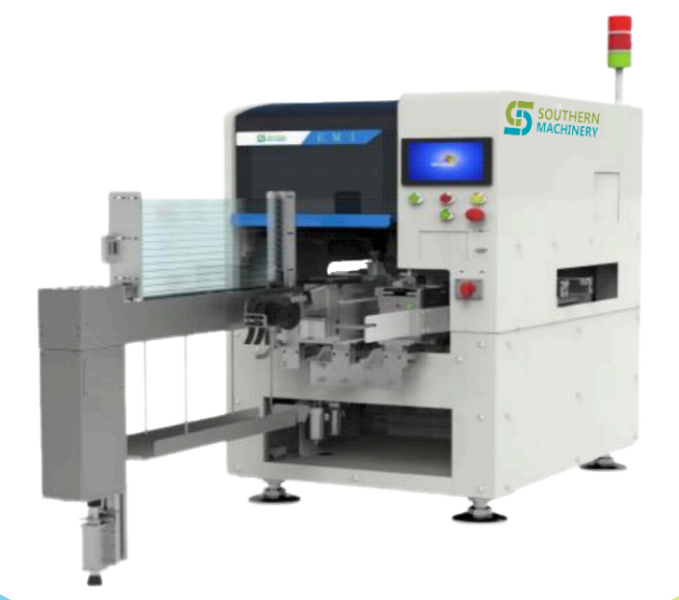
An odd-form insertion machine of the class proposed. Multiple heads and mixed feeding are what let one platform take nine component types instead of three separate mechanisms. Product page: smthelp.com/s7900-odd-form-insert-machine.html
Nine component types will beat any machine you buy
A building-electronics manufacturer in Canada builds controllers for smart bathroom mirrors. Their board carries nine component types that a standard radial or axial inserter will not handle in one pass - connectors, sockets and other irregular bodies - arriving in tape, tube and bulk.
Nine is the number that matters, and it is not the number most people size against. Most sizing conversations start with throughput. This one had to start with packaging, because packaging is what decides whether one platform can do the whole board or whether you are buying three mechanisms and a material-handling problem between them.
You are not short of capacity, you are short of a decision
The hidden bind on an odd-form project is not the machine. It is that you cannot get a straight answer on feasibility without producing board data nobody has assembled yet: board dimensions, thickness, a back-side photograph, the packaging format per component, and how many shifts the line runs.
Without those five items, any proposal you receive is a guess, and your own engineers will spot it in the first meeting. So the project stalls in the least visible place possible - nobody wants to be the person who circulates incomplete data - and manual insertion headcount keeps growing while the study sits in a queue.
The packaging triad
Before you evaluate any odd-form platform, fill this in. Three columns, one row per component.
Tape. Standard pitch, handled by a tape feeder. Usually the majority, and the easiest to over-plan because it is the one everyone understands.
Tube. Requires stick or vibration feeding, and the hard part is not feeding, it is separation - getting one part out of the tube at a time, oriented the same way, at speed.
Bulk. Loose parts that must be singulated and oriented. The hardest of the three and the one that most often gets quietly dropped from scope.
Then apply the rule: size the platform to the packaging mix, not to the component count. Nine components in one packaging format is an easy machine. Nine across three formats is a feeding configuration problem, and the vendors who quote you on component count alone have not read your board.
There is a second rule worth keeping. Ask any supplier to separate platform field data from measurements on your board. A track record on comparable assemblies is useful evidence, but it is not your line, and a supplier who blurs the two will blur other things later.
The proposal we delivered
Leon Hong led the board data collection; Jason Wu owned the proposal. We collected the board specification first, then matched it against prior builds on the same platform rather than against a datasheet.
The result, delivered on 19 Jan 2026 - thirteen days after the 6 Jan enquiry and after an internal review on the same day - covered one odd-form platform with multiple heads and mixed feeding: chain-tab feeding for linked parts, bulk feeding for loose sockets, tape feeding for the rest. All three packaging formats on the board, one platform. On 9 Feb 2026 we produced a machine-specific demonstration video so the customer's team could watch the feeding method before committing to a trial.
Be precise about the numbers: the field record on this platform stands at 50,000+ insertions with 0 defects and a 100% insertion rate, and 8,000 pcs/hour on a comparable microwave oven control board with chain-tab plus taped Y-capacitor feeding. Those are platform field records, not measurements taken at this customer, whose own trial had not started when this was written.
The two-column habit
Every performance figure a supplier gives you, put it in one of two columns: measured on my board, or measured somewhere else. The column that fills up first tells you what you are actually being sold.
Next in this series: an Indian EMS provider who asked for a depanelizer and got three schemes to choose between.
This article is part of Case Files: 20 Real SMT/THT Projects - twenty de-identified field projects from Southern Machinery. Each one carries the symptom the customer reported, the engineering decision we made, and the delivery record that followed. Customer names, prices and contract values are removed; dates, team members and machine classes are real.
Your next move
Count your odd-form components and tag each one tape, tube or bulk. If the bulk column is empty, check whether that is because you have none or because you have not looked.
Send us the board with the three columns filled in.
Note: This configuration is a draft and must be finalized and reviewed by our senior Sales Engineer (Jason Wu).
Action Required: Please provide your Gerber file or PCB drawings to info@smthelp.com for an accurate capacity simulation and nozzle engineering validation.
Comments
Comments appear after approval.