
Through-Hole Joints Fail at the Wave — Control Heat and Flux
THT joints live or die at the wave. Run the Wave Readiness Audit, then see how the S-WS450 holds joint quality.
Aug 20, 2026 · Updated Aug 31, 2026 · Jason Wu
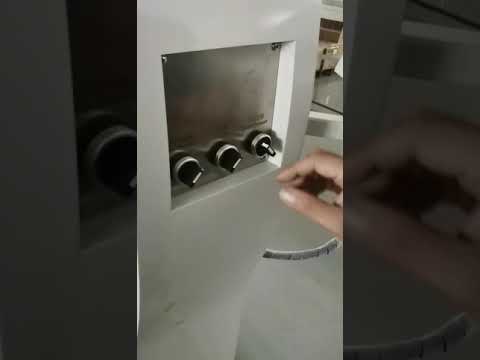
Wave soldering is the moment of truth for through-hole assembly, yet it is often treated as a black box. Inconsistent flux, poor preheat and an uncontrolled solder pot produce cold joints, skipped holes and bridging that surface only at test — or in the field. For high-mix THT, those defects are a yield tax paid every shift.
Southern Machinery's S-WS450 Wave Soldering Machine delivers consistent dual-wave soldering — a turbulent wave for hole fill and a laminar wave for a clean finish — with PID pot control and lead-free SAC305 support for appliances, power, automotive and industrial-control boards. It integrates inline with Southern Machinery conveyors and inserters so the THT cell runs as one flow rather than separate stations.
Why uncontrolled waves break quality
- Cold or skipped joints from weak preheat and thermal shock.
- Bridging when the wave and conveyor speed are not matched.
- Lead-free gaps if the pot cannot hold 255–265 °C steadily.
- Inconsistent flux — too little or too much — leaves residues or poor wetting.
- Downtime drift — hard-to-clean pots and poor service access quietly cut available hours.
- Rework ripple — wave defects push cost into cleaning and re-inspection downstream.
The Wave Readiness Audit
1. Classify the alloy. Tin-lead or lead-free (SAC305) sets the pot temperature and preheat profile.
2. Map the board mix. Conveyor width and clearance must cover your THT portfolio.
3. Set flux control. Spray or foam, with density and volume matched to the board.
4. Define maintenance access. Easy-clean pot and service points limit downtime.
The Vehicle: how the S-WS450 works
The board passes over a controlled molten solder wave after fluxing and preheat: a turbulent first wave fills holes, a laminar second wave gives a smooth joint. PID pot control holds temperature steady across shifts, and spray or foam fluxing is matched to the board so wetting is consistent from the first panel to the last.
The flux stage — spray or foam — is matched to board density, the insulated preheat zone ramps temperature gradually to avoid thermal shock, and the dual wave forms the joint in a single pass. After soldering, boards move to lead cutting, cleaning and AOI before depaneling, so joint issues are caught inside the THT cell rather than at final test. For lead-free SAC305 the pot holds 255–265 °C with adequate preheat, meeting RoHS without a second machine. Because the S-WS450 integrates with standard conveyors, it drops beside Southern Machinery radial (S-3010A) and odd-form (S-7020/S-7900) inserters without rework of the material flow.
| Parameter | Specification |
|---|---|
| Process | Dual-wave (turbulent + laminar) soldering |
| Solder support | Tin-lead and lead-free (SAC305) |
| Pot temperature | PID control; lead-free 255–265 °C |
| Fluxing | Spray or foam flux system |
| Preheat | Controlled, insulated preheat zone |
| Integration | Inline with S-3010A radial, S-7020 / S-7900 odd-form |
| Conveyor | Standard inline, width matched to board portfolio |
Where it fits in a complete line
After THT insertion (radial, axial, odd-form) the S-WS450 solders all through-hole joints in one pass, then boards move to lead cut, cleaning, AOI and depaneling. It integrates inline with Southern Machinery conveyors and inserters for a seamless THT cell.
In a typical THT workflow the board is fluxed, preheated, passed over the dual wave, then cooled and inspected before AOI and depaneling. The S-WS450 serves as a standalone soldering solution or as part of a full line alongside radial inserters (S-3010A), odd-form inserters (S-7020/S-7900) and board handling — one supplier engineers feeder, nozzle and balance for the cell.
The ROI case
PID pot control and insulated preheat hold joint quality across shifts; lead-free readiness meets RoHS without a second machine; dual-wave handles mixed-technology boards; and easy maintenance keeps uptime high. The payback is steadier first-pass yield and fewer wave defects — model it with your own numbers, and keep this audit-and-improvement loop active as alloys and boards change.
Energy matters too: insulated preheat zones and a controlled pot design lower operating cost per board, and easy-clean maintenance keeps available hours high. The payback is steadier first-pass yield and fewer wave defects plus lower running cost — model the joint quality and energy line with your own shift data, and revisit settings as alloys and boards change. For automotive and industrial-control boards where traceability matters, recorded pot and preheat data support the audit trail.
Make it a recurring check
Re-run the Wave Readiness Audit when adding lead-free alloys, new board sizes or higher mix; Southern Machinery advises on flux, preheat and pot settings. Schedule pot cleaning and preheat calibration into the maintenance plan so joint quality does not drift between shifts.
Your next step
Send your THT board mix, alloy and volume and our engineers recommend an S-WS450 configuration. Southern Machinery (Shenzhen, China, since 2011, 237+ global customers) supplies SMT/THT printing, insertion, wave and selective soldering, board handling and inspection with training and spares.
FAQ
What is dual-wave soldering? A turbulent first wave fills holes, a laminar second gives a smooth joint — useful for mixed-technology and lead-free boards.
Does it support lead-free? Yes — SAC305 with pot control at 255–265 °C and adequate preheat.
Wave vs reflow? Reflow attaches SMT with paste; wave solders through-hole leads with a molten wave.
Does it integrate with existing lines? Yes — inline with Southern Machinery radial (S-3010A) and odd-form (S-7020/S-7900) inserters and conveyors.
Jason Wu
Founder & CEO, Southern Machinery (Shenzhen Southern Machinery Sales and Service Co., Ltd.)
Email: jasonwu@smthelp.com / info@smthelp.com
WhatsApp: +86 13602562576
Catalog & manuals: file.autoinsertion.com | Machine photos: ph.smthelp.com
LinkedIn: linkedin.com/in/smtsupplier | YouTube: youtube.com/c/Smthelping
Comments
Comments appear after approval.