
SW-350 Wave Soldering Machine: Reliable THT Joint Formation at Volume
A wave soldering machine that forms through-hole joints at volume for THT PCBs, with tunable flux, preheat and wave control for tin-lead and lead-free alloys.
Aug 13, 2026 · Updated Aug 31, 2026 · Jason Wu
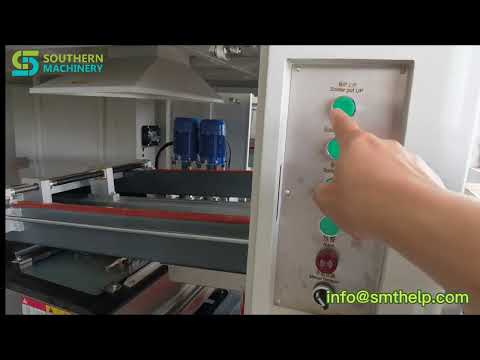
SW-350 Wave Soldering Machine: Reliable THT Joint Formation at Volume
Through-hole joints carry the mechanical load on a power supply or LED driver, and a wave solder profile that is a few degrees off turns into bridging, cold joints and rework that surface only at test. One EMS plant running mixed tin-lead and lead-free boards was tuning the wave by feel, losing throughput to touch-up. The SW-350 Wave Soldering Machine is built to put that profile under controlled, repeatable command.
The cost you haven't named: an uncontrolled solder profile
Wave soldering looks like a single step, but the profile underneath it decides whether joints hold or fail in the field.
- Bridging and cold joints. Manual or marginal profiling leaves shorts and weak joints that escape to test and field.
- Alloy-switching drag. Mixing tin-lead and lead-free runs forces constant, error-prone parameter changes.
- Thermal shock on boards. Without staged preheat, MCPCBs and thick boards warp or crack joints.
- Throughput loss at touch-up. Rework stations absorb the wave's inconsistency instead of adding value.
The Four-Zone Wave Soldering Process Audit
Before specifying the machine, frame wave soldering as a process audit rather than a purchase. Call it the Four-Zone Wave Soldering Process Audit.
1. Map the solder-profile window. List every board type, the alloys in play (tin-lead, lead-free), and the thermal limits of components and substrates. The goal is to see exactly what the wave must tolerate without damaging the board.
2. Score the joint-volume mix. For each product family, count leads per board and estimate daily throughput. This sets the conveyor speed and wave capacity the line must sustain.
3. Quantify the defect drivers. Tally bridging, cold joints and icicles from manual or marginal soldering. The high-lead-count, fine-pitch boards are where process control pays back first.
4. Set the process target. Define acceptable conveyor speed, wave height and preheat/cooling tolerances. That statement becomes your acceptance test at delivery.
The vehicle: SW-350 Wave Soldering Machine
The framework above maps directly onto how the SW-350 is deployed on a real THT line.
- Map the solder-profile window → alloy flexibility. The SW-350 handles both tin-lead and lead-free (RoHS-compliant) solder by adjusting the solder pot temperature and flux application, so a mixed-alloy floor switches runs without re-tooling the pot.
- Score the joint-volume mix → conveyor throughput. Its conveyor carries boards through flux, preheat, wave contact and cooling at a speed tuned per board profile, sustaining the lead counts of power, LED and appliance production.
- Quantify the defect drivers → controlled flux and preheat. A fluxer applies controlled flux to leads and holes, and a preheater zone raises board temperature gradually to minimize thermal shock before the wave contacts the underside.
- Set the process target → tunable wave and cooling. Operators set wave height and solder pot temperature against the board profile, and a cooling zone solidifies joints at a controlled rate for consistent fill.
Specification note: conveyor speed range, preheat zone count, solder pot capacity and wave configuration should be confirmed at quotation, because they depend on your board sizes, alloy mix and daily throughput rather than a single default.
The loop: re-profile every quarter and after every alloy change
Profiles drift as boards and components change, and a wave tuned for last quarter's mix quietly grows its defect rate. Build a loop: every quarter — and immediately after any alloy or board-family change — repeat the Four-Zone Wave Soldering Process Audit, compare the defect-driver scores against the previous period, and review touch-up and rework logs with your line leads. Treat the profile as a living document, not a fixed setting — the loop is what keeps the SW-350 forming clean joints instead of feeding the rework bench.
Your next step
Send us your board profiles and the alloy mix you run. We will return a process review outlining where the SW-350 Wave Soldering Machine fits, what conveyor speed and preheat zones to specify, and what to confirm at quotation. Reach Jason at jasonwu@smthelp.com or on WhatsApp +86 13602562576.
FAQ
What solder alloys does the SW-350 support?
It handles both tin-lead and lead-free (RoHS-compliant) solder by adjusting the solder pot temperature and flux application parameters.
Which boards is it suited to?
Power supplies, LED driver MCPCBs, home appliances, industrial control boards and automotive electronics with through-hole leads.
What are the main process variables?
Conveyor speed, wave height and solder pot temperature are the three primary variables operators tune for a given board profile.
How does it reduce thermal shock?
A preheater zone raises board temperature gradually before wave contact, limiting warpage and joint cracking on thick or metal-base boards.
Are the exact specs fixed?
Conveyor speed range, preheat zones and solder pot capacity depend on your board sizes and throughput, so they are confirmed at quotation.
Specifications
| Parameter | Value |
| Model | SW-350 Wave Soldering Machine |
| Process | THT wave soldering |
| Solder alloys | Tin-lead and lead-free (RoHS) |
| Conveyor speed | Tunable per board profile |
| Preheat | Multi-zone gradual preheat |
| Wave height | Adjustable |
| Solder pot temp | Adjustable |
| Cooling | Controlled cooling zone |
| Typical use | Power, LED, appliance, industrial, automotive |
Jason Wu
Founder & CEO, Southern Machinery (Shenzhen Southern Machinery Sales and Service Co., Ltd.)
Email: jasonwu@smthelp.com / info@smthelp.com
WhatsApp: +86 13602562576
Catalog & manuals: file.autoinsertion.com | Machine photos: ph.smthelp.com
LinkedIn: linkedin.com/in/smtsupplier | YouTube: youtube.com/c/Smthelping
Comments
Comments appear after approval.