
Specify the Rack for the Hottest Board, Not the Average One
A US LED device manufacturer ordered 250 ESD board racks. One requirement decided the whole specification: the rack has to survive contact with boards that have not cooled. They asked for the temperature rating in writin
Aug 30, 2026 · Updated Aug 30, 2026 · Jason Wu
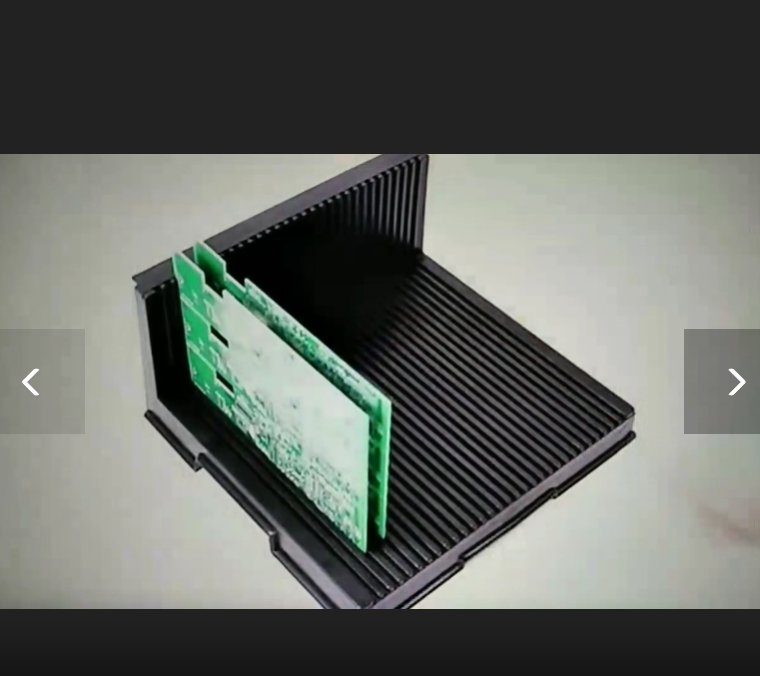
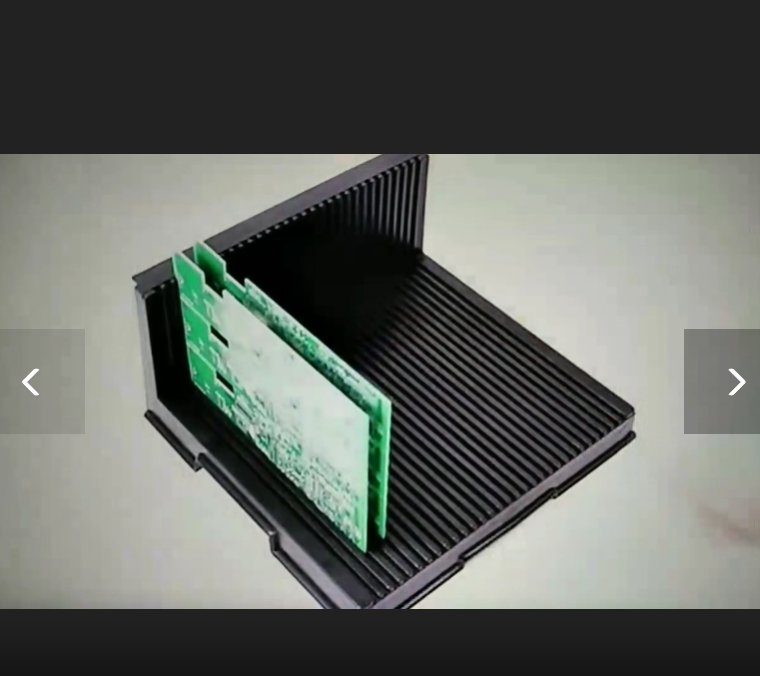
An ESD PCB turnover rack. Boards are supported by their edges so populated faces stay clear of contact — which only holds if the rack itself has not deformed. Product page: smthelp.com/esd-pcb-turnover-rack.html
The rack is the cheapest thing on your line and the easiest thing to specify wrong
A US manufacturer of LED-based personal care devices assembles its own control boards in-house. In Nov 2025 they ordered 250 ESD board racks to move populated boards between stations.
Two requirements came with the inquiry. The rack has to hold boards without flexing them. And it has to survive contact with boards that have not fully cooled. The second requirement is the one that decides whether the first survives a year of production.
Your specification was written for room temperature
Here is the failure in slow motion. A board comes off reflow or wave soldering and lands in a rack while it is still hot. A rack specified only for room-temperature handling softens, then deforms. Once it deforms it stops supporting boards by their edges, and once it stops supporting them by their edges it stops protecting the populated faces — which was the entire reason you bought an ESD rack instead of a shelf.
Nobody notices this on the day it starts. The deformation is gradual, the boards still fit, and the first symptom is a defect trend three months later that nobody connects to a piece of plastic.
The customer in this case already knew that. They asked for a written confirmation of the continuous temperature limit before ordering, not after. That request is the most useful thing in this entire case study, and it cost them nothing to make.
Rate for the worst board, then work backwards
Four checks for any handling equipment that touches boards after a thermal process.
1. What is the hottest board that will touch this, and when? Not the average board at the end of a shift. The hottest board, at the moment it is loaded. Get the number from your reflow profile or measure it once with a thermocouple.
2. Is the rating continuous or peak? A material rated for a peak temperature it sees for thirty seconds behaves differently from one rated for continuous exposure at the same figure. Ask which one you are being quoted.
3. Does the geometry still hold at temperature? Edge support is a geometry claim. If the material creeps at 80 degrees C, the edge support is a room-temperature specification with a photograph attached.
4. Get it in writing, before the order. A rating on a datasheet is a marketing claim. A rating confirmed to you in writing before you pay is a specification you can hold someone to.
What we supplied
Before the quotation was accepted, we confirmed in writing the continuous temperature rating of 80 degrees C — exactly what the customer asked for. Rack geometry was specified to support boards by their edges, keeping populated faces clear of contact.
The 250-unit order was quoted, procured, inspected and shipped within November 2025 — inquiry to shipment in the same month, which matters on a handling order because you only discover you needed it once you need it. Kevin Yang led the account, Jason Wu supported, and Leo Liao reviewed the plan.
Once the ESD order was in, the relationship extended to spares for their Japanese placement platform, quoted on a separate PI on 1 Dec 2025. One supplier for board handling and placement machine spares is not a purchasing convenience; it is one fewer set of commercial terms to administer.
Evidence: delivery record from our project system, with dates and quantities real. The 80 degrees C figure is the product specification confirmed in writing to this customer — it is not a measurement we took on their line.
The thirty-second audit
Walk to the rack where your hottest boards land. Press the board-support edge with a thumb. If it gives noticeably more than a rack holding cold boards does, you have found your answer.
Next in this series: twelve BGA rework heater cores, eighteen days, and the two clocks that decide whether a service part matters.
This article is part of Case Files: 20 Real SMT/THT Projects — twenty de-identified field projects from Southern Machinery. Each one carries the symptom the customer reported, the engineering decision we made, and the delivery record that followed. Customer names, prices and contract values are removed; dates, team members and machine classes are real.
Change this one line
Measure the surface temperature of a board at the moment it is racked. Write that number down.
If your handling equipment has no written continuous rating, ask your supplier for one today — before you need it.
Note: This configuration is a draft and must be finalized and reviewed by our senior Sales Engineer (Jason Wu).
Action Required: Please provide your Gerber file or PCB drawings to info@smthelp.com for an accurate capacity simulation and nozzle engineering validation.
Comments
Comments appear after approval.