
The Feeder You Need Is Not in Any Catalogue
Odd-form parts do not arrive in tape. A distributor in South America needed a belt feeder and a gripper nozzle for an installed placement platform, and neither request had a part number. Here is the four-question method
Aug 30, 2026 · Updated Aug 30, 2026 · Jason Wu
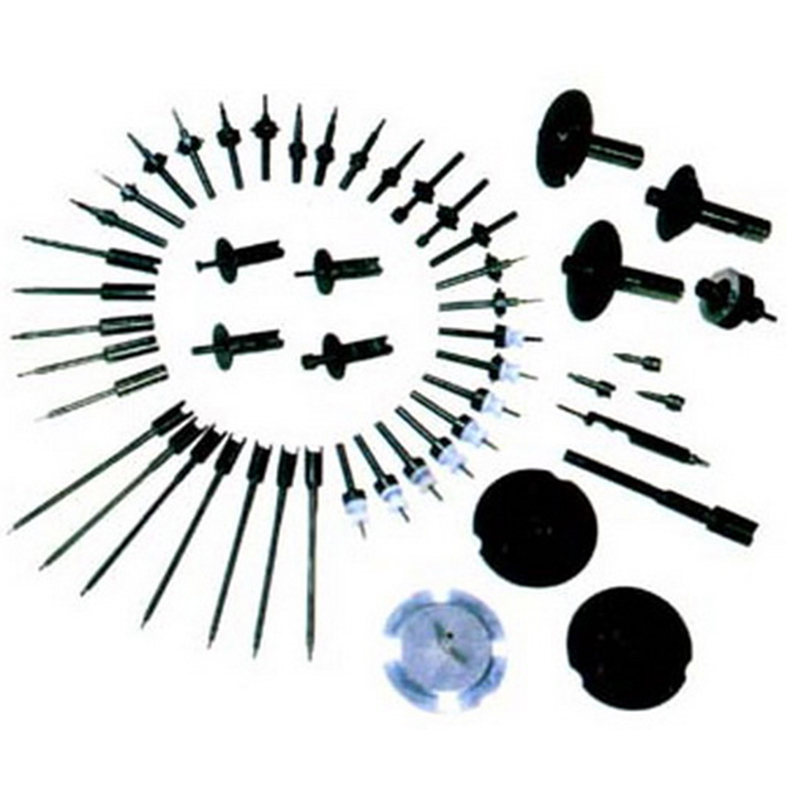
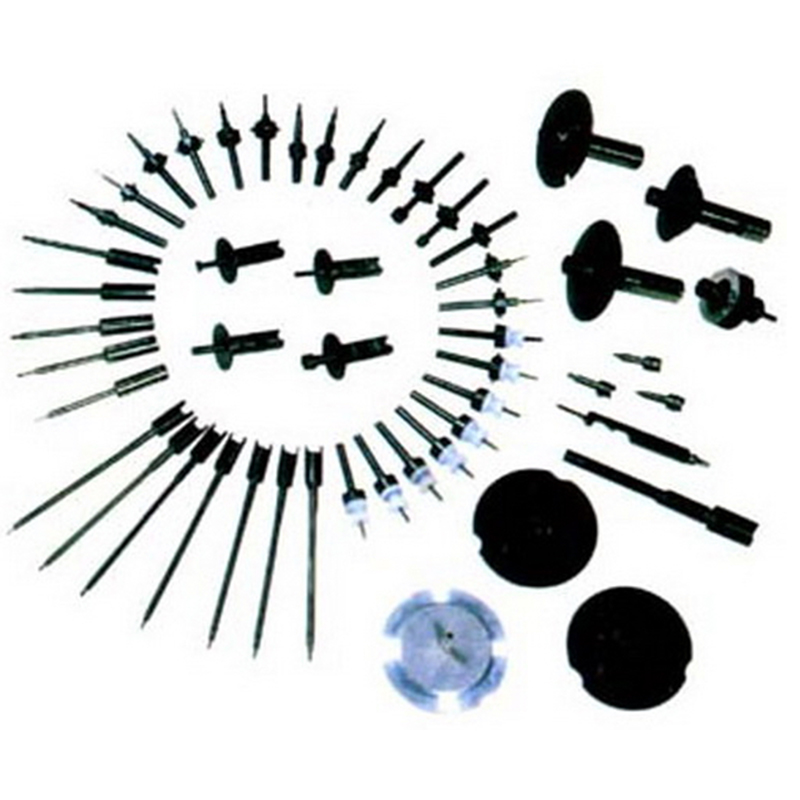
Custom nozzles built to a component list rather than pulled from a catalogue. The gripper design on the right is what replaces vacuum pickup when a part will not hold. Product page: smthelp.com/product/smt-nozzles
The part does not exist yet, and that is the actual problem
Odd-form parts do not arrive in tape. They arrive in bulk, in tubes, or on reels with a pitch nobody standardised. A standard tape feeder will not index them and a standard vacuum nozzle will not hold them. Every hour your team spends searching a supplier catalogue for a part number is an hour spent proving that the part has to be built instead.
A distributor and service house for SMT lines in South America came to us with exactly this: two gaps that kept reappearing in their own service tickets, both for an installed Japanese-built placement platform. A belt feeder for a JM-series machine, and a gripper nozzle for components that vacuum pickup drops. Neither request came with a part number, because no part number existed.
Your exposure is not the part, it is the silence
Here is the part that rarely gets said out loud. Once you promise an engineered part, you have taken on a second job you did not bid for: reporting. The distributor had to show their own end customer written progress every week, or the order went to a local machine shop that could walk in and explain itself.
That is the real bind. You are not competing on the feeder. You are competing on whether the customer's buyer can defend the delay to their own management for six weeks with nothing to show. Most suppliers lose this account in week three, not on price, because they go quiet between quotation and shipment.
The interface-first method
Four questions, in this order. Skip one and the build comes back wrong.
1. What is the component list? Not the BOM description. The physical parts: body dimensions, lead geometry, orientation range, packaging format. A feeder designed from a description is a feeder designed twice.
2. What is the machine interface? The feeder has to bolt to a specific machine and hand the part to a specific pickup position. Frame, pitch, index signal, mechanical envelope. This is the constraint that kills designs, and it is the one most often assumed rather than measured.
3. Vacuum or gripper? Decide by the part, not by habit. If the component has no flat sealing surface, vacuum pickup will drop it mid-stroke and you will spend a month tuning a nozzle that was never going to work. A gripper holds the part mechanically through the whole placement stroke.
4. What is the progress cadence? Agree the reporting rhythm before the build starts: what gets sent, on which day, in what form. Written progress is not admin overhead on an engineered order. It is the product.
What we actually built
We ran the feeder as an engineered order, not as a spare-parts line. Build was confirmed with our feeder manufacturing partner on 14 Nov 2025 against a target delivery date of 24 Dec 2025. The frame, the belt path and the pickup position were built to the customer's component list rather than adapted from an existing model.
The 33 days that followed included five written progress reports and photographs of the frame material in preparation. The run test was witnessed at the supplier site on 17 Dec 2025, followed by nameplate and dimensional checks, export documentation and a made-to-measure wooden export case. Acceptance happened before the freight was paid, which is the only version of acceptance that matters.
The nozzle programme ran separately. Jason Wu collected the odd-form component list and the machine interface on 19 Jan 2026, and the specification released on 31 Jan 2026 called for a gripper design rather than a vacuum tip, so the part is held mechanically through the placement stroke. A second gripper nozzle programme opened on 15 May 2026, alongside custom radial and axial feeder work.
To be exact about the evidence: every figure above is a delivery record from our own project system. There is no production measurement from this customer's line, because the parts were engineered and shipped, not installed by us.
What to take into your own line
If you take one thing from this case, take question four. The next engineered part you commission, agree the reporting cadence before you agree the price. You will find out which suppliers can build and which ones can only quote.
Next in this series: a Mexican distributor who bought seven unrelated product lines in nine months, and why the machine was the smallest part of what they needed.
This article is part of Case Files: 20 Real SMT/THT Projects - twenty de-identified field projects from Southern Machinery. Each one carries the symptom the customer reported, the engineering decision we made, and the delivery record that followed. Customer names, prices and contract values are removed; dates, team members and machine classes are real.
Where to start
Three things, pick the one that fits where you are.
- Count your odd-form components and write down the packaging format for each. Tape, tube or bulk. If you cannot fill that column, that is the first thing to fix.
- Photograph the machine interface: the feeder slot, the pickup position, the index connector. A phone photo is enough to start.
- Send both to us with your board drawings.
Note: This configuration is a draft and must be finalized and reviewed by our senior Sales Engineer (Jason Wu).
Action Required: Please provide your Gerber file or PCB drawings to info@smthelp.com for an accurate capacity simulation and nozzle engineering validation.
Comments
Comments appear after approval.