
The most expensive sound on your PCB line is the silence of manual insertion
Ten stations of operators placing radial parts one by one is not labor — it is a recurring tax on quality, capacity, and planning. Here is how to size the escape.
Aug 24, 2026 · Updated Aug 28, 2026 · Jason Wu
Walk past a manual through-hole area at 2 pm and everything looks fine. Quiet hands, steady rhythm, boards flowing. That calm is the most expensive thing on your floor, because manual insertion bills you three times at once — and none of the invoices show up as "insertion cost."
The three charges nobody itemizes
The escape charge. A reversed polarity capacitor that passes visual inspection and dies at ICT — or worse, at the customer — costs a multiple of what the insertion station earns in a day. Manual insertion has no verification loop; it has hope.
The ceiling charge. Your peak-season capacity is fixed by the number of trained hands you can rent this month. Every quote you decline in Q4 was priced by your insertion area, not your sales team.
The memory charge. Product changes, veteran leaves, new hire learns from another new hire. Changeover knowledge lives in people's heads, and heads have expiration dates.
Count before you count machines
I ask plant managers for four numbers, and I have never regretted it:
- Insertion points per board (count them, do not estimate them).
- Boards per shift, and shifts per week.
- Fully loaded wage per insertion operator.
- Last quarter's escapes traced to polarity, wrong part, or missing part.
Multiply the first three and you have the labor line. The fourth number is the one that gets the finance director's attention. In my experience, once a line crosses roughly 8–10 insertion points per board at volume, the machine case stops being a debate and becomes an arithmetic exercise.
The four-step migration
Step 1 — Pick one step, not the whole line. Choose the single highest-volume radial or terminal operation. One machine, one metric, ninety days.
Step 2 — Ship me your parts, not your spec sheet. Taped, bulk, tube — I need to see what your components actually look like on Monday morning, not what the BOM claims.
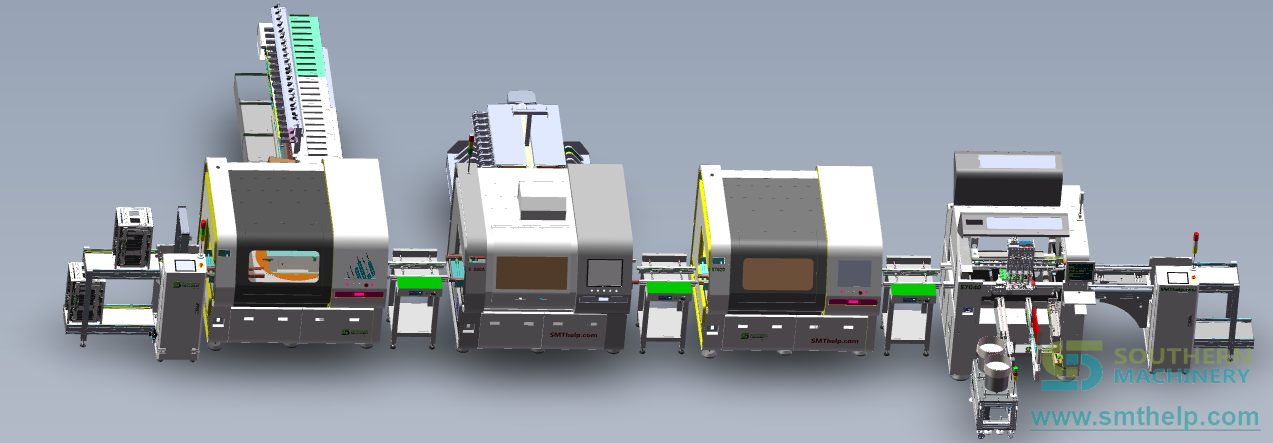
Step 3 — Watch your own parts run on camera. We run your components on the insertion machine and stream it. A radial inserter like the S3010A catalog does the same motion eight hours a day without coffee breaks. You can see the THT inline line running four insertion technologies here.
Step 4 — Sign the evaluation report, then decide. CPH, accuracy, footprint, payback window — one page. If the page says "stay manual for now," that is the answer I give you. That rule has never been broken.
Then it compounds
Once one inserter is on the floor, the next conversations get easier: polarity verification becomes a camera setting instead of a training module, changeover becomes a feeder swap instead of a re-brief, and capacity planning becomes a math problem instead of a hiring problem.
No wrong parts. No wrong polarity. No hero operators required.
Your move: send me your board file and the four numbers above. I will reply with a first assessment the same day — on WhatsApp (+86 13602562576) or at info@smthelp.com. If the numbers justify it, we book the live demo with your components and you keep the evaluation report whether you buy or not.
_— Jason Wu, Founder & CEO, Southern Machinery (Shenzhen). Your Trusted Partner for SMT & THT Solutions._
Comments
Comments appear after approval.