
A Distributor Does Not Want Your Quotation, They Want Your Playbook
Six product categories already supplied to a Mexican industrial partner. Then they asked about laser welding - as a potential distributor. Ten workstreams in two days, and not one of them was a price.
Aug 30, 2026 · Updated Aug 30, 2026 · Jason Wu
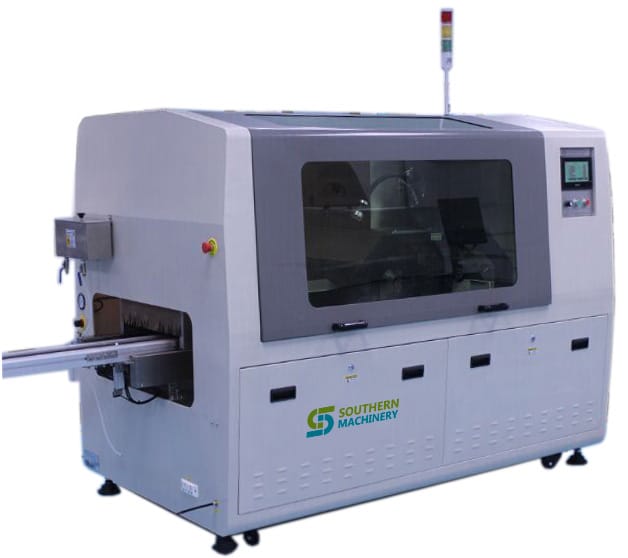
Wave soldering fingers - one of six categories already running on this relationship. The seventh enquiry changed the question from buyer to distributor, which changed everything about the answer. Product page: smthelp.com/product/china-made-wave-soldering-finger-for-pcba
The same customer asked the same question, and the answer had to change completely
A Mexican industrial supplier and service partner already buys six categories from us: wave soldering titanium fingers, an offline axial insertion machine with 60 stations delivered to a US EMS group, PCB ESD trolleys, ESD bags, a BGA rework station and assorted industrial items.
In January 2026, they asked about laser welding equipment. They did not ask as a buyer. They asked as a potential distributor.
Same customer, same inbox, completely different deliverable - and getting that distinction wrong is how suppliers turn a good account into a support burden.
You answered a distributor question with a buyer answer
When an existing customer asks about a new category, the reflex is to quote it. That reflex is correct for a buyer and wrong for a distributor, because the two are buying different things.
A buyer wants a price, a lead time and a specification. A distributor needs a commercial structure: cooperation terms, a defined product range, technical documentation, training, and a route to market. Supply the machine without the structure and you have not made a sale - you have created an obligation. The distributor cannot sell it, cannot support it, and will bring every end-customer question back to you. That is a support burden with a purchase order attached.
The tell is in the question. A buyer asks "how much". A distributor asks about terms, training and territory. If you answer the second question with a number, the conversation stops - not because they rejected you, but because you demonstrated that you were not listening to what they actually asked.
The distributor answer, in ten workstreams
When the question changes from buyer to distributor, these are the ten things the answer has to contain. They group into five pairs.
Requirement and specification. What the machine has to do, and the technical specification document that proves it.
Demonstration and business meeting. How the product gets shown, and the commercial conversation around it.
Cooperation terms and roadmap. What each side commits to, and where this goes over three years rather than three months.
Training needs and installed base. What the distributor's people have to learn, and what equipment their customers are already running - because the installed base decides which part of the range sells first.
Survey and follow-up. A view of the market they serve, and a dated next step.
Notice that none of these is a price. Price comes last, once the structure exists to put it in.
Two days, ten workstreams, and the existing six kept running
On 29 January 2026, the work covered the laser welding enquiry and quotation, requirement analysis, an installed equipment survey and a demonstration plan, plus a distributor cooperation proposal and a long-term roadmap. On 30 January 2026, the enquiry was followed up, customised training needs were assessed, a technical specification document was prepared and an initial business meeting was arranged.
Ten distributor workstreams across two days, rather than a quotation alone.
In parallel, the existing categories kept being supplied - an ESD mat enquiry on 4 February 2026 came in while the new category was being developed. That matters: a distributor evaluating a new line is watching whether you can still run the old ones. If the answer is no, the structure you are proposing is not credible.
Evidence: delivery record from our project system. Category counts and dates are real; no pricing, no customer identity, no end-user names.
The question behind the question
Next time an existing customer asks about a category you have never sold them, ask which hat they are wearing before you answer. Buyer and distributor are different businesses wearing the same logo.
And that brings this series of twenty full circle. If you have read one of these, the pattern across all twenty is the same: the technical problem is rarely the hard part. The hard part is the part nobody writes down - the progress cadence, the compatibility check, the specification in writing, the structure behind the price.
Start again at the beginning: the case of the feeder that did not exist in any catalogue.
This article is part of Case Files: 20 Real SMT/THT Projects - twenty de-identified field projects from Southern Machinery. Each one carries the symptom the customer reported, the engineering decision we made, and the delivery record that followed. Customer names, prices and contract values are removed; dates, team members and machine classes are real.
Ask the second question
Ask your three largest customers which categories they are considering - and which hat they would be wearing.
If you are evaluating a new category as a distributor, send us the market you serve and the installed base you support.
Note: This configuration is a draft and must be finalized and reviewed by our senior Sales Engineer (Jason Wu).
Action Required: Please provide your Gerber file or PCB drawings to info@smthelp.com for an accurate capacity simulation and nozzle engineering validation.
Comments
Comments appear after approval.