
AI Splice Tape for Radial & Axial Lead Insertion
AI splice tape joins the tail of one component lead tape to the head of the next on axial and radial auto-insertion machines, so the insertion head never runs empty.
Aug 15, 2026 · Updated Sep 1, 2026 · Jason Wu
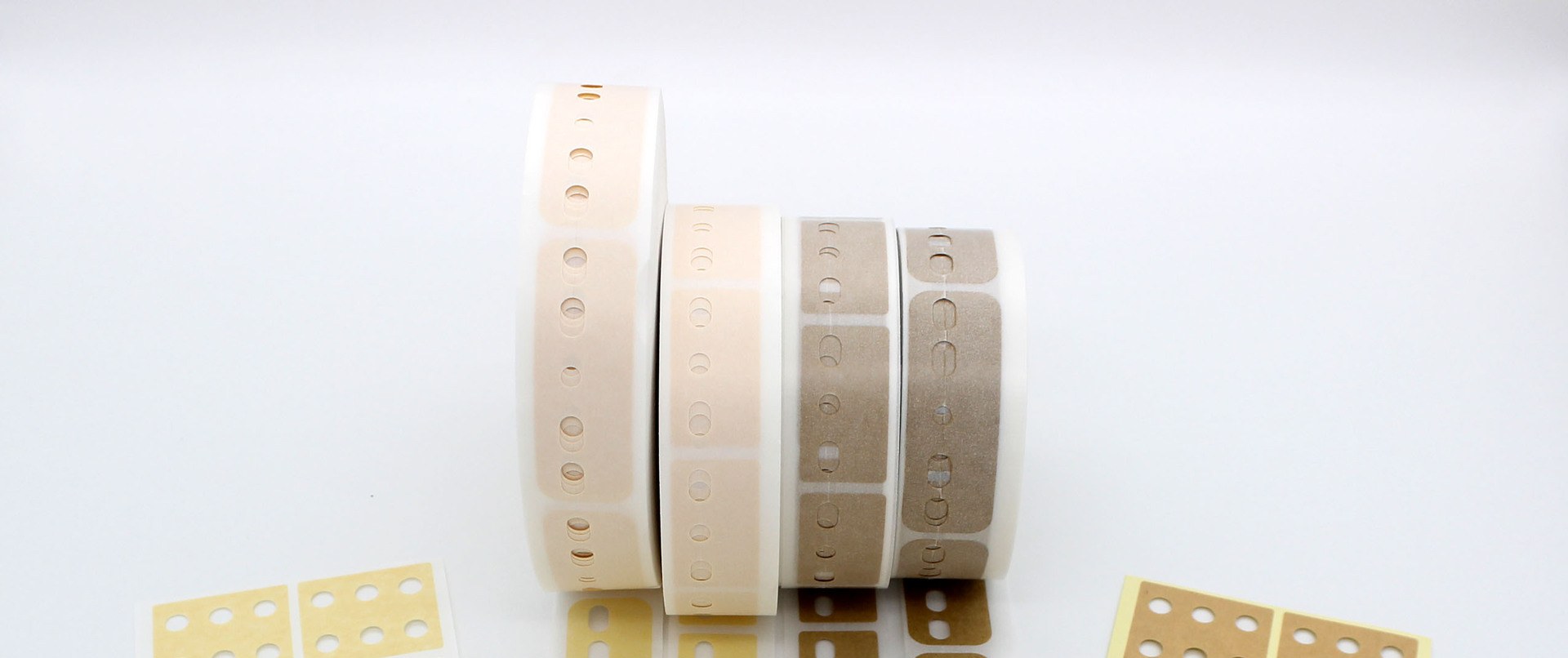
AI Splice Tape for Radial & Axial Lead Insertion
Reel changeover gets most of the attention in SMT. On the through-hole side it is quieter and just as costly. When component lead tape runs out on an axial or radial insertion machine, the head waits, the board stops mid-cycle, and an operator re-threads by hand. A weak splice opens under feeder tension and the next components miss their station. AI splice tape turns that stop into continuous feed — and it is not the same product as carrier-tape splice tape for SMD feeders.
The cost you haven't named
Most plants log insertion stops under a generic machine-stop code, so a failed splice never appears as its own line item. The costs accumulate in five places:
- Insertion downtime — an empty or broken lead tape stops the machine mid-cycle; each lost minute multiplies across the shift.
- Missed insertions — a gapped splice sends components past their station and the board ships short.
- Wrong hole format — three-hole and five-hole machines are not interchangeable; the wrong tape jams the feeder.
- Heat at the joint — a splice that softens near soldering can release partway through the run.
- Adhesive lifting — low-tack tape lifts under feeder pull and the splice separates while feeding.
The boundary with SMD work matters. Carrier-tape splice tape joins 8 mm to 44 mm tape on a pick-and-place feeder, where pitch and ESD drive the choice. Lead-tape splice tape is a different hole format, adhesive and machine family.
The Lead-Tape Splice Audit
A named method to make lead-tape changeover a planned, repeatable action instead of a scramble.
1. Match. Confirm the three-hole or five-hole format against the machine's lead-tape drive before ordering. Drive pins index on those holes, so a mismatch jams the head.
2. Rate. Choose the temperature class from where the splice sits relative to soldering. Standard crepe covers 0–70 °C; the heat-rated type handles 150 °C short-term and 100 °C long-term.
3. Apply. Align the hole pattern across the running tail and the new head, overlap, then press for full contact. The joint must hold under tension and pass the guides.
4. Standardize. Source every format your fleet needs from one supplier, packed per machine family. Fewer SKUs means less qualification work.
The vehicle: AI splice tape for axial and radial lead tape
The product that carries the audit is crepe-paper splice tape in three-hole and five-hole formats, kiss-cut so operators tear a splice with no cutting tool.
- Match → hole format. Three-hole and five-hole patterns cover axial and radial machines across families, so drive pins index correctly.
- Rate → heat class. Standard type for 0–70 °C, or the heat-rated type at 150 °C short-term and 100 °C long-term.
- Apply → adhesive. Polyurethane high-tack adhesive rated at 300 N/m — the figure that stops the splice lifting under feeder pull.
- Feed → base material. Crepe paper at 0.15–0.5 mm: thin enough to pass the guides, strong enough to carry the joint.
- Width → tape fit. 22.5 mm and 30 mm reference, with other widths available.
- Stock → roll format. Kiss-cut at 2.75-inch intervals, 60 yards per roll, packed per machine family.
Specification note: these values combine the supplier specification and the SPLICING TAPE RADIAL LEAD drawing (Universal Instruments C24782000, material 3M 2364, ASME Y14.5M-1994). Final spec is confirmed against your machine and lead pitch.
Specifications
| Parameter | Value |
|---|---|
| Hole format | Three-hole and five-hole for axial and radial insertion machines |
| Base material | Crepe paper (美纹纸) |
| Adhesive | Polyurethane high-tack, 300 N/m adhesion |
| Thickness | 0.15–0.5 mm depending on type |
| Width | 22.5 mm / 30 mm reference; other widths available |
| Temperature range | 0–70 °C standard; heat-rated 150 °C short-term, 100 °C long-term |
| Roll length | 60 yards per roll, kiss-cut at 2.75-inch intervals |
| Printing and packaging | Custom logo or identification printing; rolls packed per machine family |
The loop: keeping lead-tape splicing controlled
Splicing happens line-side, before the tape enters the insertion feeder. A clean splice keeps axial and radial inserters feeding, so wave soldering, handling and inspection receive a steady flow of assembled boards instead of batches interrupted by empty tape.
Re-run the audit every quarter, and whenever a new machine model, lead pitch or supplier enters the floor. Each pass re-checks hole formats against the fleet, confirms the heat rating matches where the joint sits, and reconciles stock. That loop converts splice quality from an operator-dependent habit into a controlled variable.
It pays for itself on axial lines feeding resistors, diodes and jumper wires, on radial lines, and on multi-brand fleets. Southern Machinery qualifies each order in five steps — format review, specification within 24 hours, sample trial, bulk supply and reorder support.
Your next step
Email jasonwu@smthelp.com with your axial and radial insertion machine models and lead pitch — or ship a sample lead tape. You get the matched hole pattern, heat rating, width and a quotation, with a sample trial on your machines before bulk commitment.
FAQ
Is AI splice tape the same as SMT carrier-tape splice tape?
No. Carrier-tape splice tape joins 8 mm to 44 mm SMD tape on a pick-and-place feeder. AI splice tape joins lead tape on axial and radial insertion machines, using three-hole or five-hole crepe paper with 300 N/m polyurethane adhesive.
How do I know whether I need three-hole or five-hole tape?
The hole pattern must match your insertion machine's drive. Send the machine model or a short sample of lead tape and the format is confirmed before you order.
Can the splice survive heat near the soldering process?
Yes, on the heat-rated type, which withstands 150 °C short-term and 100 °C long-term exposure. The standard type covers 0–70 °C.
What widths and roll lengths are available?
Reference widths are 22.5 mm and 30 mm, with other widths available. Rolls run 60 yards, kiss-cut at 2.75-inch intervals.
Can we print our logo or an identification mark on the tape?
Yes. Custom logo or identification printing is available — specify print content and tape width when requesting a quotation.
About the author
Jason Wu
Founder & CEO, Southern Machinery (Shenzhen Southern Machinery Sales and Service Co., Ltd.)
Email: jasonwu@smthelp.com / info@smthelp.com
WhatsApp: +86 13602562576
Catalog & manuals: file.autoinsertion.com | Machine photos: ph.smthelp.com
LinkedIn: linkedin.com/in/smtsupplier | YouTube: youtube.com/c/Smthelping
Comments
Comments appear after approval.