Radial Insertion Machine S3000 vs S3010A — Which One Fits Your THT Line
Two radial inserters, two automation levels. Use the five-parameter check to decide between the S3000 entry model and the S3010A inline cell before you ask for a configuration.
Tag

Two radial inserters, two automation levels. Use the five-parameter check to decide between the S3000 entry model and the S3010A inline cell before you ask for a configuration.

Every hand-soldered joint is a quality lottery. The S-C5331R and S-HX331R move that variability from the operator to the machine — here is how to pick between them.

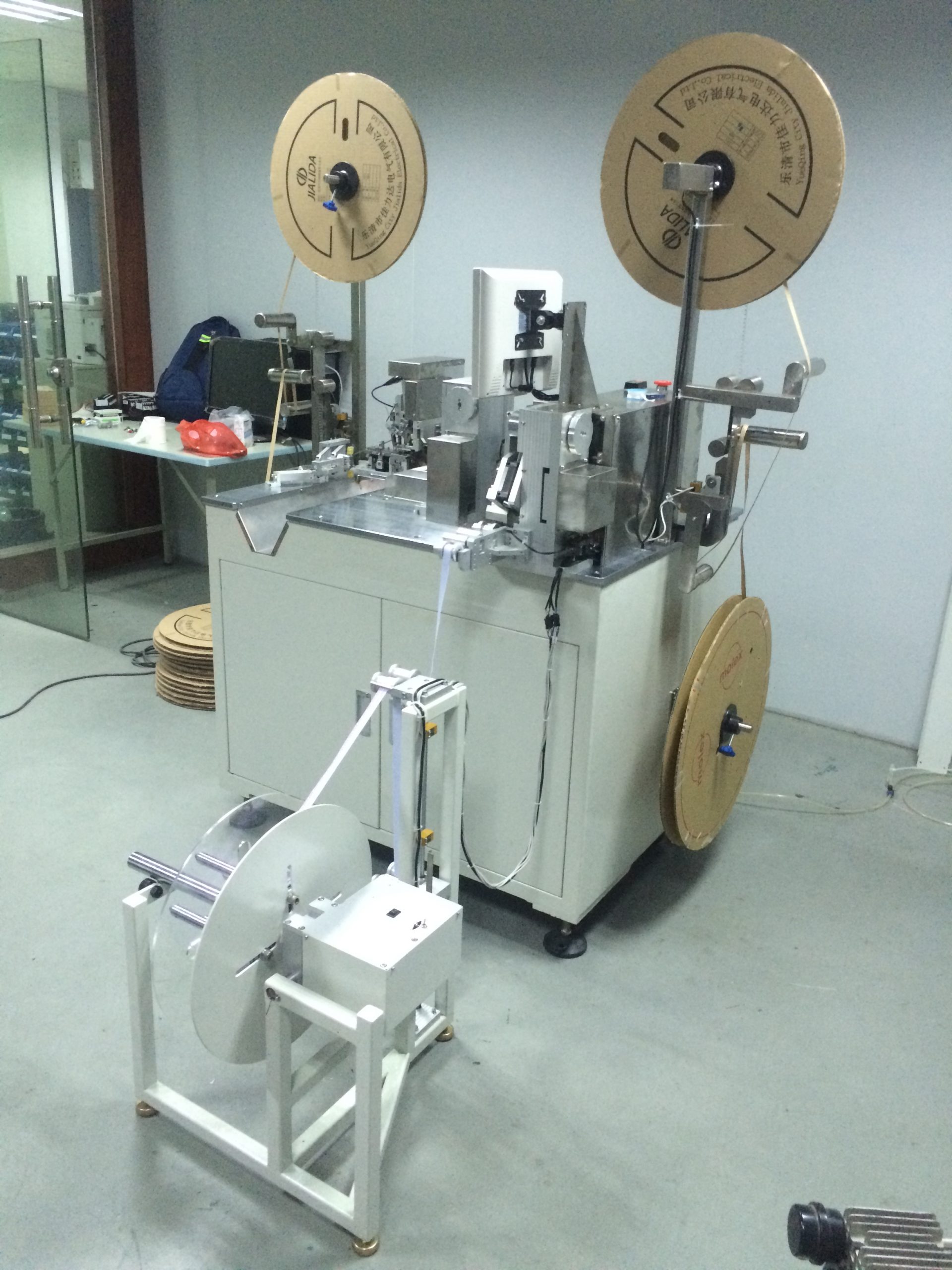
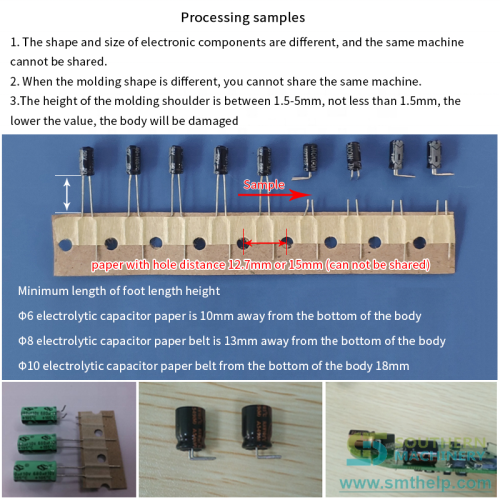
Radial components only become useful to an insertion line after leads are formed, values verified, and parts taped. The S-300B does all three in one pass at 180 parts/min.

Between the printer and the wave solder sits the part of the line easiest to overlook: board transport. Choose the right conveyor and operators stop being couriers.

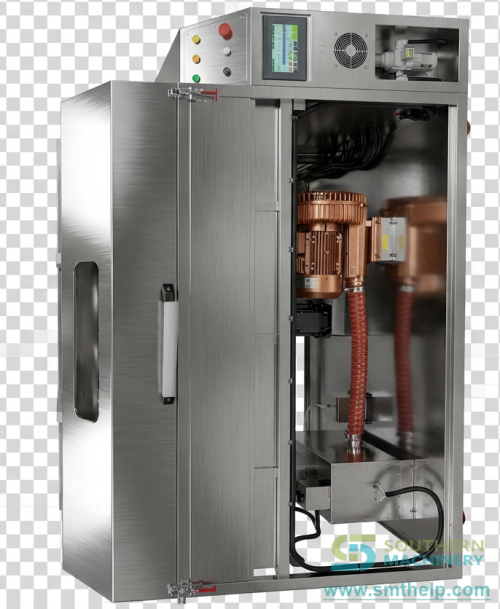
SMT fixtures, pallets and trays carry flux and grease from board to board. The SME-5200 / SME-5300 clean a whole batch in one automatic cycle — no iron-brush scrubbing.

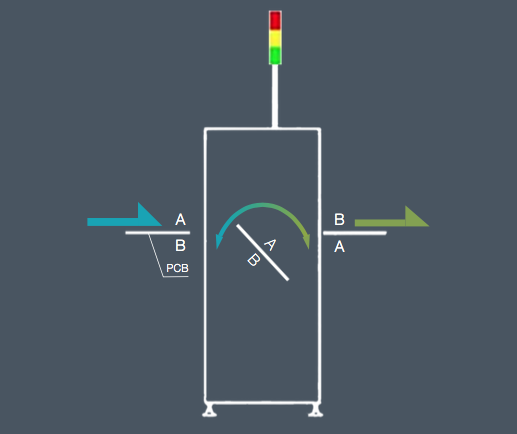
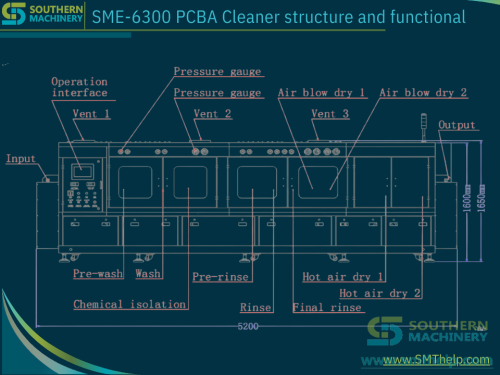
Flux residue rarely fails on the first board. It fails later, in the field. The SME-6300 removes it inline — wash, rinse and dry in one pass, board never leaving the line.

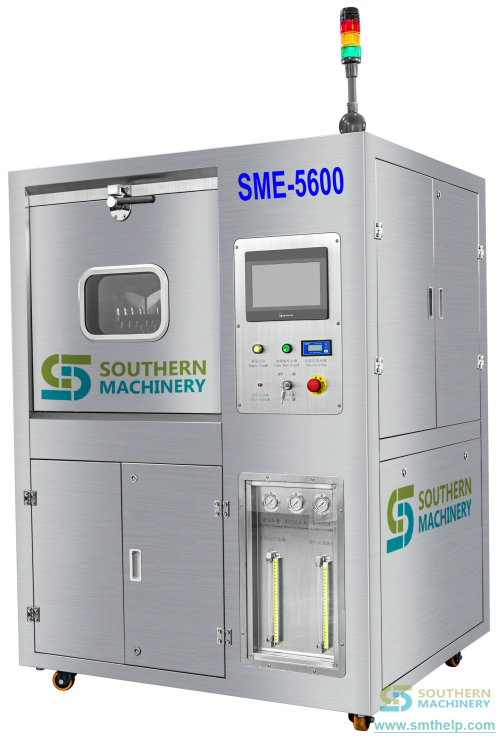
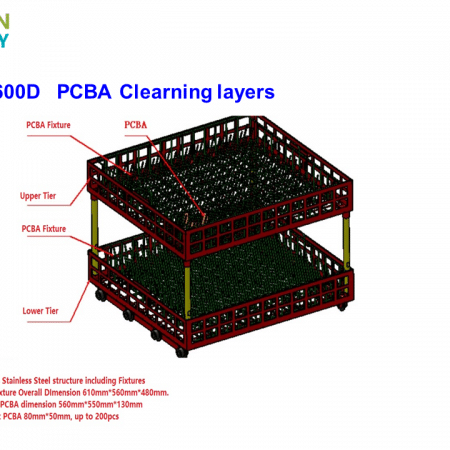
Flux residue left on a board causes leakage, corrosion and field failures. The SME5600D batch-cleans a whole PCBA load in one key press — wash, DI rinse and hot-air dry, automatically.

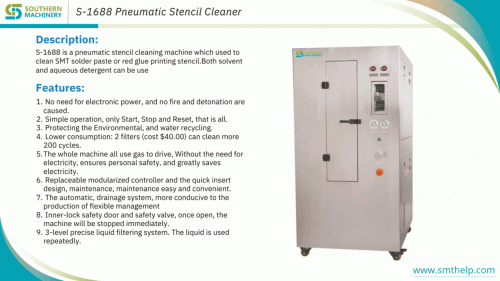
Blocked stencil apertures cause paste misprint and rework. The S-1688 cleans stencils with rotating spray rods and 3-level filtration — and runs on air alone, so there is no ignition source near flammable solvent.

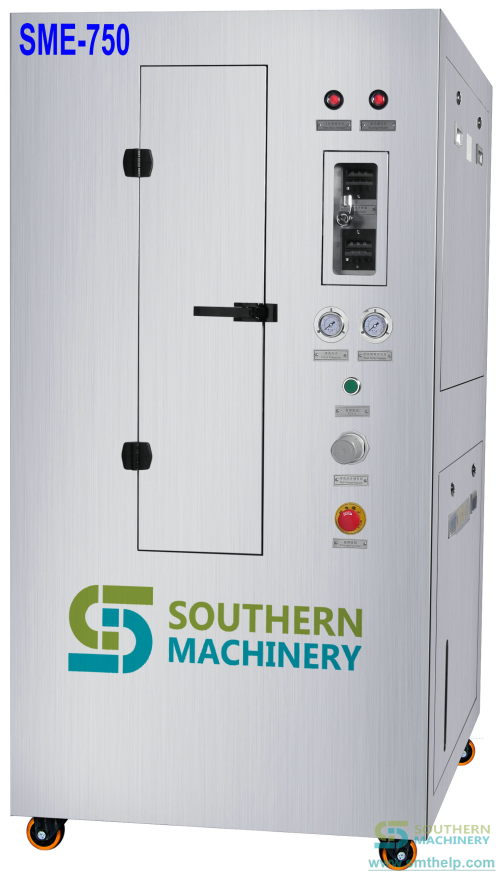
Blocked stencil apertures cause paste misprint and rework. The SME-750II cleans two stencils in one pneumatic cycle — double throughput, no electric power near flammable solvent.

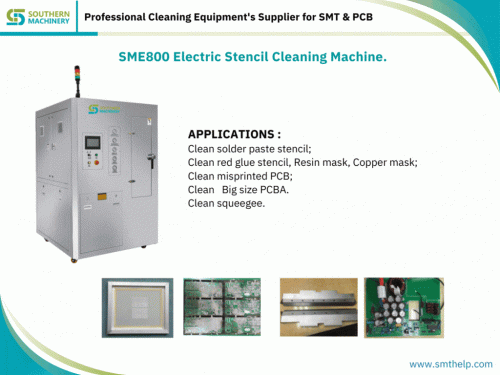
Blocked apertures and slow manual scrubbing quietly raise misprint and changeover time. Run the four-point stencil check, then see how the SME800 automates clean-rinse-dry for stencils up to 750 × 750 × 40 mm.

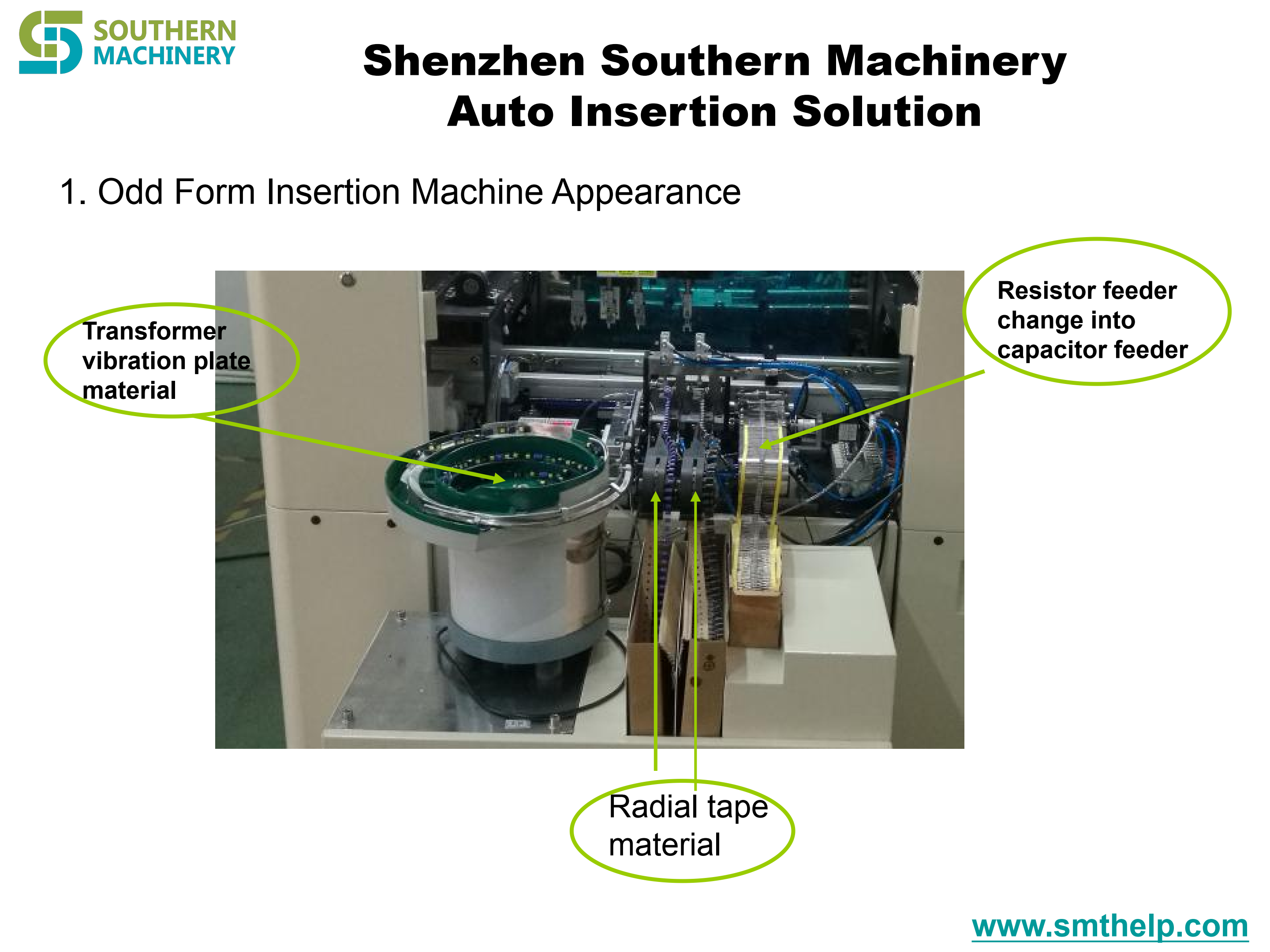
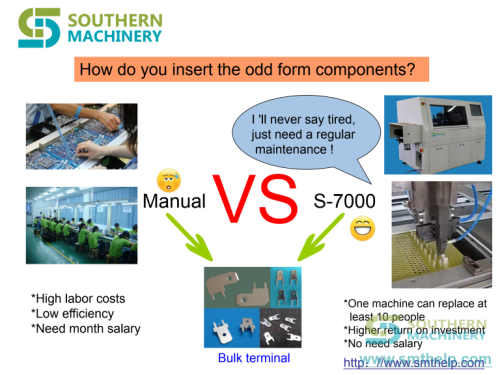
Transformers, relays and connectors still get placed by hand on many THT lines. Run the DIP-Bench Tally, then see how an odd form insertion machine takes that work off the bench.

For high-mix, low-volume THT soldering, fixtures and pallets are a hidden tax. Run the fixture-less fit test, then see how the S100B solders by recalled program instead of mechanical tooling.

Manual THT inspection only samples boards, so reversed polarity and missing parts reach test. Run the insertion defect tally, then see how an online AOI inspects every board before wave soldering.

Loose terminals, Y-capacitors and transformers are the parts your mounter still waits on an operator to sort. Run the bulk-feed audit, then see how a customized bowl feeder delivers them oriented to the pick-up point.

Axial resistors, diodes and capacitors are still inserted by hand on many THT lines. Run the four-failure-mode feed check, then see how the ATF-1002 feeds taped axial parts to your existing inserter.

At the end of every SMT line, finished boards wait for an operator to rack them — throughput lost and a scratch risk. Run the end-of-line cost count, then see how the SUL-250 loads boards into magazines automatically.

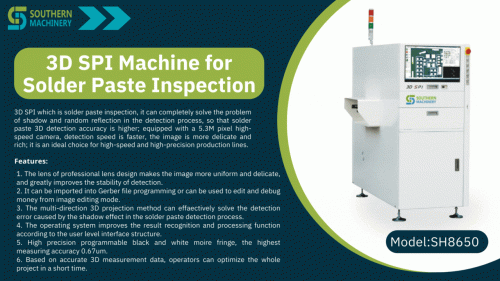
The quality of your SMT line is decided at the stencil printer, not the reflow oven. Run the paste-window pre-check, then see how the SH8650 measures paste before placement instead of after reflow.

Your placement head only runs as fast as its material supply. Run the Tray Fit Audit, then see how a custom Southern Machinery tray feeder keeps QFP/BGA/LGA/CSP and odd-form parts presented without manual swaps.

Most PCB defects are born at the stencil. Run the Tension Rule, then see how a mesh tension meter catches a failing stencil in 10 seconds — before a single board is printed.

For tube-packaged ICs, LEDs, and connectors, the bottleneck is often the operator refilling the feeder. Run the 40-Tube Throughput Test, then see how the STF-1002 stacks 40 tubes and presents them hands-free.

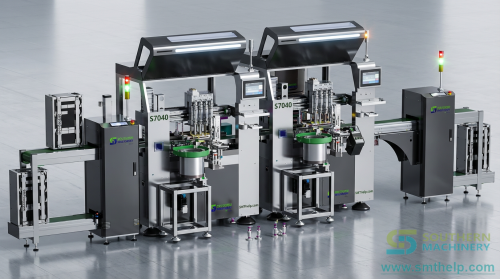
On a mixed SMT/THT line, the bottleneck is usually the manual odd-form station. Run the Odd-Form Bottleneck Audit, then see how the S7040 automates transformers, relays and connectors.
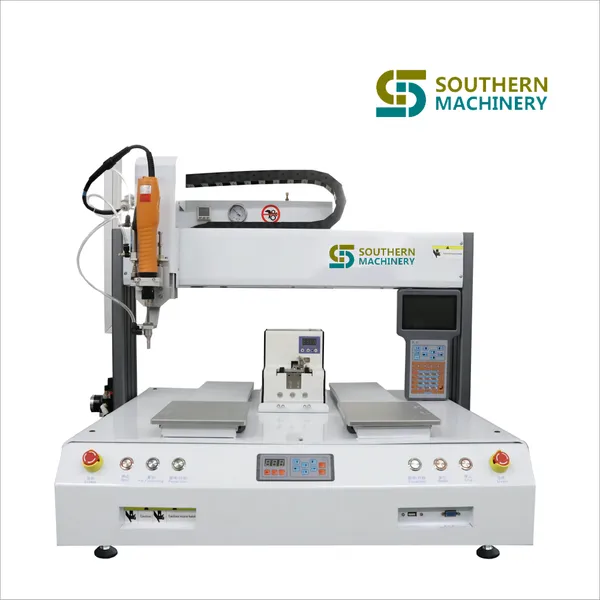
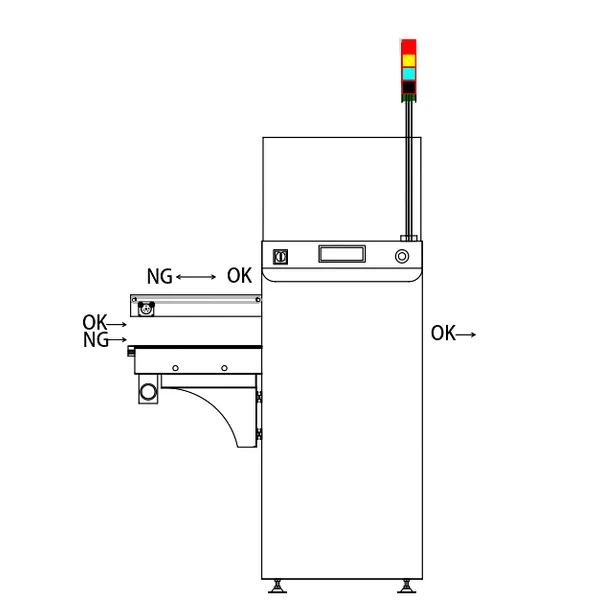
When AOI or SPI rejects a board, the line should not stop. Run the NG/OK Buffer Check, then see how the SBN250 stores 12 PCBs and decouples takt time on your SMT/THT line.

If your THT line still relies on hand-seating FASTON tabs and eyelets, clinch quality drifts with every operator. Run the Terminal Seat Check, then see how the S-7000T verifies each insertion in real time.

Surface-mount SOP and SOIC ICs still ship in tubes, yet many EMS lines load them by hand. Run the Tube-Feed Fit Test, then see how the SSTF01 feeds them hands-free.

Improper depaneling cracks solder joints and delaminates boards. Run the Depanel Integrity Check, then see how the SC3500 separates panels with vacuum loading and programmed routing.

Reflow is where process drift hits final quality hardest. Run the Thermal Profile Readiness Check, then see how the WITH-10's 10 zones tighten the window on LED and SMT boards.

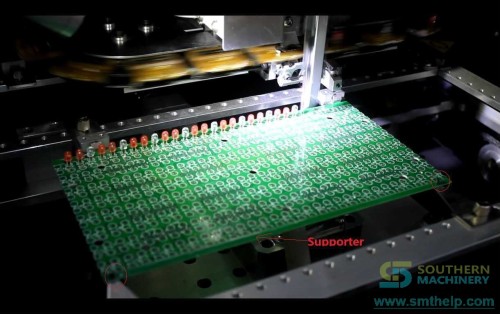
A P10 panel can carry hundreds of radial LEDs, each needing insertion, orientation and clinch. Run the Radial LED Insertion Audit, then see how the S3000 does it under machine vision.

Odd-form parts are why many EMS factories still keep a manual DIP bench. Run the Odd-Form Feed Audit, then see how a custom tray feeder removes the human from the repetitive part.

Flux residue and ionic contamination are invisible until they aren't. Run the Ionic Cleanliness Gate, then see how the SQC250A protects long-term reliability on high-reliability boards.

On a long SMT line, reaching the other side means climbing conveyors or stopping production. Run the Aisle-On-Demand Check, then see how a telescopic gate opens a path in seconds.

Large radial components with 15 mm lead spans quietly break manual THT insertion. Run the XL-Span Fit Audit, then see how Southern Machinery automates them.

Flux residue on a pallet doesn't show up until it shifts a component or wrecks a solder joint. Run the Dirty Pallet Audit, then see how the SME5200 cleans fixtures automatically.

When operators, carts, and forklifts share the path with your boards, flow breaks. Run the Overhead Flow Audit, then see how overhead air-rail transport fixes it.

Surface contamination becomes a printing defect the moment paste hits the board. Run the Pre-Print Cleanliness Gate, then see how the SQC250A cleans bare boards before printing.
Manual screwdriving is inconsistent by definition. Run the Torque Consistency Audit, then see how the screw fastening robot drives every point the same way.

Print quality sets the ceiling on SMT yield. Run the Print Consistency Audit, then see how the SP-830-A automates every deposit.

Manual DIP insertion is the last labor island on an automated line. Run the Insertion Coverage Audit, then see how the S-3010B places every lead.

Standard feeders can't hold your odd-form parts. Run the Feeder Fit Audit, then see how a custom feeder targets a 10x cost-saving benchmark.

Paste defects cap SMT yield before placement begins. Run the Stencil Setup Audit, then see how the SP-300 motorizes the squeegee stroke.

Dirty pallets cause misalignment and solder defects. Run the Fixture Hygiene Audit, then see how the SME-5200 automates the cleaning step.

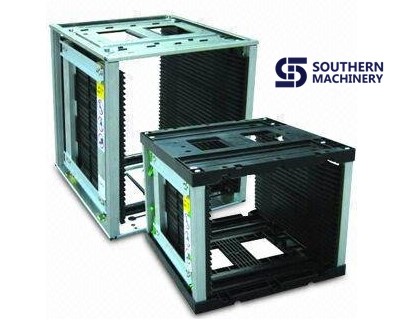
Boards fail from ESD and scratches long before test. Run the WIP Storage Audit, then see how ESD magazine racks protect yield.

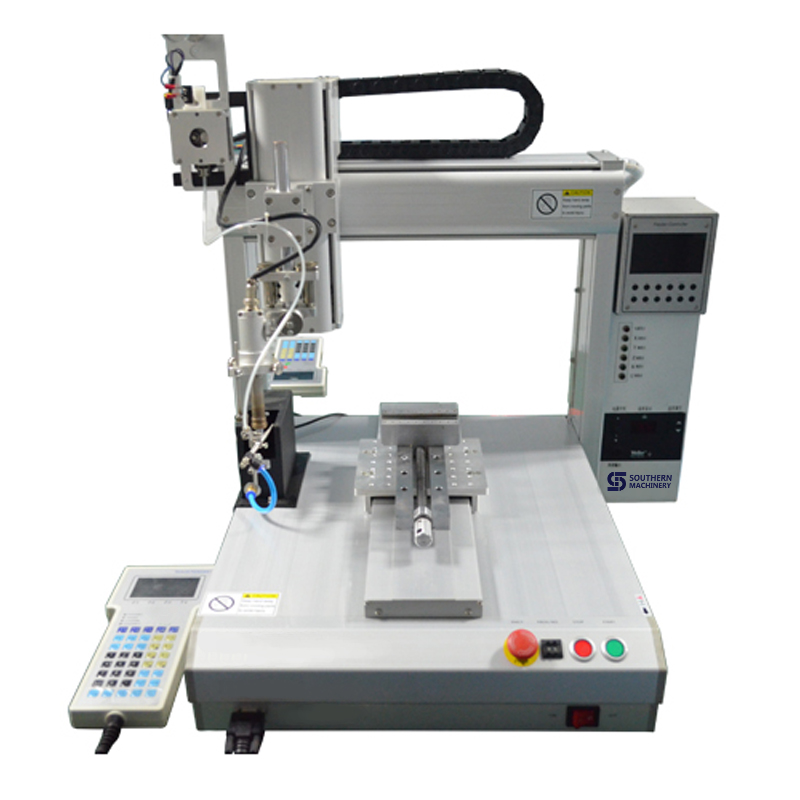
Hand soldering THT is slow and uneven. Run the Selective Solder Audit, then see how the SO-300 targets only the joints that need it.
Pick misses and dropped parts trace back to the nozzle. Run the Grip Fit Audit, then see how a custom gripper nozzle stabilizes placement.

Long boards print unevenly on a desktop printer. Run the Print Gate Audit, then see how the SP-1200 keeps paste even.

Hand-inserted odd-form parts cap your DIP line. Run the DIP Labor Audit, then see how vision-guided insertion targets a 10x labor benchmark.

A particle on a bare board becomes a printing defect downstream. Run the Pre-Print Cleanliness Audit, then see how the sticky-roller cleaner removes it inline.

Manual brush cleaning is hard to standardize. Run the Post-Solder Cleaning Audit, then see how the SME-350MB cleans boards inline.

Most SMT defects start at printing. Run the Print Accuracy Audit, then see how the SP-1008 lays paste precisely every cycle.

Manual harness prep is slow and inconsistent. Run the Harness Prep Audit, then see how one machine cuts, strips and crimps.

Odd-form parts still get hand-placed at the end of the DIP line. Run the Odd-Form Audit, then see how SOLVE-10 automates 10 types.
Now Playing
Powering the Future
The Southern Machinery Anthem