
SP-TRO102-24 Anti-Static PCB Basket Trolley: Stainless Steel 201, 6 Staggered Tiers
Straight-tier racks put the back levels out of reach and mild steel corrodes in humid plants; staggered tiers on a stainless 201 frame fix both.
Aug 15, 2026 · Updated Aug 31, 2026 · Jason Wu
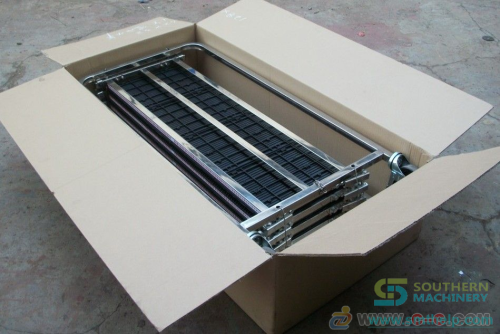
Two problems quietly undermine board-handling carts in electronics plants. Humidity turns a painted mild-steel frame into a rust source sitting right next to ESD-sensitive assemblies. And straight-stacked tiers put the back of every shelf out of reach, forcing operators to drag boards out at an angle and scrape edges — so they load the top shelf instead because it's easier. Neither shows up in a maintenance log. Both show up as scrap.
The SP-TRO102-24 answers both with a polished stainless steel 201 frame and six staggered tiers, so nothing corrodes and nothing sits out of reach.
Why unprotected PCB handling breaks quality, capacity or cost
The cart looks like the cheapest item on the floor until you count what passes through it.
- Static builds up at every transfer. Moving boards on bare metal or a non-dissipative surface lets charge accumulate, degrading sensitive ICs without leaving a visible mark.
- Mild steel corrodes where electronics live. Humid assembly halls attack painted carbon-steel frames, and rust particulate near an open assembly is a contamination problem as well as a cosmetic one.
- Straight tiers force bad reaching. If the rear of a level cannot be reached without leaning in, operators pull boards out at an angle and scrape the edges on the tray in front.
- Angled trays without guards let boards drift. Push a loaded cart across a threshold and unguarded boards slide forward. Some of them keep going.
- Unbraked casters creep. On the slight slope that most factory floors actually have, a parked cart with no locking wheels moves on its own, usually into an aisle or a bench leg.
The Reach-and-Roll Audit
Do this with a fully loaded cart and an operator of average height, not with the tallest person on the shift.
1. Test the rear of every tier. Ask the operator to remove a board from the back of the bottom level and the back of the top level without leaning into the frame. Any tier that fails is a tier that will be loaded badly, and staggering the tiers is what recovers it.
2. Push it over a threshold. Load the trays, roll the cart across an expansion joint or door sill at normal walking speed, then look at the trays. Boards that shifted forward tell you the tray needs a curved front guard, not a more careful operator.
3. Park it and let go. Set the brakes on the slope you actually have, wait a minute, then check. Two locking casters out of four is the practical configuration: enough to hold, while the other two keep the cart pivoting in a narrow aisle.
4. Check the frame against the environment. Look at existing carts for rust at the weld points and caster mounts. If painted steel is failing there, specify stainless 201 as standard and 304 where washdown or aggressive chemistry is involved.
The Vehicle: how the SP-TRO102-24 works
The frame is heavy-duty stainless steel 201 in welded, polished tubing — corrosion-resistant and rigid enough to stay square in a humid plant under daily load, at a lower cost than 304. Six tiers are arranged in a stagger, so no level blocks the one beneath it and every tray stays reachable when the cart is full. Black ribbed ESD PP trays hold boards separated, and a curved front guard keeps them seated when the cart moves. Four swivel casters give the cart a real pivot in a narrow aisle, and two carry locking brakes so it stays parked. The same frame family also accepts slot plates for panel storage where boards are handled in higher counts.
| Parameter | Specification |
|---|---|
| Model reference | SP-TRO102-24 |
| Frame material | Stainless steel 201, welded polished tubing (304 available on request) |
| Tier layout | 6 staggered tiers — no level blocks the one below |
| Tray type | Black ribbed ESD PP trays with curved front guards |
| Board separation | Ribbed slot interior, boards stored edge-down without contact |
| Casters | 4 swivel casters, 2 with locking brakes |
| Slot-plate option | 350 to 630 slots, roughly 200–600 PCBs per cart (reference) |
| Environment | Rated for humid electronics assembly halls; easy-clean surfaces |
| Dispatch | 48-hour dispatch from Shenzhen, standard build (reference) |
| Spare parts | Replacement trays, casters and hardware available |
| Customization | Frame length, tier count, tray layout and finish |
Specifications are compiled from reference production data (Shenzhen). Final configuration and load ratings are confirmed after technical review of your boards.

Where it fits
The trolley is the board-handling layer that connects the stations. Coming off the stencil printer, boards go into ESD trays instead of an unprotected stack. Between placement and reflow, staged boards move under controlled contact. Into THT insertion and wave soldering, mixed-technology boards travel and wait in the same ESD-safe trays. At inspection and rework, separated boards route to AOI, X-ray and manual benches in traceable batches. Parked with brakes locked at each station, the cart becomes a disciplined FIFO buffer that supports 5S. Because Southern Machinery supplies the full line, the trolley can be specified alongside your insertion, soldering and handling equipment for a consistent floor layout.
The ROI case
Four levers, all measurable on your own floor. Labour: staggered tiers remove the leaning and stretching that slows every load and unload, and the time saved compounds because handling happens at every transfer point, not once. Quality: dissipative PP trays, ribbed slots and curved front guards cut static damage, edge scrapes and dropped boards — the defect families that are almost never traced back to the cart that caused them. Capacity: slot-plate builds carry roughly 200 to 600 PCBs per cart depending on configuration, which reduces both cart count and aisle traffic. Deployment: a 48-hour dispatch target on the standard build means handling capacity arrives with the line rather than weeks after it.
Re-run the Reach-and-Roll Audit whenever you change board size, add a tier or move a line. That audit-and-improvement loop closes the gap between the layout drawing and what operators actually do at full load. Any payback you calculate from these levers is a planning benchmark.
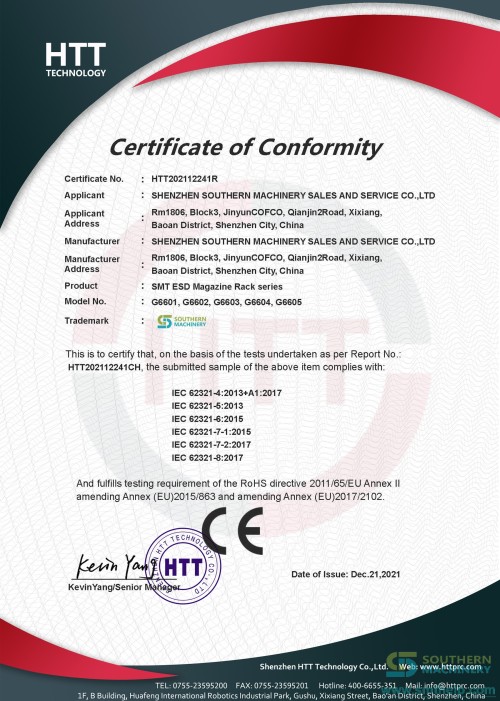
Your next step
Send your PCB dimensions, daily WIP volume, aisle width and floor conditions. We confirm tier count, tray layout and caster configuration, then quote with a delivery schedule — normally the same working day after technical confirmation. Email jasonwu@smthelp.com or info@smthelp.com, or WhatsApp +86 13602562576.
FAQ
Why stainless steel 201 rather than 304? 201 gives corrosion resistance and rigidity for heavy daily use in humid plants at a lower cost than 304. Where washdown or aggressive chemistry is involved, 304 builds are available on request.
What does the staggered layout achieve? With six tiers in a zig-zag, no tier blocks the one below it, so every tray stays reachable without leaning — including when the cart is fully loaded.
Why only two braked casters? Four swivel casters keep the cart pivoting in narrow aisles; two locking brakes hold it parked at the workstation. The mix trades nothing away on either side.
Can it hold panels as well as boards? Yes. The ribbed ESD trays hold individual boards, and the same frame family supports slot-plate turnover builds from 350 to 630 slots, roughly 200–600 PCBs per cart as a reference figure.
Jason Wu
Founder & CEO, Southern Machinery (Shenzhen Southern Machinery Sales and Service Co., Ltd.)
Email: jasonwu@smthelp.com / info@smthelp.com
WhatsApp: +86 13602562576
Catalog & manuals: file.autoinsertion.com | Machine photos: ph.smthelp.com
LinkedIn: linkedin.com/in/smtsupplier | YouTube: youtube.com/c/Smthelping
Comments
Comments appear after approval.