
Hand-Crimped Wire Terminals Are a Quiet Quality Escape
Manual harness prep is slow and inconsistent. Run the Harness Prep Audit, then see how one machine cuts, strips and crimps.
Aug 19, 2026 · Updated Aug 31, 2026 · Jason Wu
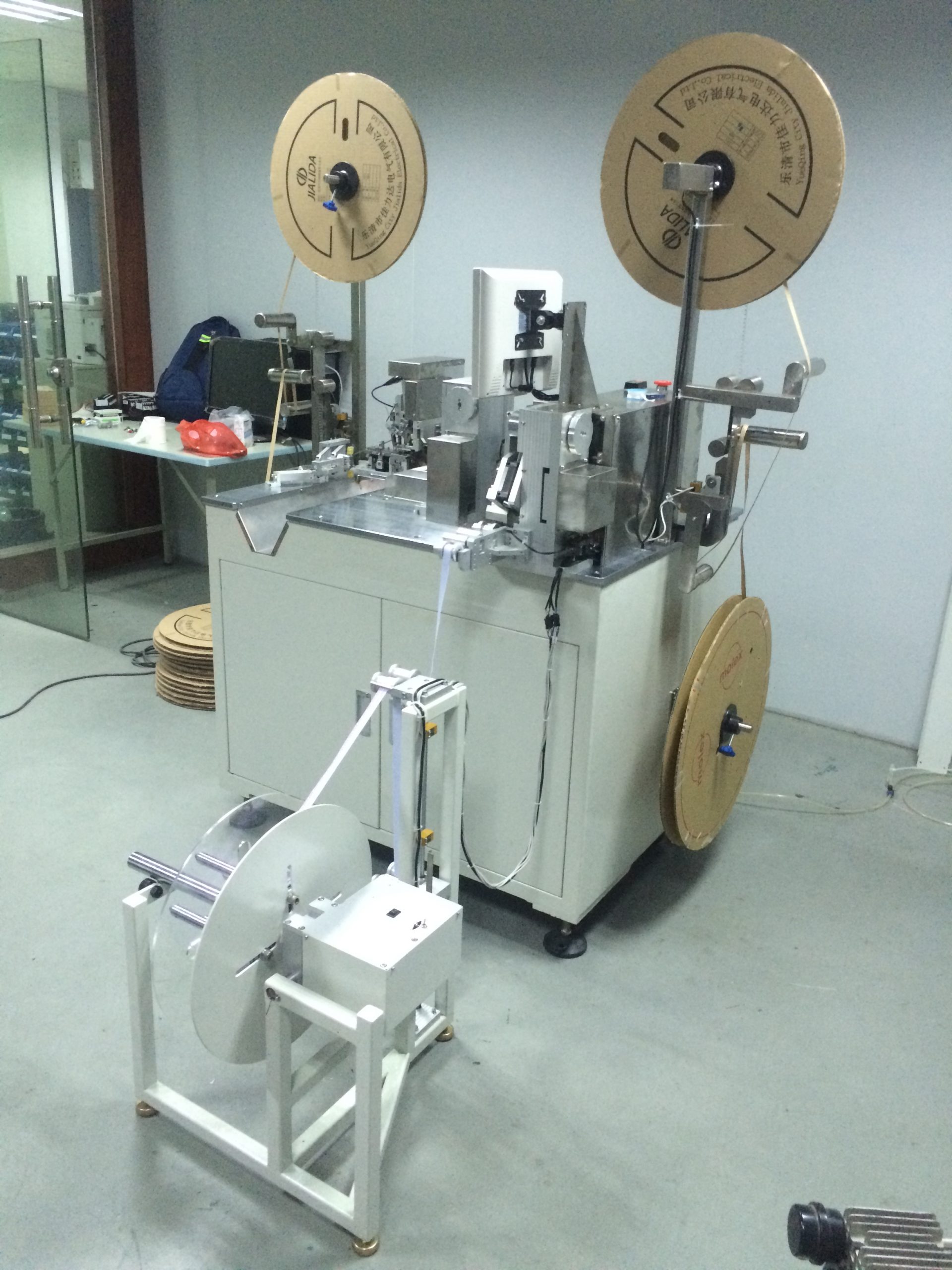
Every PCB assembly that connects to power, signals, or peripherals needs finished wire harnesses — cut to length, stripped, and terminated with the right connector. Done by hand, that work is slow, inconsistent, and a hidden source of quality escapes: a loose crimp or a half-stripped wire passes the bench and fails only at functional test, or worse, in the field. The cost is a return, not a quick re-crimp at the station.
Southern Machinery — the Shenzhen-based SMT/THT automation specialist founded in 2011, serving 237+ global customers — supplies the automatic wire cutting, stripping, and terminal crimping machine (also called a winding displacement terminating machine). It finishes the job in one pass: feed cable, cut, strip, and crimp single- or double-end terminals automatically under industrial computer control.
Why hand harness prep breaks consistency
Manual cutting, stripping, and crimping spread variance through every harness:
- Loose or over-crimped terminals from hand-tool pressure that changes with fatigue across a shift.
- Inconsistent strip length — too much bares conductor, too little leaves insulation in the contact.
- Mis-cut lengths that force rework or scrap on the whole harness.
- Missed operations — a skipped crimp or wrong terminal caught only at final test.
- Labor drag — a manual bench ties an operator to low-value, repetitive work all shift.
Every one of these is a process defect, not a parts defect.
The Harness Prep Audit
Score your wire-prep risk before specifying a machine. The audit uses your product:
1. List your cable mix. Wire diameter, cable width, terminal families, and whether you need single- or double-end crimping decide machine compatibility.
2. Define length and strip windows. Confirm cable length above 75 mm and peel length in the 2–10 mm range against your drawings.
3. Map the harness cell. The machine is a standalone unit — confirm a 220 V supply and 0.4–0.6 MPa filtered, dried air are available where you plan to place it.
4. Set your quality bar. Decide which built-in detections (no-wire, deviation, low pressure, missing strip/crimp) you require before quoting.
The audit tells you whether a manual bench is still defensible at your harness volume — and past a certain point, it is not.
The Vehicle: how the crimping machine works
The machine integrates feeding, cutting, stripping, clamping, transmitting, twisting, and terminal crimping into one frame coordinated by computer control. A Panasonic servo motor positions the cable precisely for reliable conductivity and winding displacement, and an eccentric-shaft mechanism applies balanced, consistent crimping force. A flipping structure turns the cable for double-end processing, so a complete two-ended harness is produced in one cycle.
Verified specification from the Southern Machinery product page:
| Parameter | Specification |
|---|---|
| Footprint | 1.65 m × 0.75 m × 1.5 m (under 1.5 m²) |
| Weight | 300 kg |
| Air pressure | 0.4–0.6 MPa (filtered, dried) |
| Voltage / Power | 220 V 50 Hz / 600 W |
| Cable length | > 75 mm |
| Peel (strip) length | 2–10 mm |
| Max. cable width | 35 mm |
| Wire diameter | 0.8–3.0 mm |
| Efficiency | 18,000 PCS/H (10-pin cable), 24-hour operation |
| Cutting / stripping precision | Up to 0.1 mm (stepping motor) |
| Positioning | Panasonic servo motor |
| Terminal families | JC, PH, XH, EH, ZH, SCN, SM, VH, Dupont |
Confirm the exact configuration — terminal family, single/double-end, interleaving — against your cables before ordering.
Where it fits in a complete line
The crimping machine sits in the material-preparation stage, upstream of final assembly. While the SMT line runs printing, placement, and reflow, and the THT side runs radial/axial/odd-form insertion and wave soldering, the harness cell prepares terminated cables in parallel. Finished harnesses are kitted to the board or final-assembly stations, where operators or automated insertion equipment connect them to PCB connectors. As a standalone, self-contained unit, it slots into an existing factory layout without conveyor integration — only a 220 V supply and filtered compressed air are needed.
The ROI case
Manual cutting, stripping, and crimping is among the most labor-intensive jobs in PCB assembly. A single automatic machine rated at 18,000 PCS/H on a 10-pin cable replaces that bench and runs 24 hours with consistent results. Quality improves through three mechanisms: consistent eccentric-shaft crimping force (fewer loose or over-crimped terminals), 0.1 mm stepping-motor precision on cut and strip length, and built-in detectors that alarm on no-wire, wire deviation, low pressure, or missing strip/crimp — defects that would otherwise travel to the line. The small footprint and touch-screen programming mean one operator can supervise several units. Re-run the Harness Prep Audit when you add a cable type or terminal family, then reconfigure the machine — this audit-and-improvement loop keeps yield stable as your harness mix changes. The exact payback depends on your labor cost and volume, so model it with your own numbers.
Make it a recurring check
Re-run the Harness Prep Audit when you introduce a new wire diameter, a new terminal family, or a double-end requirement you did not run before. Southern Machinery supports configuration and sample validation with your actual cables.
Your next step
Your next step is to send us your wire diameter, cable type, terminal family, and target throughput, and we will propose a configuration for your harness cell. Southern Machinery (Shenzhen, China, since 2011, 237+ global customers) supplies SMT / THT, wave soldering, board handling, and inspection, with installation, training, and spare parts for the full line.
FAQ
What wire can this machine process? The verified machine handles wire diameters of 0.8–3.0 mm, cable types such as 2468 and similar, with a maximum cable width of 35 mm.
Which terminals does it support? It crimps common connector families including JC, PH, XH, EH, ZH, SCN, SM, VH, and Dupont; confirm your exact terminal with Southern Machinery.
Can it crimp both ends automatically? Yes — special functions include single- or double-end crimping, interleaving crimping, and cable flipping, so double-ended harnesses are produced in one cycle.
How accurate is the cutting and stripping? Stepping motor control for cutting, branching, and peeling delivers accuracy up to 0.1 mm.
Jason Wu
Founder & CEO, Southern Machinery (Shenzhen Southern Machinery Sales and Service Co., Ltd.)
Email: jasonwu@smthelp.com / info@smthelp.com
WhatsApp: +86 13602562576
Catalog & manuals: file.autoinsertion.com | Machine photos: ph.smthelp.com
LinkedIn: linkedin.com/in/smtsupplier | YouTube: youtube.com/c/Smthelping
Comments
Comments appear after approval.