
The Bowl Feeder in the Corner Is Not an Asset
Every plant has one: a custom-tooled bowl feeder that cost real money and now holds a part number you no longer build. The technology wasn't wrong. The selection test was.
Jul 5, 2026 · Updated Aug 29, 2026 · Jason Wu
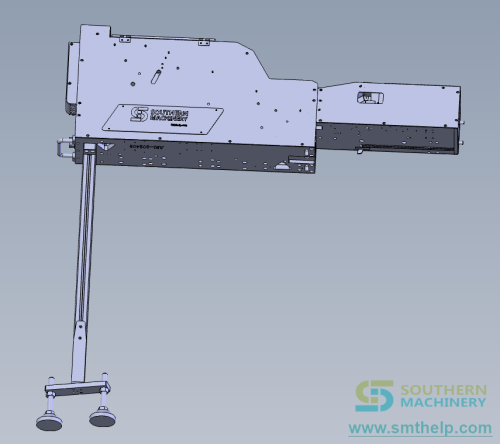
Every plant has one: a custom-tooled vibratory bowl feeder sitting in the corner, built for a part number you no longer make.
It was not a bad machine. It was the right machine for a production reality you no longer have. The part ran for eighteen months, the product changed, the rails did not fit the new geometry, and retooling cost more than the feeder did.
That is the real question in odd-form feeding — not "which technology is better," but "which technology survives your next product change."
The Four Symptoms That Push Factories to Look
Loose terminals, connectors, clips, and molded parts create a specific set of problems that standard tape feeders never expose you to:
- Labor that does not scale. Operators sort, orient, and load by hand. Output tracks headcount, and headcount is the one input you cannot reliably grow.
- Bottlenecks upstream of the bottleneck. Manual feeding and long changeovers cap the speed of a downstream machine that cost ten times more.
- Inconsistent quality. Manual handling and harsh feeding produce placement errors, component damage, rework, and scrap — plus a defect rate that moves with whoever is on shift.
- Inflexibility. A feeder built around one part usually stays around that one part.
For high-mix EMS work, feeder speed is rarely the constraint. The constraint is whether the line stays stable across twenty part numbers without a tooling project each time.
The Three-Variable Feeder Test
Score your application on these three variables before you look at a datasheet. The answer is usually obvious by the end.
Variable 1 — Mix. How many part numbers will this feeder see in a year, and how often do they change? A modern belt feeder is built for software-based adjustment across part families. A vibratory bowl feeder is custom-tooled per part; retooling is a mechanical project with its own cost and lead time.
Variable 2 — Fragility. Can the part survive being vibrated up a track? Belt feeding uses smoother linear transport, which matters for terminals, cosmetically sensitive parts, and anything that can be scratched, marked, or bent. Our source analysis notes a belt feeder footprint up to 97% smaller than a typical bowl setup — treat that as a comparison example from the analysis, not a universal figure, because real savings depend on your hopper, guarding, and layout.
Variable 3 — Changeover Economics. Our analysis uses minutes versus hours as the planning reference. Real numbers depend on tooling, recipes, operator training, and how similar your parts are — but the direction is stable, and for high-mix work changeover speed usually beats theoretical feed rate on your OEE.
Read the result. High mix + delicate parts + frequent changeover points to a belt feeder. One rugged part + long runs + acceptable tooling cost still points to a bowl feeder. There is no third answer where both are wrong.
What Each Option Is Genuinely Good For
Belt feeders suit loose odd-form parts in SMT or THT automation, terminals and connectors needing repeatable pickup, high-mix lines with frequent change, parts sensitive to impact or abrasion, robotic loading cells, and factories trying to remove manual part presentation.
Vibratory bowl feeders still make sense for one part running for long periods, high-volume low-mix production, rugged parts that tolerate vibration, and lines where lower initial feeder cost matters more than changeover flexibility.
Bowl feeders also demand experienced tuning, and a small change in component design can alter feeding behavior when orientation rails are highly customized. Belt feeders are more predictable to operate but still need proper setup: belt material, pocketing or guides, component loading, sensor position, pick coordinate, and machine handshake all have to be confirmed.
Fit the Feeder to the Line, Not to the Part
A feeder is never an isolated purchase. In an SMT + odd-form line the flow runs: magazine loader or conveyor → stencil printer and SPI → pick-and-place and reflow → AOI → odd-form insertion or robotic placement with belt, bowl, tube, tray, or tape feeding plus custom nozzle or gripper → wave or selective soldering → final inspection, ICT/FCT, unloading, and traceability.
A feeder that presents the part perfectly still fails commercially if the pick point, cycle time, orientation, board handling, and soldering process were not designed together. That is the part most projects skip.
Before you commit, confirm: component type, material, size, weight, and surface sensitivity; required orientation and pickup face; packaging format (bulk, reel, tube, tray, stick, tape); target output and real downstream cycle time; part-number count; changeovers per shift; available machine-side footprint; integration target; sensor, accuracy, and handshake requirements; and ESD, cleanliness, guarding, and traceability needs.
If the component is unusual, send samples and have them tested. It is the only honest way to avoid overpromising on speed or compatibility — and Southern Machinery will run that test before quoting.
Close the Loop: Keep the Test in Your Process
Make the Three-Variable Test part of new-product introduction. Every time engineering releases a new odd-form part number, score it before anyone requests a feeder. That single habit is what stops the next bowl feeder from ending up in the corner.
On the business case: the value shows up as less manual sorting, shorter changeover downtime, fewer feed-related line stops, lower damage risk, more repeatable pickup, and better floor use. If you change products several times a day, saving a few minutes per changeover compounds meaningfully across 250 working days. If you run one part for months, a simple dedicated bowl feeder may still be the more sensible money.
Your Next Step
Send component photos or samples, dimensions, packaging format, required orientation, target output per shift, your downstream machine model, available floor space, and your changeover expectations. We will compare belt, bowl, tube, tray, tape, and custom gripper options and tell you which one fits — including when the answer is the cheaper bowl feeder.
Catalog and documentation: file.autoinsertion.com. Machine photos: ph.smthelp.com. Videos: youtube.com/c/Smthelping.
Jason Wu
Founder & CEO, Southern Machinery (Shenzhen Southern Machinery Sales and Service Co., Ltd.)
Email: jasonwu@smthelp.com / info@smthelp.com
WhatsApp: +86 13602562576
Catalog & manuals: file.autoinsertion.com | Machine photos: ph.smthelp.com
LinkedIn: linkedin.com/in/smtsupplier | YouTube: youtube.com/c/Smthelping
Comments
Comments appear after approval.