
Brazil NR12 made us rebuild a feeder trolley — twice
A machinery safety standard became the best product spec we ever received. The story of engineering ESD feeder trolleys and safety fingers that survive certification thinking.
Aug 16, 2026 · Updated Aug 28, 2026 · Jason Wu
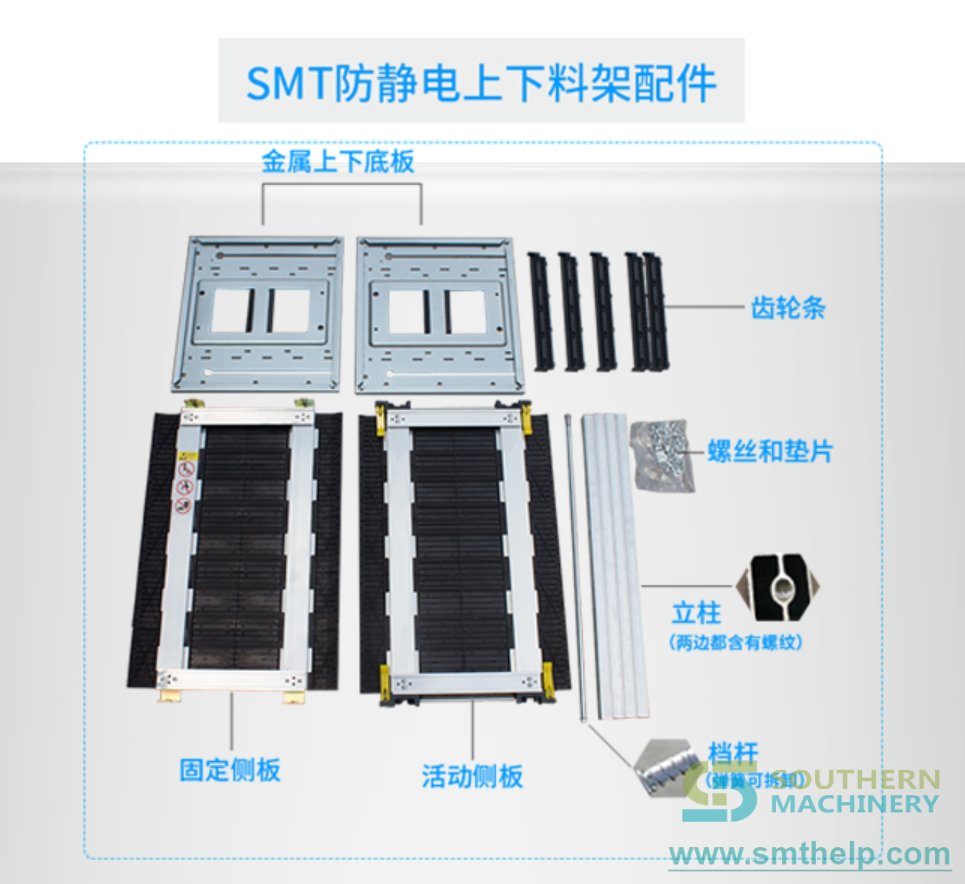
A Brazilian EMS plant once asked us a question that could fit on a napkin: "Can your JUKI RS-1 feeder trolleys comply with NR12?" Most suppliers would have said yes and shipped a cart. NR12 is Brazil's machinery safety regulation — design, installation, operation, maintenance, documentation, all of it — and it does not grade on a curve. That napkin question rebuilt our product twice. Here is what the regulation taught us about a thing everyone thought was a shopping cart.
What safety review forced us to see
The pinch zone is the product. Operators load heavy feeders onto trolleys next to moving conveyors. The first version treated the trolley as furniture. NR12 thinking treats every human-machine intersection as a risk to be engineered: guarded geometry, a safety finger that keeps tapes and leads controlled during loading, stable castors that lock when a loaded feeder rolls on.
ESD and mechanical safety are the same conversation. A grounded, continuous path is not just a quality spec — it is an electrical safety spec. Grounding studs, dissipative surfaces, no sharp edges at hand height, load margins that survive a forklift accident, not just a careful operator.
Documentation is part of the product. NR12 expects safe work procedures and maintenance logs to exist before the machine does. We started shipping the trolley with its own procedure sheet and inspection checklist — and customers in other countries began asking for it as a feature.
The rebuild loop
Version one failed our own internal review: geometry that worked for one JUKI RS-1 layout jammed on a neighbor's line. Version two fixed adjustability but left the safety finger as an accessory. Version three made the finger structural — part of the frame, not an add-on — and the trolley family was born: feeder carts, reel trolleys, and ESD magazine racks on the same safety logic.
The AGV trolley evolution came out of the same conversation — when the cart has to move between lines safely, eventually the cart learns to drive itself.
Why I am telling you this
Because every region has its own napkin question. Brazil has NR12. Europe has machinery directive CE marking. North America has OSHA lockout culture. The suppliers who treat safety reviews as product specifications end up with better products everywhere; the ones who treat them as paperwork disappear after the first audit.
When you buy handling equipment, ask the vendor what their last safety-driven redesign was. If the answer is "we never changed anything," you are buying a cart. If the answer is a story — like ours — you are buying engineering.
Your move: facing NR12, CE, or a plant audit on handling equipment? Send the regulation clause that worries you. I will send back exactly how our trolleys and racks answer it — with the procedure sheets we ship. WhatsApp me or write to info@smthelp.com.
_— Jason Wu, Southern Machinery. Safety questions are design questions in disguise._
Comments
Comments appear after approval.