
Computing PCBA in 29 Seconds: AI Insertion Machine Upgrade
A retrofitted through-hole AI insertion machine assembles a computing PCBA in a measured 29-second cycle — automatic loading, fast programming, repeatable insertion.
Aug 8, 2026 · Updated Aug 31, 2026 · Jason Wu
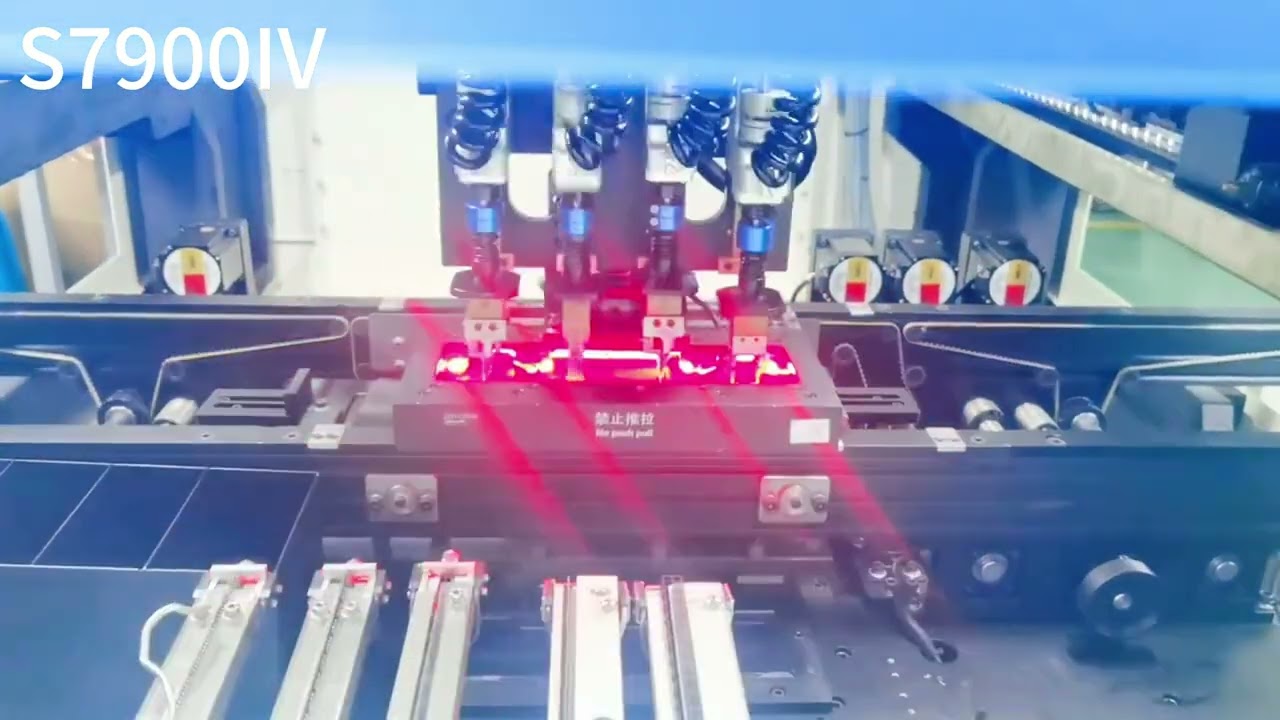
Computing PCBA in 29 Seconds: AI Insertion Machine Upgrade
A computing motherboard still carries a dense population of through-hole connectors, sockets and capacitors that no pick-and-place can place. On most EMS floors that population is hand-inserted, board after board, at a cycle time nobody has measured. Southern Machinery's engineering team recorded a different result: a retrofitted auto-insertion (AI) machine finishing a full computing PCBA in 29 seconds. That number is a measured assembly cycle from a working line, not a software estimate.
The cost you haven't named: manual through-hole insertion
Through-hole work is the last manual station on many computing-board lines, and the cost hides in plain sight.
- An unmeasured cycle. Manual insertion time per board varies with operator skill and fatigue, so you cannot quote a real THT takt or balance it against the SMT side.
- Lead-forming inconsistency. Hand placement bends leads unevenly, which shows up as clinch defects, lifted pads and post-wave touch-up.
- A tied-up operator. One person stands at the insertion station every shift, doing work a retrofitted machine can do unattended between line events.
- No retained asset value. Legacy Universal/UIC AI machines already on the floor keep depreciating instead of being modernized into a faster, documented process.
The Four-Step Through-Hole Insertion Modernization
Before buying new iron, frame the upgrade as a repeatable engineering exercise rather than a one-off purchase. Call it the Four-Step Through-Hole Insertion Modernization.
1. Map the through-hole load. List every axial, radial, DIP and odd-form component on the computing PCBA, with lead spans and body sizes. The goal is to see exactly which parts keep an operator at the station instead of flowing through the machine.
2. Score the labor bottleneck. For the insertion station, estimate hours per shift, rework rate and the value of boards waiting on a manual step. This is the number that justifies automating the handoff rather than leaving it.
3. Validate the cycle time. Run the board on the retrofitted machine and measure the actual assembly cycle. Southern Machinery's validation video records a complete computing PCBA finished in 29 seconds — a measured result you can compare against your current manual time.
4. Set the automation target. Define what "good" looks like: automatic board load/unload, repeatable insertion, fast program changeover, and a cycle logged for every board type. That statement becomes your acceptance test at delivery.
The vehicle: retrofitted Universal/UIC AI insertion machine
The framework maps directly onto how Southern Machinery upgrades a legacy through-hole platform.
- Map the through-hole load → component coverage. The upgraded AI machine inserts axial-lead, radial-lead, DIP/IC and odd-form parts into the computing PCBA, covering the connector, socket and capacitor mix typical of motherboards and embedded computing boards.
- Score the labor bottleneck → automatic PCB loading and unloading. Boards are fed and removed automatically instead of by hand, removing the operator from the insertion station and freeing them for higher-value line work.
- Validate the cycle time → measured 29-second assembly. The 29-second computing PCBA cycle is a validated machine result from the demo line, supported by a companion programming workflow that builds and edits board programs in roughly 3 seconds for fast changeover.
- Set the automation target → inline integration. The machine keeps standard feeder and tooling interfaces and connects to the existing line through a SMEMA-compatible conveyor handoff, so it slots into the SMT outfeed without a full replacement.
Specification note: component range, lead-span limits, maximum PCB size and thickness, feeder compatibility, power, air and footprint should be confirmed at quotation, because they depend on your board mix and line layout rather than a single default.
Specifications
| Parameter | Value |
|-----------|-------|
| Validated cycle time | 29 s per computing PCBA (measured demo result) |
| Companion programming time | ~3 s per board program (demo) |
| Component classes | Axial, radial, DIP/IC, odd-form |
| Retrofit base | Universal / UIC legacy AI auto-insertion platform |
| PCB handling | Automatic inline load and unload |
| Line interface | SMEMA-compatible conveyor handoff |
| Feeder / tooling | Retains existing standard interfaces where compatible |
| Integration | Downstream of SMT, pre-wave soldering |
| Facility requirements | Power, air, footprint confirmed at quotation |
The loop: re-validate every product ramp
Throughput and quality both drift once a new board family enters the line. Build a loop: every time you ramp a new computing or server board, re-run the Four-Step Through-Hole Insertion Modernization, measure the actual assembly cycle on the retrofitted machine, and compare it against the previous board's baseline. Review the program-changeover time with your process leads and keep the 29-second result as a reference point, not a ceiling. Treat the validation as a living record — the loop is what keeps the upgraded machine earning its place instead of becoming another underused asset in the corner.
Your next step
Send us your computing PCBA drawing and the through-hole component list you want automated. We will return a retrofit review outlining which Universal/UIC machine you have, what automatic loading and programming to specify, and what to confirm at quotation. Reach Jason at jasonwu@smthelp.com or on WhatsApp +86 13602562576.
FAQ
What does the AI insertion machine actually assemble?
It inserts through-hole components — axial, radial, DIP/IC and odd-form parts — into a PCBA before wave soldering. In the demo it is configured for a computing board with the connector, socket and capacitor mix typical of motherboards.
Is the 29 seconds a real assembly cycle or a software number?
It is a measured physical assembly cycle from a working retrofitted machine, recorded on a specific computing PCBA. It is not a programming or compute time; the companion demo handles programming separately.
Will this work on my existing Universal/UIC machine?
The upgrade path targets Universal/UIC "AI" auto-insertion machines, adding automatic PCB loading/unloading and faster programming. Send your machine model and board types so we can confirm the retrofit kit for your configuration.
How does it compare to manual insertion?
Manual through-hole insertion of a comparable board typically takes minutes and varies with operator skill. The machine delivers a consistent, repeatable cycle and repeatable lead forming, which reduces bent leads and misplaced components.
Which industries use this automation?
EMS and contract manufacturers, computing and server board producers, power-supply and industrial-control makers, and automotive or medical electronics suppliers that still run through-hole work after SMT placement.
Jason Wu
Founder & CEO, Southern Machinery (Shenzhen Southern Machinery Sales and Service Co., Ltd.)
Email: jasonwu@smthelp.com / info@smthelp.com
WhatsApp: +86 13602562576
Catalog & manuals: file.autoinsertion.com | Machine photos: ph.smthelp.com
LinkedIn: linkedin.com/in/smtsupplier | YouTube: youtube.com/c/Smthelping
Comments
Comments appear after approval.