
How the SME800 Auto Stencil Cleaning Machine Optimizes SMT Yield Through Process Control
The electric SME800 keeps stencil apertures clean between every print, so paste deposition stays repeatable and SMT yield stops drifting shift to shift.
Aug 8, 2026 · Updated Aug 31, 2026 · Jason Wu
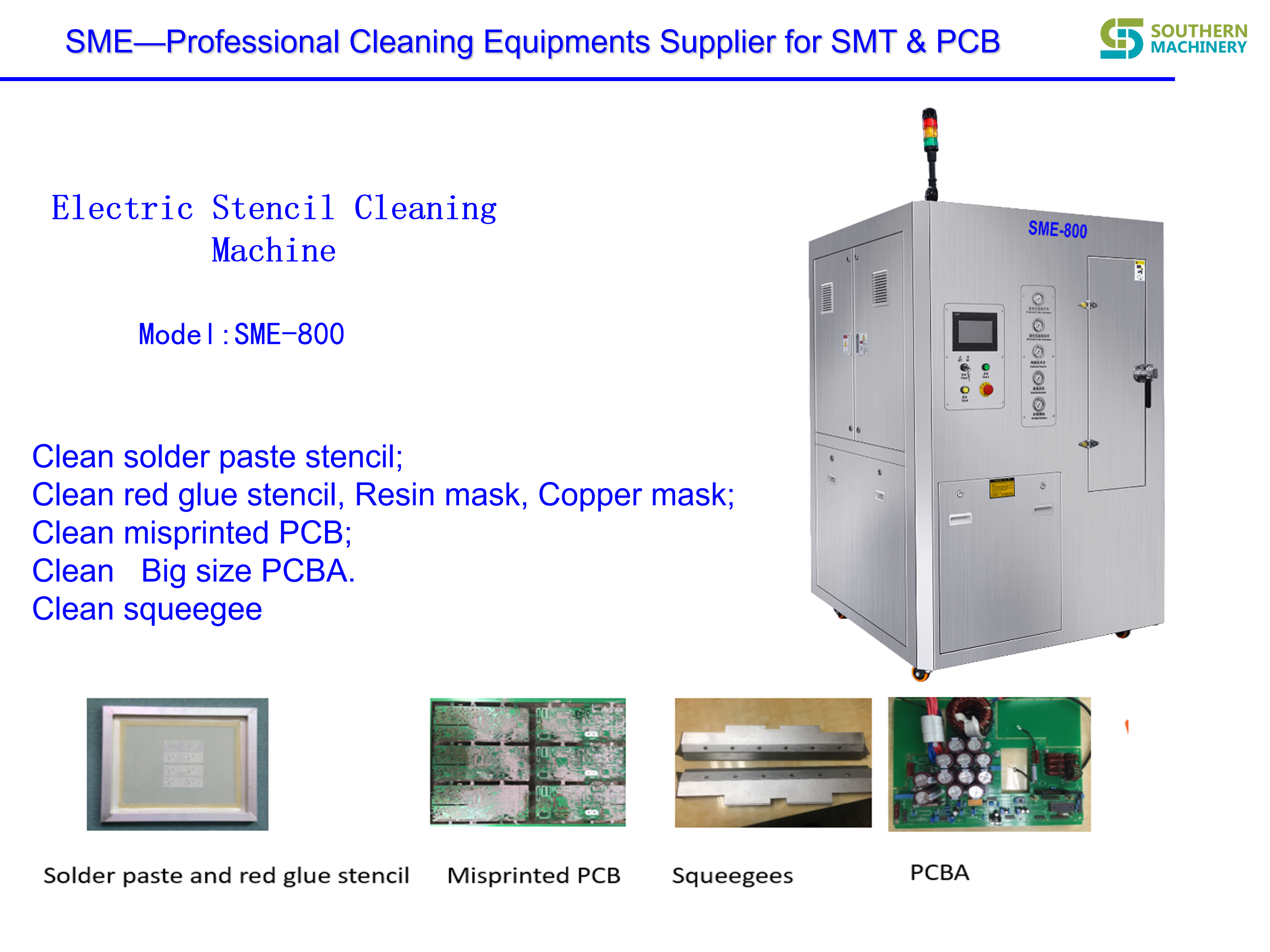
How the SME800 Auto Stencil Cleaning Machine Optimizes SMT Yield Through Process Control
Most SMT defects start before reflow — at the print stroke. When a stencil aperture clogs or smears, every board from that print gets too little or too much paste, and the problem shows up at AOI or, worse, in the field. One uncontrolled print variable can quietly erase the consistency that your placement and reflow steps worked hard to build.
The cost you haven't named: print-stage drift
Yield is largely decided at solder-paste printing, yet stencil condition is the variable most lines manage by feel.
- Clogged fine-pitch apertures. Below 0.4 mm pitch, dried paste or flux residue in an aperture shows up immediately as insufficient solder or bridging after reflow.
- Operator-dependent wiping. Manual cleaning produces inconsistent results — the 8:00 AM print and the 11:00 PM print are not the same board.
- Misprint scrap. A smeared board is often scrapped instead of recovered, losing material and work-in-progress.
- Shortened stencil life. Aggressive manual scraping wears stencil tension and aperture geometry faster than controlled cleaning would.
The Four-Step Print-Stage Yield Control
Treat stencil cleaning as a controlled process node, not a chore. Think of it as the Four-Step Print-Stage Yield Control.
1. Baseline the print variable. Measure aperture condition and paste-volume consistency with your SPI, and record where defects cluster. The goal is to see exactly which prints drift before they reach reflow.
2. Standardize the clean. Replace hand wiping with a recipe-controlled clean so every stencil returns to the printer in a known-good state, regardless of shift or operator.
3. Close the recipe loop. Log each clean as a repeatable step tied to the board and paste type, so changeover cleaning becomes a documented program rather than a judgment call.
4. Track the aperture life. Monitor stencil tension and aperture geometry over clean cycles, and schedule replacement before it affects deposit volume. That record becomes your process-capability evidence.
The vehicle: SME800 electric stencil cleaning machine
Here's how the framework maps onto the SME800 sitting at the front of the SMT line, beside the printer and SPI.
- Baseline the print variable → clean stencils between runs. The SME800 removes residue from solder-paste stencils between print runs and changeovers, so every print deposits the same paste volume — the foundation of a stable process.
- Standardize the clean → recipe-controlled operation. It cleans red glue (SMT adhesive) stencils, resin masks, copper masks, misprinted PCBs, large-size PCBA and squeegees on a repeatable program, removing operator variation from the step.
- Close the recipe loop → electric, self-contained drive. Because it is electrically driven rather than pneumatic, the unit does not depend on a heavy compressed-air supply at the print station, which keeps the cleaning step consistent and easy to schedule.
- Track the aperture life → controlled, gentle cleaning. Regular controlled cleaning preserves stencil tension and aperture geometry far longer than manual scraping, supporting a measurable consumable-cost saving.
Specification note: confirm stencil size range, cleaning chemistry (solvent or aqueous/semi-aqueous), drying capability, filtration stage, cycle time per recipe and footprint at quotation, since they depend on your stencil sizes, paste types and changeover cadence.
Specifications
| Parameter | Value |
|-----------|-------|
| Drive type | Electric (no compressed-air supply required) |
| Cleans | Solder-paste stencils, red-glue/resin/copper masks, misprinted PCB, large PCBA, squeegees |
| Cleaning method | Spray-wash / combined (recipe-controlled) |
| Drying | In-cycle dry, ready to re-mount |
| Filtration | Multi-stage, with solvent recycling |
| Cycle time | Per recipe; matched to changeover cadence at quotation |
| Chemistry | Solvent or aqueous/semi-aqueous, per material |
| Workpiece flexibility | Stencils, squeegees, misprinted boards, large PCBA in one unit |
| Utilities | Electric supply; footprint confirmed at quotation |
The loop: re-clean on a recipe cadence
Yield and print quality both drift once cleaning becomes casual. Build a loop: drive SME800 cleaning from your changeover and SPI data, not from memory. Every shift, review which board families triggered a clean, compare SPI defect trends against the cleaning record, and tighten the recipe cadence where fine-pitch apertures clog fastest. If a new paste or adhesive enters the line, add its clean recipe before ramp. Treat the clean as a logged process node — the loop is what keeps aperture condition from becoming the hidden variable that quietly lowers your yield.
Your next step
Send us your stencil sizes, paste and adhesive chemistries, and changeover cadence. We will return a cleaning configuration outlining whether the electric SME800 fits your print stage, what recipe and filtration to specify, and what to confirm at quotation. Reach Jason at jasonwu@smthelp.com or on WhatsApp +86 13602562576.
FAQ
What does the SME800 clean?
Per the Southern Machinery product listing, it cleans solder-paste stencils, red-glue and resin/copper masks, misprinted PCBs, large-size PCBA and squeegees in one electrically driven unit.
Is the SME800 electric or pneumatic?
It is electric, so it does not depend on a compressed-air supply at the print station. Southern Machinery also offers the S1688 pneumatic stencil cleaner for air-driven installations.
How often should a stencil be cleaned?
Frequency depends on paste type, aperture size, print count and observed quality — typically between runs and at changeovers. Your SPI results and defect trends should drive the actual schedule, not a fixed guess.
Can a misprinted board be recovered?
Yes. The SME800 cleans misprinted PCBs so the board can be re-printed and re-flowed instead of scrapped, a direct yield and material recovery measure.
Where does it sit in the line?
At the print stage, between the stencil printer and SPI or placement: printer → SME800 clean → SPI → placement → reflow → AOI. It complements board handling, THT insertion and wave soldering in a full line.
Jason Wu
Founder & CEO, Southern Machinery (Shenzhen Southern Machinery Sales and Service Co., Ltd.)
Email: jasonwu@smthelp.com / info@smthelp.com
WhatsApp: +86 13602562576
Catalog & manuals: file.autoinsertion.com | Machine photos: ph.smthelp.com
LinkedIn: linkedin.com/in/smtsupplier | YouTube: youtube.com/c/Smthelping
Comments
Comments appear after approval.