
Quote After You Check Compatibility, Not Before
Reel-fed chain terminals and bulk loose terminals, engineered for an insertion platform already on the floor in Brazil. The quotation came last, not first—and the reason lies in the feeding, not the price.
Aug 30, 2026 · Updated Aug 30, 2026 · Jason Wu
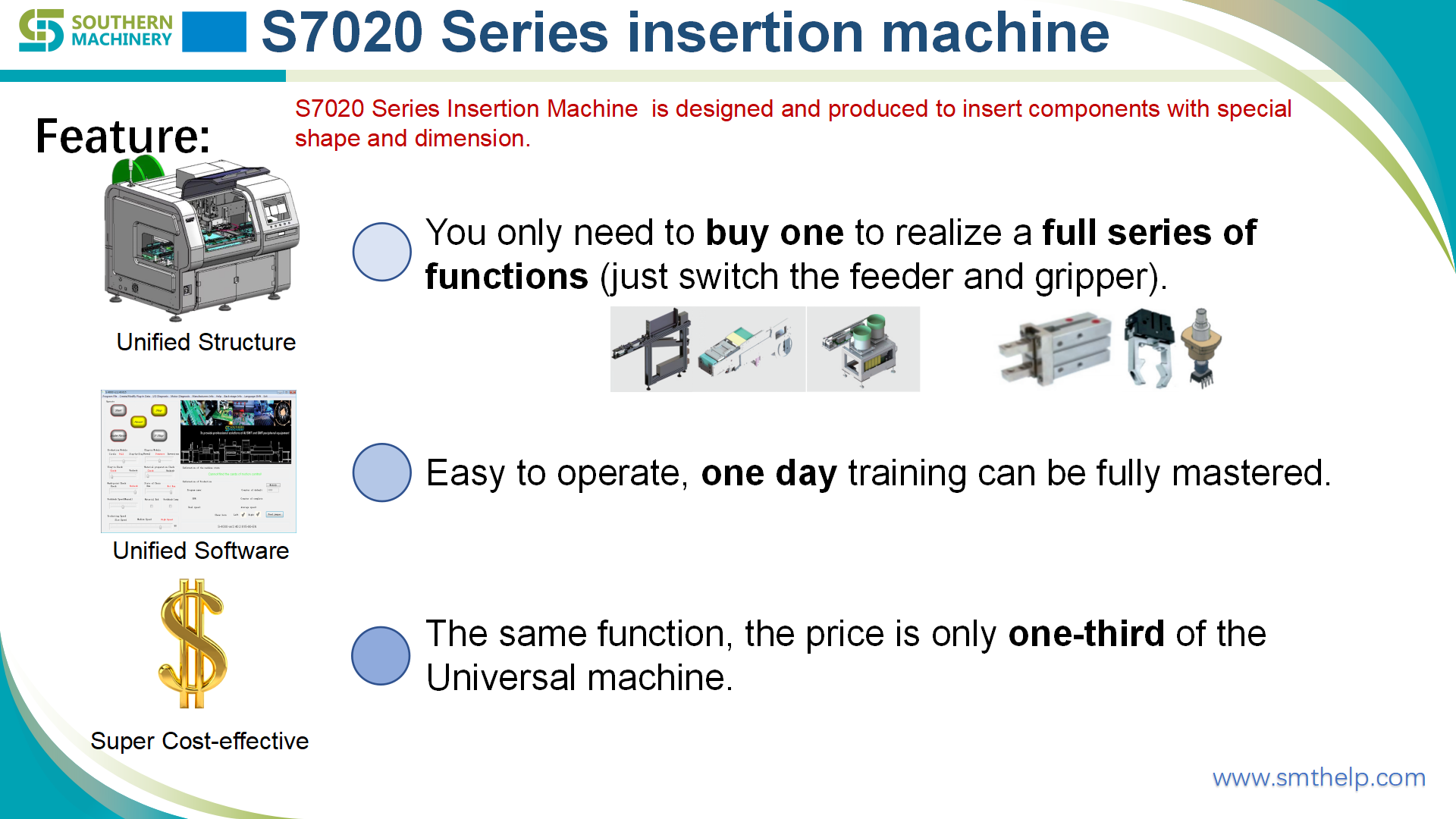
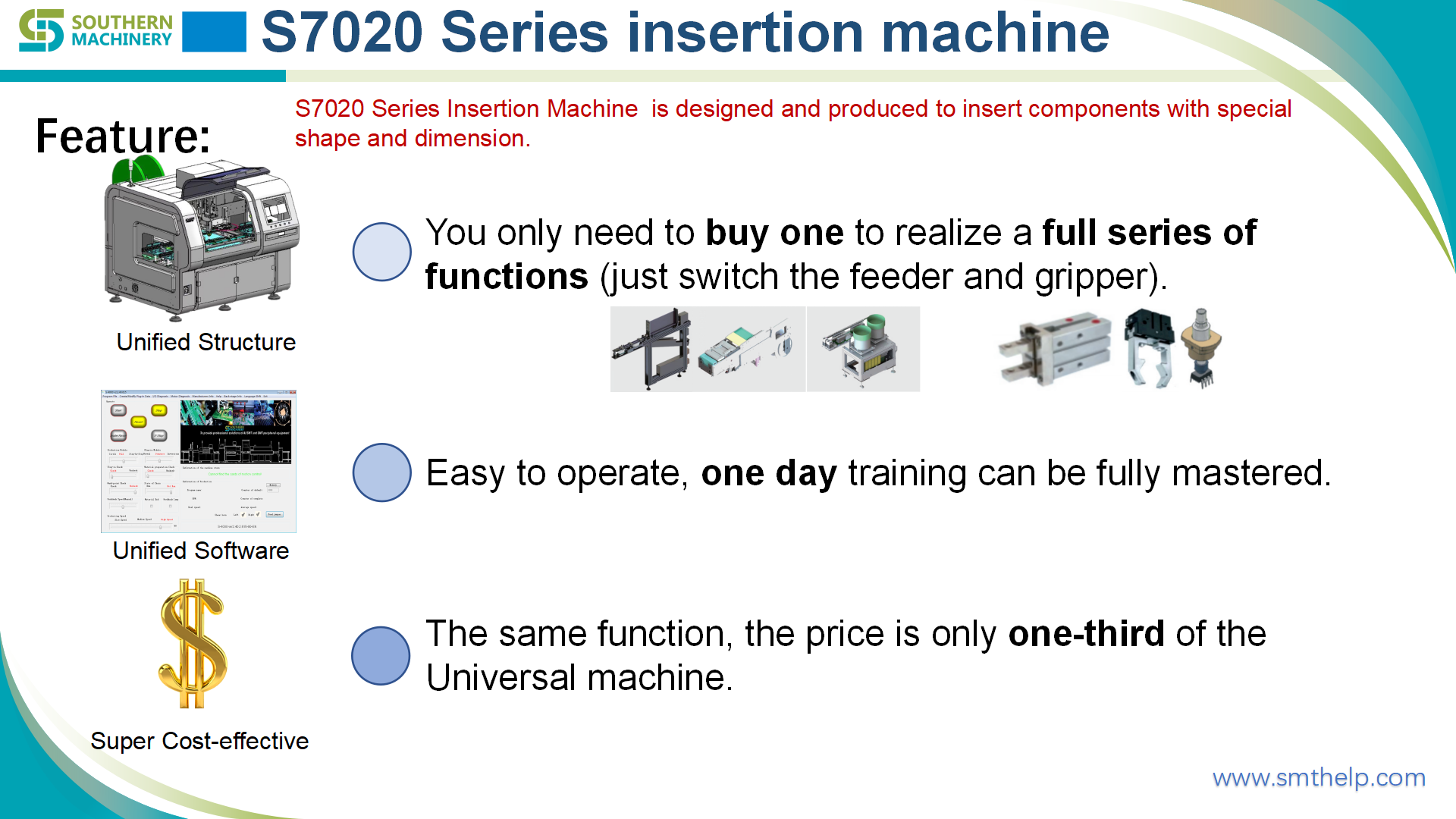
A terminal insertion machine. The feeder has to index the carrier strip accurately, or the terminal arrives at the insertion head out of position—a feeding problem, not a machine problem. Product page: smthelp.com/s7020-series-pin-eyelet-terminal-insertion-machine.html
Terminal feeding fails in two places, and neither is the insertion head
A Brazilian manufacturer running axial and radial through-hole insertion equipment came back to us in 2026 about terminal feeding. Two modes were on the table: chain terminals arriving on reels, and loose terminals fed from bulk.
Terminal feeding fails in two specific ways. On a reel, the carrier strip must index accurately, or the terminal arrives at the insertion head out of position. In bulk, loose terminals have to be singulated and oriented without jamming. Both also have to fit the insertion platform already standing on the floor—and that is the one thing nobody can verify from a datasheet.
The quotation is the cheapest thing to produce and the most expensive thing to get wrong
Here is the trap. You ask for a price. A supplier sends one. It is low, it arrives fast, and now the project has a number attached to it before anyone has checked whether the feeder will physically fit the machine.
From that point, every subsequent conversation is anchored to a number produced from incomplete information. When the compatibility problem surfaces—and it always surfaces, during installation—the overrun reads as a change of terms rather than the correction it actually is. Your purchasing colleague remembers the first number, not the caveat.
The deeper issue is that compatibility is nobody's job by default. The machine vendor assumes the feeder vendor checked. The feeder vendor assumes the machine vendor documented the interface. The integrator assumes the datasheet is current. That's a three-way assumption with no owner.
Compatibility before quotation
Three checks, run in this order, before any commercial number moves.
1. Identify the host platform precisely. Machine model, series, build vintage, and the existing feeder interface. Not "a radial inserter"—the actual machine, with photographs of the mounting face and the drive connection.
2. Verify the feeding mode against the part. For reel-fed chain terminals: carrier strip pitch, index accuracy, and whether the strip can be advanced without deforming the terminal. For bulk loose terminals: singulation method, orientation reliability, and jam recovery—because a bulk feeder that jams every 200 parts is worse than no feeder.
3. Confirm the insertion head can accept the presentation. Position tolerance, clinch clearance, and whether the existing tooling needs to change. This is the check that most often reveals a second, unbudgeted item.
If a supplier cannot do all three before quoting, they are quoting the catalogue, not your machine.
How we ran this one
We started with compatibility rather than with a number. On 11 Feb 2026, the work recorded was requirement analysis, device compatibility verification, and technical evaluation—and only then a quotation. The programme reached quotation stage with compatibility verified against the customer's existing insertion platform, and two feeding modes engineered: reel-fed chain terminals and bulk-fed loose terminals.
In parallel, we produced the material the customer's purchasing team needs to justify the buy internally: a product landing page and 3D renders of the reel terminal feeder on 20 Jan 2026, and a separate 3D model plus selling-point package for the bulk terminal feeder on 23 Jan 2026. That is not decoration. An engineer circulating a 3D render internally gets a decision in one meeting; an engineer circulating a PDF specification gets a request for more information.
The account itself goes back to 2021, when insertion machines were first sold into Brazil through us, and five of our people have touched it across the period: Jimmy Zheng, Jason Wu, Kevin Yang, Leon Hong, and Marie. We know which machine range we are feeding.
Evidence: engineering and commercial record. The machine has not been installed, so there are no production measurements for this account—and we are not going to invent any.
The question to ask before you ask for a price
"What have you verified about my machine?" If the answer is a list of assumptions, the number that follows is not a quotation. It's an opening bid.
Next in this series: a 400 x 250 mm lighting board in Serbia, and why the consumables were quoted before the machine.
This article is part of Case Files: 20 Real SMT/THT Projects—twenty de-identified field projects from Southern Machinery. Each one carries the symptom the customer reported, the engineering decision we made, and the delivery record that followed. Customer names, prices, and contract values are removed; dates, team members, and machine classes are real.
Before you ask for a price
Photograph your existing insertion platform: mounting face, drive connection, insertion head. Three shots.
Send them with the terminal you are trying to feed, in its actual packaging.
Note: This configuration is a draft and must be finalized and reviewed by our senior Sales Engineer (Jason Wu).
Action Required: Please provide your Gerber file or PCB drawings to info@smthelp.com for an accurate capacity simulation and nozzle engineering validation.
Comments
Comments appear after approval.