
S-680A Tape Cutter: Under-Cart 5S & ESD
A 4-step under-cart audit turns the S-680A reel scrap tape cutter into visible, audit-ready 5S and ESD housekeeping on every feeder cart.
Aug 14, 2026 · Updated Aug 31, 2026 · Jason Wu
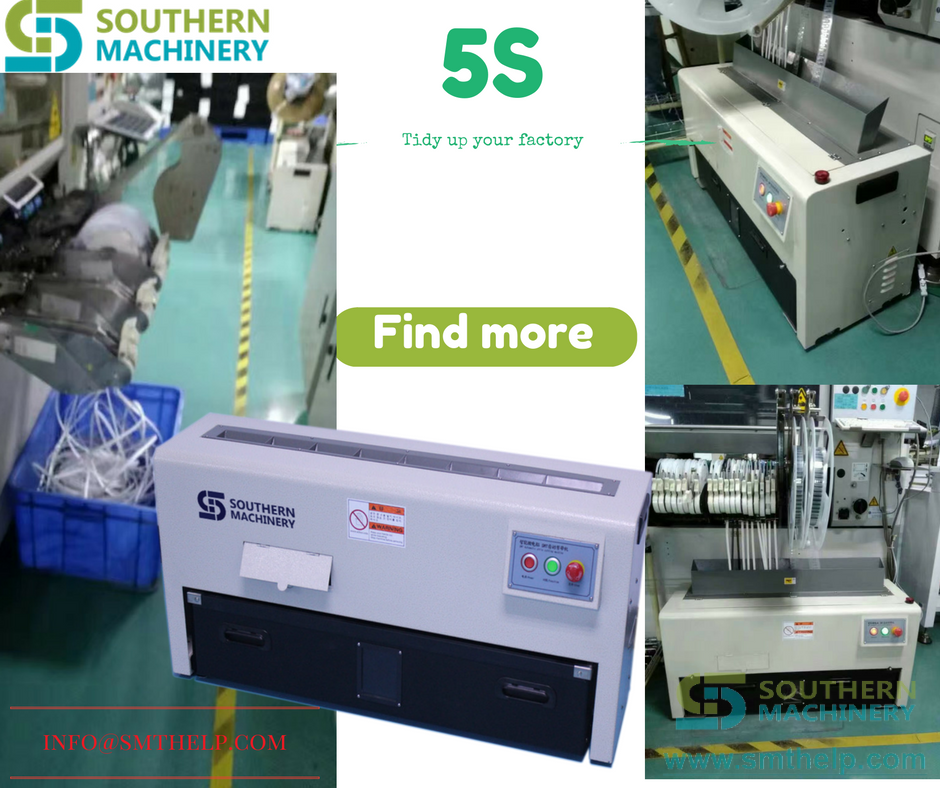
S-680A Tape Cutter: Under-Cart 5S & ESD
Every finished SMT reel leaves a long tail of scrap carrier tape. In most factories an operator stops, reaches for scissors, and cuts that tape by hand at every reel change — shift after shift. That small task never shows up on a cost report, yet it produces three visible problems at once: lost placement time, tape tangling around the cart, and the risk of a cut. For automotive, medical, and industrial-control customers, it is also the housekeeping finding that fails the audit.
Why Scrap Tape Is a Hidden Housekeeping Cost
Manual tape handling taxes the line every day, and the cost shows up in the audit, not the ledger.
- Operator time becomes waste handling. Cutting tape ends at every reel change pulls skilled operators off placement and changeover — the work you actually paid the line to do.
- Tape drifts everywhere. Uncut scrap tangles around feeder carts and aisles, creating the housekeeping mess that surfaces in customer audits and 5S walkthroughs.
- Scissors mean cut risk. Hand-cutting thousands of tape ends per day exposes operators to blade injuries that automated cutting removes at the source.
- Bins fill in hours. Loose, uncut tape fills waste bins fast, forcing repeated line-side trips just to empty them and adding traffic to the placement zone.
The Under-Cart 5S Audit
A structured method to make feeder-cart housekeeping a standard, not a hope. It is product-independent and applies to any under-cart cutter you evaluate.
1. Waste map. Walk each cart and record where scrap tape accumulates, how often bins are emptied, and which reels are cut by hand. The map shows the real housekeeping load per cart so the fix is sized to the line, not to a guess.
2. Cut-risk removal. Replace manual scissor cutting at the cart with an enclosed automatic cut path and a front-panel emergency stop. Removing the hand-cut task eliminates the injury source and the interruption in one move, which is why it belongs in the audit before any productivity claim.
3. ESD discipline. Keep the sealed collection bin at the cart so scrap tape never touches the floor or trails into the aisle, protecting the tidy, controlled line-side area that ESD and 5S programs require. Discipline at the cart is what an auditor sees first when they enter the placement zone.
4. Audit proof. Hold one housekeeping standard on every cart and photograph it as evidence. Proof is what turns "we keep it tidy" into a documented claim you can show during a customer visit without scrambling to clean up first.
The S-680A as the Housekeeping Vehicle
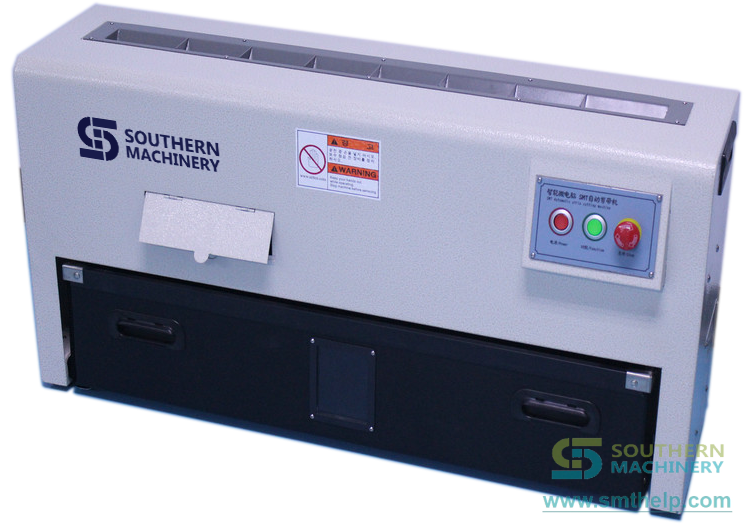
Southern Machinery's S-680A is an under-cart reel scrap tape cutter that cuts scrap carrier tape automatically the moment it leaves the feeder, so scrap goes from feeder to bin without operator handling.
- Cutting action: rotational circular high-speed steel gear blades cut automatically at 76 mm/s; cutting length 5–150 mm, adjustable via PLC with speed regulation.
- Tape range: paper carrier tape 8–32 mm and embossed plastic tape; very thin vinyl tape is not recommended.
- Footprint: standard body 900 × 220 × 400 mm, approx. 45 kg, on lockable casters; body length and bin layout can be customized to your cart.
- Safety and noise: enclosed cutting path, front-panel emergency stop, under 70 dB at 100 W on 220 VAC single phase, 50/60 Hz.
- Collection: front slide-out bin gathers cut pieces; operation is release E-stop, then ON in AUTO.
Verified feeder-cart references include Hanwha/Samsung SM411, SM421, SM471, SM481, SM482 and S1/S2 carts, JUKI KE-series trolleys, Sony lines, and domestic pick-and-place brands. Custom dimensions, electrical standards, and cart interfaces depend on your actual feeder trolley and tape mix and are confirmed after technical review. The high-speed steel rotary blade design is cited by the manufacturer as delivering up to 4x the lifecycle of conventional cutter designs, subject to your tape mix, which lowers blade-swap frequency and the line-side traffic that comes with it.

As a planning benchmark, removing manual cuts can return placement minutes per shift and reduce bin trips — model it against your own cart count and shift pattern before purchase rather than treating any vendor figure as a fixed promise. The tidy, ESD-disciplined cart area is visible proof of process control during audits; actual results depend on your line layout, tape mix, and shift pattern.
The Housekeeping Review Loop
Close the audit with a weekly housekeeping review loop. On a set day, walk each cart: confirm the bin is sealed and emptied, the cutting path is enclosed, and no tape trails into the aisle. Log any cart that slipped and reset it the same shift. That loop is what keeps the 5S and ESD standard live between audits instead of rebuilt the night before one. Southern Machinery supports the loop with spare blades, maintenance guidance, and rapid follow-up; replace the blade when cut quality drops, check the helical gear every 3 months, lubricate the LM shaft as required, and check belt tension monthly.
Your Next Step
Email your feeder-cart models, tape formats, and the number of carts to cover to info@smthelp.com or message WhatsApp +86 13602562576, and request a configuration and quotation for a pilot unit before rolling the standard across the plant.
FAQ
What types of tape can the S-680A cut?
Paper carrier tape 8–32 mm wide and embossed plastic tape. Very thin vinyl tape is not recommended; send a sample description with your inquiry and compatibility is confirmed before quotation.
Which pick-and-place brands does it fit under?
References include Hanwha/Samsung SM series, JUKI KE-series trolleys, Sony lines, and domestic mounter brands. Body length is customized to your cart footprint; custom interfaces are confirmed after technical review.
How does automatic mode work?
Rotate the emergency stop switch to ON, then press ON at AUTO. The blade unit cuts tape continuously until the collection bin is removed or the emergency stop is pressed.
Is it safe for operators?
Yes. The cutting path is enclosed, an emergency stop is on the front panel, and the machine removes manual scissor cutting — the cut-risk task it replaces was the hazard.
What routine maintenance is required?
Empty the bin as needed, replace the blade when cut quality drops, check the helical gear every 3 months, lubricate the LM shaft as required, and check belt tension monthly.
Jason Wu
Founder & CEO, Southern Machinery (Shenzhen Southern Machinery Sales and Service Co., Ltd.)
Email: jasonwu@smthelp.com / info@smthelp.com
WhatsApp: +86 13602562576
Catalog & manuals: file.autoinsertion.com | Machine photos: ph.smthelp.com
LinkedIn: linkedin.com/in/smtsupplier | YouTube: youtube.com/c/Smthelping
Comments
Comments appear after approval.