
SM-JWF-01 Jumper Wire Feeder: Consistent Wire Prep for Any SMT Mounter
A compact feeder that automates jumper wire cutting, forming and feeding for any SMT mounter brand, removing manual prep as a changeover bottleneck.
Jul 23, 2026 · Updated Aug 31, 2026 · Jason Wu
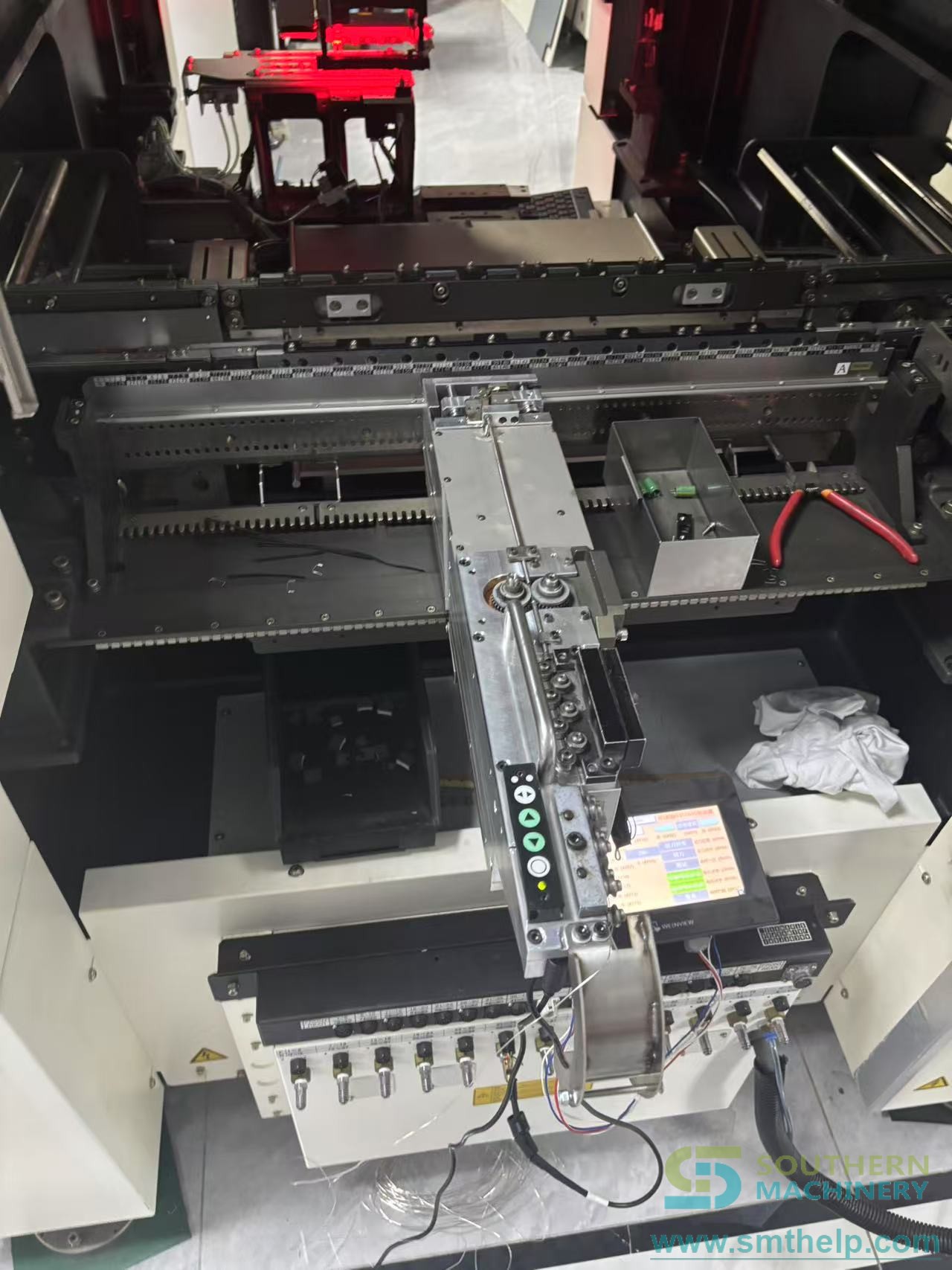
SM-JWF-01 Jumper Wire Feeder: Consistent Wire Prep for Any SMT Mounter
A jumper wire step that takes one operator two minutes by hand becomes a line-wide bottleneck the moment a Friday changeover arrives. Operators cut, form the span, and keep lead length consistent — but the result depends on whoever holds the pliers. For EMS, automotive, medical, and industrial-control boards that still rely on jumper wires as through-hole links, manual prep quietly caps throughput and makes quality shift-dependent. The SM-JWF-01 Jumper Wire Feeder is built to take that step off the bench entirely.
The cost you haven't named: manual jumper wire prep
Jumper wire preparation looks like a trivial step until you count it across a mixed production week.
- Changeover drag from hand forming. Every jumper span size means fresh cutting and bending by hand, so new product introductions slow the whole line at exactly the wrong moment.
- Geometry drift between operators. Wire diameter, span, and lead length vary with technique, which changes insertion fit and downstream process stability from board to board.
- Mixing and deformation risk. Manually prepared wires get tangled, deformed, or misloaded, creating rework that surfaces at THT insertion or wave soldering.
- Operator skill tied to a low-value task. Experienced staff spend minutes on repetitive prep instead of value-added assembly and line support.
The Wire Prep Consistency Audit
Before adding any feeder, audit the jumper wire step as a repeatable process rather than a bench habit. Call it the Wire Prep Consistency Audit.
1. Specify the wire geometry. Capture the exact wire diameter, jumper span, and lead length each board needs, and confirm those three numbers are fixed by tooling rather than by the operator's eye.
2. Standardize the cut and form. Define one formed shape per jumper size and confirm the feeder produces it the same way every cycle, with no hand rework between the feeder and the mounter.
3. Synchronize with the mounter. Match the feeder's output to your SMT mounter model and board flow so prepared wires arrive at the placement point without a manual handoff or buffer.
4. Control the changeover. Set the span change as a mold swap with a known time, so moving between jumper sizes is a planned setup step, not an open-ended manual re-teach.
The vehicle: SM-JWF-01 SMT THT Jumper Wire Feeder
The four audit steps map directly onto how the SM-JWF-01 is deployed beside an existing mounter.
- Specify the wire geometry → fixed mold configuration. The feeder prepares tinned copper wire from Φ0.5 mm to 1.2 mm, with jumper span 6–40 mm set by mold change and lead length 3–5 mm, so the geometry is locked by tooling instead of by hand.
- Standardize the cut and form → automated cutting, forming, and feeding. It automatically cuts, forms, and feeds each jumper wire to a consistent shape under single-chip microcomputer program control, removing the per-operator variation that manual prep introduces.
- Synchronize with the mounter → universal brand compatibility. The feeder is built for any SMT mounter brand, so the engineering task is the mechanical and process interface to your selected mounter, placement program, and board flow.
- Control the changeover → quick mold replacement. Span changes are handled by mold swap, with source-noted replacement around five minutes, keeping multi-size jumper work as a planned, repeatable setup.
Specification note: actual cycle time, exact mold-change duration, and mounter integration details should be confirmed at quotation, because they depend on your wire condition, span configuration, mounter model, and line balancing rather than a single default.
Specifications
| Parameter | Value |
| --- | --- |
| Wire diameter | Φ0.5 – 1.2 mm tinned copper |
| Jumper span | 6 – 40 mm (customizable by mold change) |
| Lead length | 3 – 5 mm |
| Cycle time | Up to ≤1.5 s/piece |
| Control system | Single-chip microcomputer program control |
| Power supply | 24V DC / 50Hz, 150W |
| Dimensions | 580 × 50 × 180 mm |
| Mold replacement | ~5 minutes (source-noted, setup dependent) |
| Compatibility | Universal for any SMT mounter brand (integration to confirm) |

The loop: re-validate every wire and mold change
Wire prep quality slips when a new span size goes to the line without a sample check. Build a loop: on every mold change or wire-diameter change, form sample jumpers and validate the geometry against the PCB design before mass production. On a regular cadence — weekly for mixed jumper volume, immediately for any new size — review formed-wire samples with your process engineer and retire molds no longer in use. Treat the audit as a living document: the loop is what keeps the SM-JWF-01 delivering the same span and lead length on the hundredth board as on the first, instead of drifting with the bench.
Your next step
Send us your jumper wire diameter, required span range, lead length target, PCB application, and SMT mounter model. We will review whether the SM-JWF-01 Jumper Wire Feeder fits your line, what mold configuration applies, and what to confirm at quotation. Reach Jason at jasonwu@smthelp.com or on WhatsApp +86 13602562576.
FAQ
Can the SM-JWF-01 work with my SMT mounter?
The source describes it as universal for any SMT mounter brand. Final compatibility should still be confirmed against your exact mounter model, feeder interface, available space, and production process.
What wire material and size does it support?
The listed range is Φ0.5 mm to 1.2 mm tinned copper wire, with jumper span 6–40 mm and lead length 3–5 mm. Other materials or unusual wire conditions should be tested before production approval.
How fast is the feeder?
The source lists speed up to ≤1.5 seconds per piece. Actual output depends on wire condition, mold setup, mounter integration, and line balancing, so it should be confirmed against your board.
Is this only for high-volume factories?
No. It is also relevant for high-mix factories where operators repeatedly prepare jumper wires and where consistent setup control matters more than manual flexibility. The case should be built from your actual jumper volume and labor need.
What should be confirmed before purchase?
Confirm wire diameter, span range, lead length, mounter interface, required cycle time, and mold-change procedure with our engineering team, then validate formed-wire samples before release.
Jason Wu
Founder & CEO, Southern Machinery (Shenzhen Southern Machinery Sales And Service Co., Ltd.)
Email: jasonwu@smthelp.com / info@smthelp.com
WhatsApp: +86 13602562576
Catalog & manuals: file.autoinsertion.com | Machine photos: ph.smthelp.com
LinkedIn: linkedin.com/in/smtsupplier | YouTube: youtube.com/c/Smthelping
Comments
Comments appear after approval.