
SMT Intelligent Reel Storage Rack: Cutting Material Handling Costs
A cost-focused look at SMT material handling — how manual reel search, kitting errors, and line starvation drain OEE, and how intelligent storage recovers it.
Aug 11, 2026 · Updated Aug 31, 2026 · Jason Wu
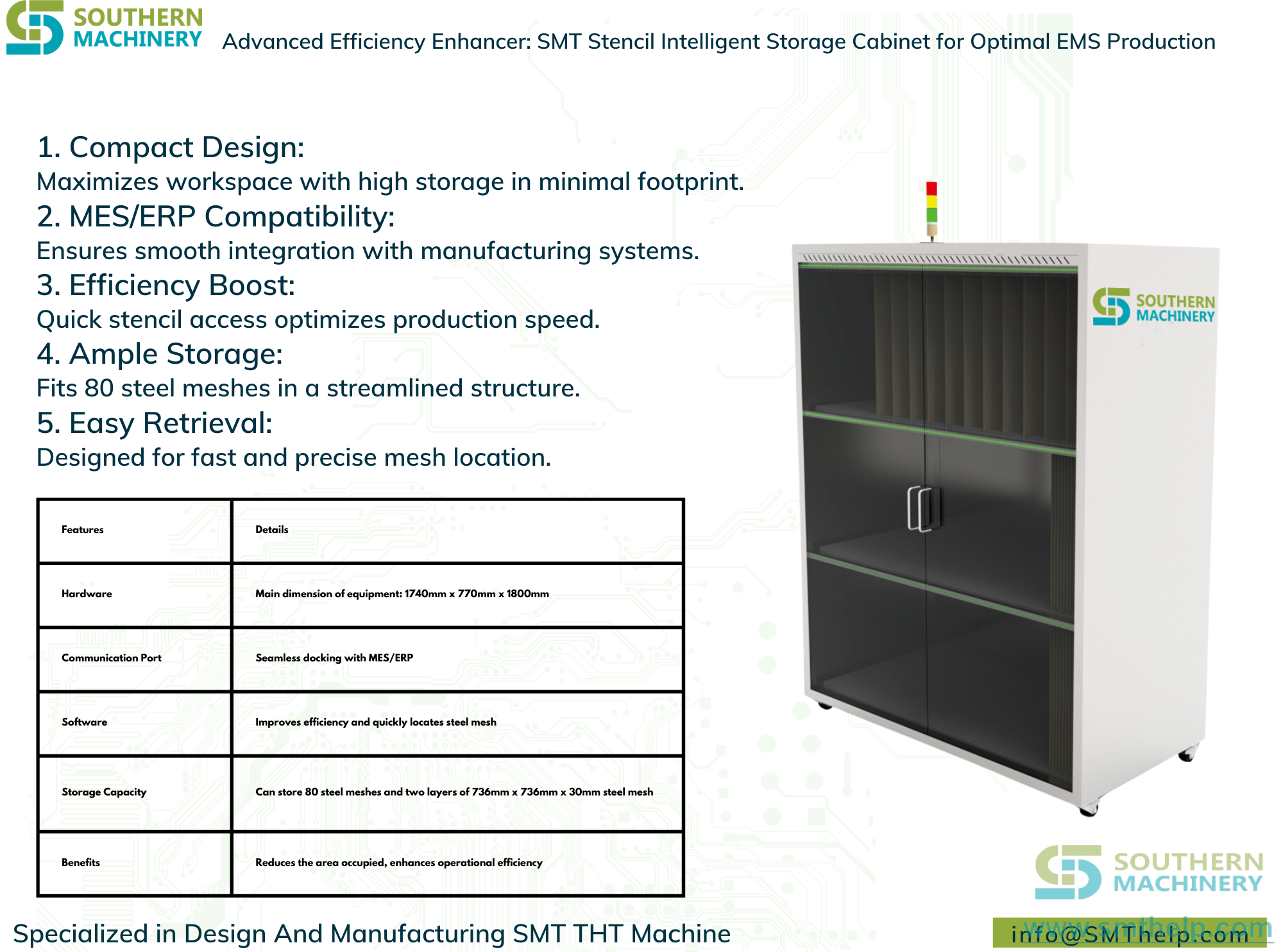
SMT Intelligent Reel Storage Rack: Cutting Material Handling Costs
Manual SMT material handling hides costs that never show up in a machine quotation. Operators walk aisles searching for reels, kitting errors trigger rework, and lines stop when components arrive late — each event small on its own, but repeated across shifts they quietly erase OEE and margin. Southern Machinery's SMT Intelligent Reel Storage Rack is built to replace that manual, error-prone flow with automated storage and retrieval, so the warehouse works as a production advantage rather than a cost center.
The cost you haven't named: manual material flow
Material handling is often treated as fixed overhead, but it is a direct efficiency risk.
- Search and kitting time. Operators walk, scan and re-scan shelves to find the right reel, then assemble kits by hand — hours per shift that never reach the placement machine.
- Mispick and rework. A wrong reel pulled in a rush becomes scrap, rework or a quality escape downstream.
- Line starvation. When inventory data lags physical stock, a line can stop waiting for a component that was "in stock."
- Unrecorded labor. The true cost of manual moves is rarely measured, so it survives every cost-cutting review.
- Dock-to-stock lag. Reels often sit in receiving for hours before they are logged into the system, so the placement machine can call for a part that physically arrived but is not yet visible to the line.
The Material-Handling Cost Audit
Before buying storage, put real numbers on the waste. Call it the Material-Handling Cost Audit.
1. Count the search hours. Measure how many operator-minutes per shift are spent locating reels and building kits. This is the largest, most visible line item.
2. Price the mispick risk. Tally rework and scrap tied to wrong-part picks over a quarter, and assign a conservative cost per event.
3. Value the line-down minutes. Record how often a line waits for a misplaced or unreconciled reel, and convert that stoppage into lost throughput.
4. Model the automated alternative. Compare those three sums against an automated storage-and-retrieval system that delivers the right reel on request, and use the gap as your business case.
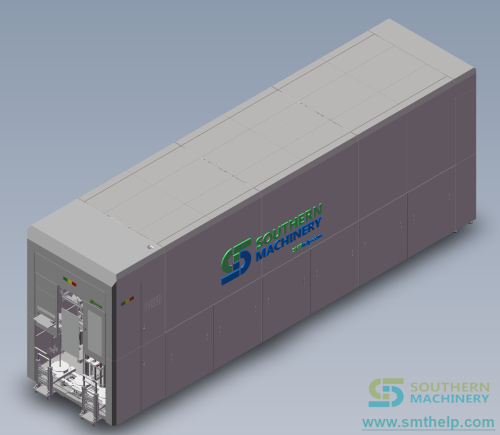
The vehicle: SMT Intelligent Reel Storage Rack
The framework maps onto what the rack changes on the floor.
- Count the search hours → on-demand retrieval. Operators request a component and the system delivers it, removing shelf-walking and manual scanning from the kitting routine.
- Price the mispick risk → guided accuracy. Barcode or LED-guided picking reduces wrong-reel pulls, cutting the rework and scrap those errors cause.
- Value the line-down minutes → starvation-free feeding. Real-time reel position data keeps line-side material ready through changeover and replenishment, so placement machines are not starved.
- Model the alternative → measurable payback. The recovered operator hours and avoided stoppages form a defensible cost case instead of a vague efficiency hope.
Specification note: storage capacity, reel size range, retrieval speed and software integration should be confirmed at quotation, because they depend on your component count, floor layout and MES environment.
On an existing SMT line, the rack fits line-side next to the loader. It signals the placement machine's feeder status through the MES, so when a reel drops below its set reel-count threshold the system stages the next reel before the feeder empties. That hand-off removes the last manual trigger between storage and the pick-and-place stage.
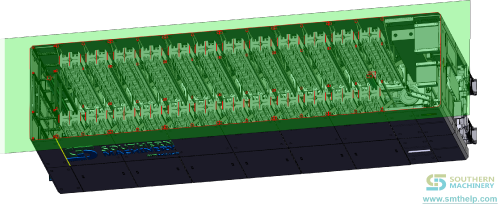
Specifications
| Parameter | Typical range / value |
| --- | --- |
| Reel sizes supported | 7" / 13" / 15" SMD reels |
| Storage capacity | Configurable by reel count and shelf layers |
| Retrieval method | Barcode / LED-guided automated pick |
| Inventory tracking | Real-time reel position, BOM-linked |
| Integration | MES / ERP interface (confirmed at quotation) |
| Footprint | Modular, line-side or warehouse |
| Power | Standard factory supply |
| Payback input | Operator-hour and stoppage recovery |
The loop: re-cost every quarter
Costs creep back as product mix shifts and new reels enter the system. Build a loop: every quarter, repeat the Material-Handling Cost Audit, compare the search-hour and mispick numbers to the prior quarter, and review retrieval logs with your line leads. If a new product family changes the reel mix, re-model before ramping it. Treat the audit as a living document — the loop is what keeps the rack paying for itself instead of becoming a static cabinet nobody measures.
Your next step
Send us your reel count, typical kit sizes and current kitting labor estimate. We will return a cost model outlining where the SMT Intelligent Reel Storage Rack fits, what capacity to specify, and what to confirm at quotation. Reach Jason at jasonwu@smthelp.com or on WhatsApp +86 13602562576.
FAQ
What problem does the rack solve?
It removes manual reel searching, mispicks and line starvation by automating storage, retrieval and tracking of SMD reels.
How does it cut costs?
It recovers operator hours spent kitting, reduces rework from wrong picks, and prevents line stoppages from unreconciled inventory.
Does it integrate with our MES?
Integration is supported; the exact interface and data fields are confirmed at quotation.
Is it only for large factories?
No. Capacity is modular, so it scales from a single line-side buffer to a warehouse system.
What should I send for a cost model?
Reel count, typical kit sizes and your current estimated kitting labor.
Jason Wu
Founder & CEO, Southern Machinery (Shenzhen Southern Machinery Sales and Service Co., Ltd.)
Email: jasonwu@smthelp.com / info@smthelp.com
WhatsApp: +86 13602562576
Catalog & manuals: file.autoinsertion.com | Machine photos: ph.smthelp.com
LinkedIn: linkedin.com/in/smtsupplier | YouTube: youtube.com/c/Smthelping
Comments
Comments appear after approval.