
SMT Printing & Reflow Fixture: Custom Aluminum Carrier
A high-precision spring-type aluminum printing and reflow fixture that holds the board flat and aligned, engineered to your sample or drawing.
Aug 15, 2026 · Updated Aug 31, 2026 · Jason Wu
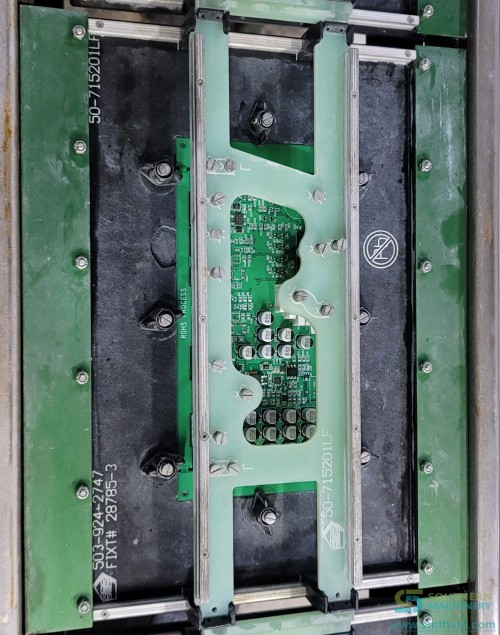
SMT Printing & Reflow Fixture: Custom Aluminum PCB Carrier by Southern Machinery
Solder paste printing is where a PCB assembly line's yield is won or lost, and most teams blame the printer when the real culprit is the board moving under the stencil. If the panel shifts by a fraction of a millimeter, every aperture-to-pad offset becomes a misprint, a reprint cycle, and wasted paste and time. Southern Machinery's high-precision spring-type printing fixture holds the board flat and aligned through solder paste printing and reflow, engineered around your board — by sample or by drawing — and supplied factory direct.
The cost you haven't named: unstable printing tooling
A misprint looks like a printer problem. Often it is a tooling problem that the printer simply reveals.
- Boards that shift under the stencil. Unstable boards cause solder paste misalignment and reprint cycles that nobody attributes to the fixture.
- Warped boards in reflow. Boards without proper oven support warp under thermal load and fail reflow or crack joints after cooling.
- Standard fixtures that do not fit. Off-the-shelf tooling ignores your board layout, edge rails and component heights, so it never quite holds right.
- Long custom lead times. Slow fixture vendors delay your line ramp-up and your customer qualification window.
The Four-Point Print Stability Audit
Before ordering a fixture, qualify the board with a repeatable audit. Call it the Four-Point Print Stability Audit.
1. Trace the misprints. For the last print defects, separate stencil issues from board-movement issues. If offsets repeat at the same board location, the carrier is the suspect.
2. Map the support needs. Note where the board needs pressure, where components stand proud, and where edge rails sit. A generic frame cannot see this; your board drawing can.
3. Define the reflow support. Identify the panels that warp in the oven and specify the support the carrier must give so the board stays flat through the thermal profile.
4. Set the acceptance test. Decide the allowable print offset and warpage after reflow, then hold the fixture vendor to it. That becomes your incoming inspection for tooling.
The vehicle: SMT Printing & Reflow Fixture
The audit maps onto how the fixture is built and used.
- Trace the misprints → spring-type positioning. A high-precision spring-type printing fixture (高精密弹力印刷治具) positions the board and holds it stable under the stencil so apertures line up with pads consistently across the batch.
- Map the support needs → aluminum body. The carrier is built on an aluminum body engineered around your board layout and component heights, instead of forcing your board into a generic frame.
- Define the reflow support → oven stability. It supports the board in the reflow oven to prevent warpage, keeping flatness through the thermal cycle.
- Set the acceptance test → factory-direct supply. Engineered by sample or drawing and supplied direct, it shortens the custom lead time that stalls ramp-up.
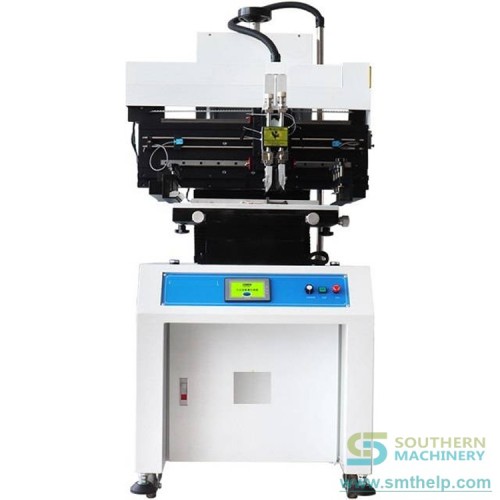
On a semi-automatic stencil printer, the fixture sits in the printing stage and clamps the board so the squeegee stroke deposits paste only where the apertures allow — the stable base that makes a clean print repeatable, board after board.
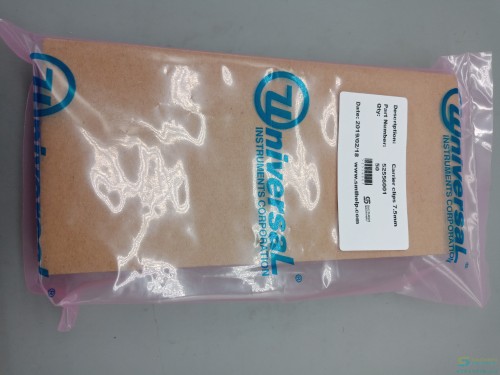
Carrier clips and accessory parts extend the fixture family so boards stay positioned across printing, reflow and downstream handling without a second tooling set.
Specification note: fixture size range, spring force, material grade and turnaround time should be confirmed at quotation, since they follow your board dimensions and component profile.
The loop: re-verify at every board revision
Boards change, and so do their support needs. Build a loop: every time a board revision alters its layout, edge rails or component heights, re-run the Four-Point Print Stability Audit and confirm the fixture still holds. Review print-offset data monthly from the printer's SPI or inspection record, and feed repeat defects back to the tooling design. The loop keeps the carrier matched to the board instead of to last year's revision, and is what protects the payback benchmark — validate it against your own defect cost and shift pattern.
Your next step
Send us your board sample or drawing and the misprint pattern you see today. We will propose a spring-type aluminum fixture design and tell you what to confirm at quotation for size, spring force and turnaround. Reach Jason at jasonwu@smthelp.com or on WhatsApp +86 13602562576.
FAQ
What is a spring-type printing fixture?
It is a high-precision fixture that uses spring positioning to hold a PCB flat and aligned under the stencil during solder paste printing.
Does it help in reflow too?
Yes. The same carrier supports the board in the reflow oven to prevent warpage through the thermal profile.
Can it be built for my specific board?
Yes. It is engineered around your board by sample or by drawing, including layout, edge rails and component heights.
How long does a custom fixture take?
Turnaround follows your board complexity; confirm the lead time at quotation when you send the sample or drawing.
What material is the body made from?
The carrier body is aluminum, chosen for stability and repeatable alignment through printing and reflow.
Jason Wu
Founder & CEO, Southern Machinery (Shenzhen Southern Machinery Sales and Service Co., Ltd.)
Email: jasonwu@smthelp.com / info@smthelp.com
WhatsApp: +86 13602562576
Catalog & manuals: file.autoinsertion.com | Machine photos: ph.smthelp.com
LinkedIn: linkedin.com/in/smtsupplier | YouTube: youtube.com/c/Smthelping
Comments
Comments appear after approval.