
Automatic SMT Reel Splicing Machine with LCR Measurement for EMS PCB Assembly
An automatic tape splicing station that joins component reels with consistent cut and pressure while verifying inductance, capacitance and resistance before parts reach a nozzle.
Aug 8, 2026 · Updated Aug 31, 2026 · Jason Wu
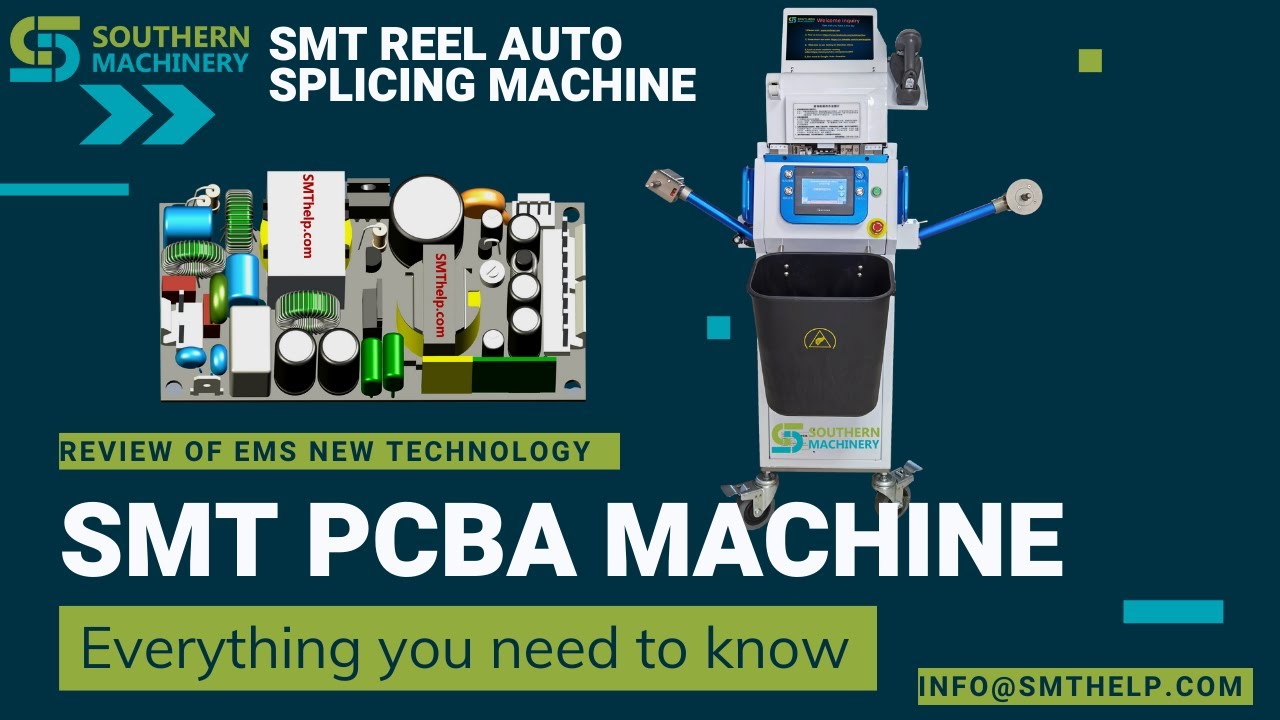
Automatic SMT Reel Splicing Machine with LCR Measurement for EMS PCB Assembly
A feeder runs dry mid-build. The mounter stops, a light goes amber, an operator walks over, cuts, aligns and hand-tapes the next reel, then re-threads. Two or three minutes—repeated across dozens of feeders and every reel change in a shift. Splicing looks like the smallest job on the floor and quietly decides how much placement time you actually get. Doing it off-line, automatically, with a value check built in, moves that cost out of the line.
The cost you haven't named: splicing done at the machine
Material preparation is where uptime is won or lost, yet most factories treat splicing as something an operator improvises when a feeder empties.
- Every splice at the machine is placement time. The mounter is the expensive asset. Any minute it spends waiting on tape is a minute of line-wide output you cannot recover later.
- Hand splices vary. Cut angle, alignment and tape pressure depend on who did it and how rushed they were. An inconsistent joint is the joint that jams a feeder halfway through a run.
- Wrong-value parts travel far. A mis-picked reel of resistors or capacitors looks correct on the label. Without a measurement step it reaches a nozzle, then a board, then AOI—or a customer.
- Nobody owns the data. Manual splicing leaves no record, so when a lot needs tracing there is nothing between receiving and placement to look at.
The Four-Gate Material Continuity Audit
Before quoting a splicing machine, audit the material path as a set of gates rather than a shopping list. Call it the Four-Gate Material Continuity Audit.
1. Map where splices happen today. Record whether each splice is made at the feeder bank during a stop, at a trolley beside the line, or off-line at a prep bench. Splices made during a stop are the ones costing placement time.
2. Inventory your tape stock. List carrier widths in use—8 mm upward—plus paper versus embossed tape, and pitch. The machine has to pass its own joint through your feeders without jamming, so tape format leads the specification.
3. Decide which values must be verified. Separate the tape-fed parts where a wrong value is expensive to catch late—passives on automotive, medical and power boards—from parts where visual identification is adequate. That list defines the LCR measurement scope you need.
4. Set the verification record you must produce. State what your quality system needs at audit: a displayed pass/fail at the bench, a logged measurement per splice, or a record pushed into your material-management workflow. Decide this before you compare configurations.
The vehicle: automatic SMT reel splicing machine with LCR measurement
This machine is a material-preparation station, not an in-line process tool. It sits ahead of the line, and each audit step maps onto a capability.
- Map the splices → off-line automatic joining. The cut, align and join sequence runs with consistent pressure and positioning instead of hand-applied splicing tape, so reels arrive at the feeder already continuous. The feeder runs through the splice rather than stopping at it.
- Inventory your tape stock → carrier tape range. It handles the carrier tapes used on pick-and-place feeders from 8 mm upward. Accepted widths, pitch and paper versus embossed handling are matched to your stock at specification time.
- Decide which values to verify → integrated LCR measurement. As the splice is made, the machine can measure inductance, capacitance and resistance on the tape, catching wrong-value or misplaced components at the material stage instead of after placement.
- Set the verification record → displayed and loggable results. Measurement outcomes give the line a documented gate between receiving and the feeder, which is exactly the evidence automotive and medical programmes ask for.
For THT lines the same discipline extends to radial tape, with splice cutters and manual splicing tools for radial insertion and odd-form machines. Splicing carts keep the station mobile where prep happens beside the line.
Specification note: splicing cycle time, verified value ranges, accepted tape formats and integration method are confirmed at quotation, because they depend on your component mix, tape stock and line layout rather than a single default configuration.
Specifications
| Parameter | Value |
|---|---|
| Station type | Off-line automatic tape splicing with value verification |
| Carrier tape width | 8 mm and wider, paper and embossed (confirm against your stock) |
| Splice sequence | Automatic cut → align → join at consistent pressure |
| Measurement | Integrated LCR (inductance, capacitance, resistance) |
| Result handling | On-station display, loggable for material-management workflow |
| Typical cycle | Seconds per splice; exact figure confirmed for your tape type |
| Related THT support | Radial tape splice cutters and manual splicing tools |
| Utilities | Single-phase power and compressed air at the prep bench |
| Placement in flow | Between receiving/kitting and feeder setup |
The line flow around it stays familiar. Reels are identified at receiving, the station joins and verifies tape before reels reach the floor, spliced reels load onto feeders, placement consumes the joined tape continuously, and boards proceed to reflow, SPI/AOI and THT processes with one fewer source of wrong-component risk.
Where it earns its bench: high-mix EMS with constant reel changes, automotive electronics with strict traceability, small-batch medical assemblies, industrial control and power boards heavy in tape-fed passives, and LED production.
The loop: re-run the gates every quarter
Material flow drifts as products change. Build a loop: each quarter, re-map where splices are actually being made—some will have crept back to the feeder bank—re-check tape formats against current stock, and review measurement results for the part families you flagged in step three. Compare feeder-empty stop counts against the previous quarter with your line leads. When a new product family lands, run the four gates again before ramping it. The loop keeps the station a working quality gate rather than a bench that gathers reels.
Your next step
Send us your carrier tape formats, the tape-fed part families you want value-verified, and how splicing is handled today. We will return a material-flow review showing where the splicing station fits, what verification scope to specify, and which figures to confirm at quotation. Reach Jason at jasonwu@smthelp.com or on WhatsApp +86 13602562576.
FAQ
What does an SMT reel splicing machine do?
It joins the end of one component tape to the beginning of the next so pick-and-place feeders keep running without a full stop. The automatic version with LCR measurement also verifies component values while the splice is made.
How does LCR measurement improve assembly quality?
LCR covers inductance, capacitance and resistance. Measuring those values on taped components catches wrong-value or misplaced parts before placement, which is far cheaper than rework, an AOI escape or a field return.
Does it work with our existing SMT line?
Yes. It is a material-preparation station feeding standard pick-and-place feeders, so it integrates with existing lines without changing your placement programs.
How is machine splicing better than hand splicing?
The cut, alignment and pressure repeat every time, removing operator-to-operator variability and keeping the joint passing cleanly through the feeder. It also moves the work off the machine and onto a prep bench.
Which industries use automatic reel splicing?
EMS and contract manufacturers, automotive and medical electronics, industrial control, power supplies and LED lighting—any factory running tape-fed components continuously.
Jason Wu
Founder & CEO, Southern Machinery (Shenzhen Southern Machinery Sales and Service Co., Ltd.)
Email: jasonwu@smthelp.com / info@smthelp.com
WhatsApp: +86 13602562576
Catalog & manuals: file.autoinsertion.com | Machine photos: ph.smthelp.com
LinkedIn: linkedin.com/in/smtsupplier | YouTube: youtube.com/c/Smthelping
Comments
Comments appear after approval.