
Solder Preforms Cost 16x More Per Chip Than Cut Solder Wire
If your mounter places solder preforms, you are paying preform prices for a joint that cut solder wire can make.
Aug 18, 2026 · Updated Aug 31, 2026 · Jason Wu
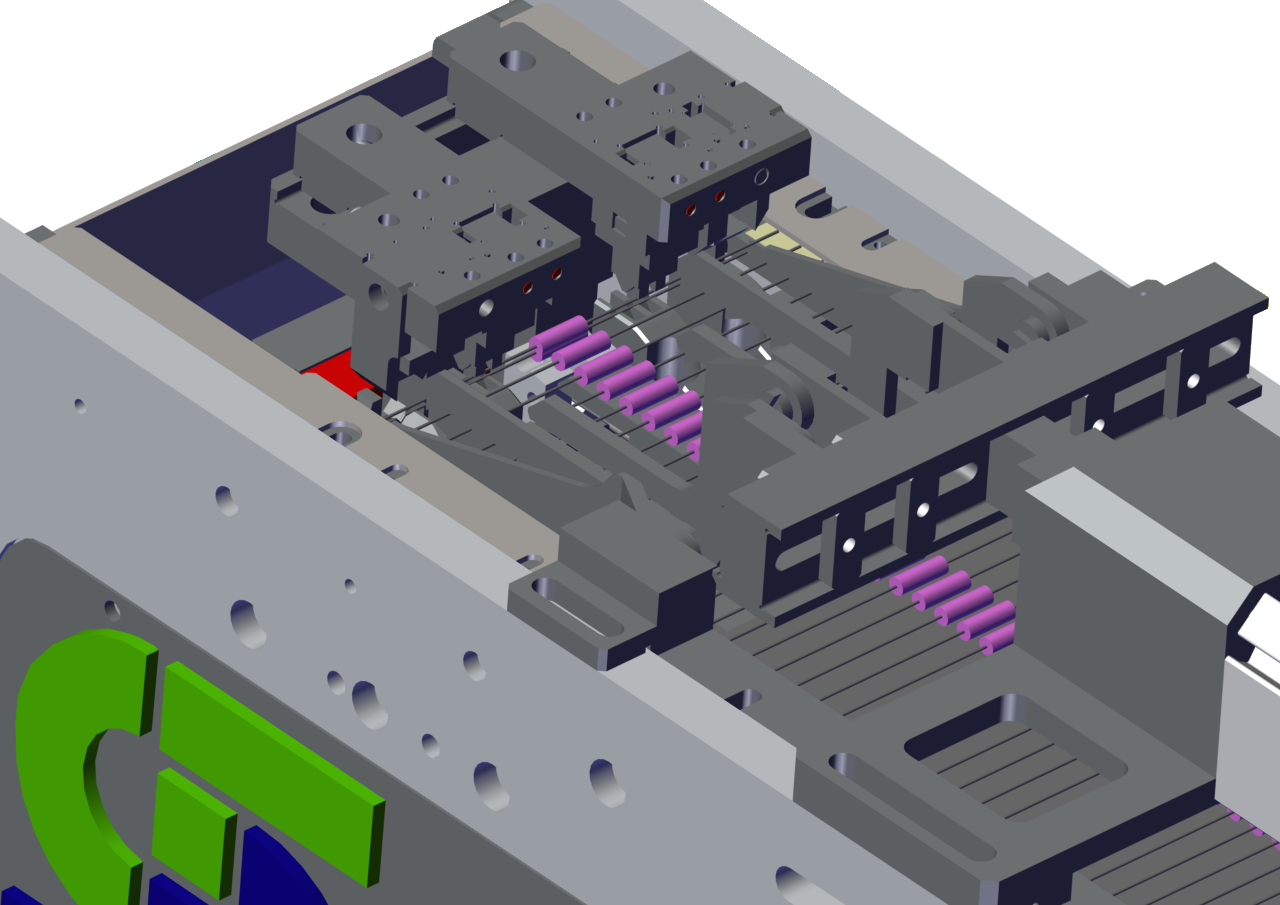
Consumable cost is the line item nobody audits. Paste, wire and preforms are small numbers on a single board, so they get approved without question — then multiplied by millions of joints a month. On lines that use solder preforms to add volume to power modules, connectors and shielding joints, that habit is expensive: Southern Machinery's published comparison puts preforms at roughly USD 0.025 per chip against about USD 0.0015 per chip for cut solder wire, a difference of more than sixteen times on the same joint.
Southern Machinery's solder wire feeder is a compact unit that closes that gap. It measures and cuts solder wire into short segments, then presents each segment so the pick-and-place head can pick it up and place it on a PCB pad alongside the component. The board flows through reflow, where the segment melts and forms the joint.
Why preforms and manual solder addition break cost and consistency
Adding extra solder volume by hand or by preform creates problems that are structural, not occasional:
- Consumable cost per joint. A preform is a manufactured part with a manufactured part's price; solder wire is bulk stock.
- Deposit variance. Manual preform positioning and hand touch-up produce joints of varying volume, which is exactly what high-current and vibration-exposed joints cannot tolerate.
- Extra process steps. A dedicated solder-dispensing station or a second reflow pass adds cycle time, floor space and another thing to schedule.
- Fillet height control. RF and antenna joints need a controlled fillet; hand work is not a control method.
- Inventory friction. Preform part numbers multiply by pad size and volume requirement; solder wire is a few diameters.
The Consumable Cost Audit
Four steps, using your own consumption data:
1. Count the segments. Joints per board needing extra solder volume × monthly board volume. Southern Machinery's published comparison models an EMS line at 2.4 million solder segments per month — establish where you sit relative to that.
2. Price the two paths. Your delivered preform cost per piece against your solder wire cost per equivalent segment. The published reference figures are roughly USD 0.025 versus USD 0.0015 per chip, with feeder equipment cost amortized over 24 months included in the comparison.
3. Check machine compatibility. Confirm the presentation position suits your mounter and that its software can pick from that position. This is the step that decides feasibility, so settle it before pricing.
4. Match the wire to the joint. Segment length sets solder volume, so confirm your required volume falls inside the 1–2 mm adjustable cut range, and that your stocked wire diameter matches an available option.
The Vehicle: how the solder wire feeder works
The feeder mounts on or beside the pick-and-place machine and performs two jobs in one cycle: it measures and cuts the solder wire to a set length, then presents the segment for pickup. Because it is a material-supply accessory rather than a station, it does not need floor space, a separate conveyor position or a second reflow pass. A touch panel sets cut length and cycle.
Published specification from the Southern Machinery product page:
| Parameter | Specification |
|---|---|
| Cutting speed | 100 pcs/min |
| Repeat accuracy | 0.05 mm |
| Cutting length | 1–2 mm (adjustable) |
| Solder wire diameter options | 0.6 mm, 0.8 mm, 2.0 mm |
| Control | touch panel |
| Power supply | AC 220 V, 50/60 Hz |
| Weight | 3.5 kg |
| Dimensions | L 680 mm × W 38.5 mm × H 125.1 mm |
Confirm presentation method, changeover and refill time, and pickup compatibility with your specific mounter model before ordering.
Where it fits in a complete line
The feeder sits in the SMT placement area. Solder paste is printed first; at pick and place, SMD components are mounted and the feeder supplies wire segments to the placement head for the joints that need additional volume; in the reflow oven, paste and wire segments melt together to form the joint; AOI then verifies joint quality; and THT and final assembly follow with wave soldering, selective soldering or manual processes. Because the feeder works with any pick-and-place machine that can pick from its presentation position, it integrates without a solder-dispensing station or a second thermal pass. Southern Machinery also supplies custom feeders, nozzles and material-handling equipment, so it can be quoted inside a full SMT/THT line proposal.
The ROI case
The case here is unusually clean because it is dominated by consumable cost. Cost per joint: the published comparison shows roughly 94% lower consumable cost per chip for cut wire against preforms. Payback: at high monthly consumption the equipment cost amortizes quickly — the published comparison shows payback well inside a year, with 24-month depreciation already built into the per-chip figures. Consistency: automatic cutting to a fixed length with 0.05 mm repeat accuracy removes the variation of manual preform placement. Footprint: a 3.5 kg unit adds negligible floor space compared with a dedicated solder deposition machine. Labor: no manual preform positioning and no hand touch-up on those joints.
Treat all of it as a planning benchmark rather than a promised saving — your delivered preform price, wire price and joint count decide the real number. Build the model, run a sample test on your own board, then compare actual joint quality and consumption against the projection and feed the result back into the audit. That verify-and-adjust loop is also how you tune cut length: the shortest segment that still produces the fillet you need is the one that minimizes both cost and rework.
Your next step
Send your mounter model, the joints that currently use preforms, and your monthly volume for an engineering review. Southern Machinery's engineers will confirm pickup compatibility, recommend wire diameter and cut length, and can arrange a sample test with your board. Southern Machinery (Shenzhen, China, since 2011, 237+ global customers) supplies SMT and THT automation including insertion machines, wave soldering, board handling and inspection, backed by spare parts, training and retrofit services. Contact details are below.
FAQ
What is a solder wire feeder in SMT? An accessory for pick-and-place machines that cuts solder wire into short, precise segments and presents them to the placement head, so the mounter can place solder segments onto pads much like components.
How does it reduce cost? Solder wire costs less per chip than preforms. Southern Machinery's published comparison shows about USD 0.025 per chip for preforms against about USD 0.0015 per chip for solder wire, with feeder depreciation included.
Will it work with my existing pick-and-place machine? It is designed as a material-supply unit for pick-and-place machines. Confirm the presentation position and pickup method for your specific mounter model with the supplier.
Which wire diameters and cut lengths are supported? 0.6 mm, 0.8 mm and 2.0 mm wire as optional configurations, with cut length adjustable from 1 to 2 mm at 100 pcs/min and 0.05 mm repeat accuracy.
Jason Wu
Founder & CEO, Southern Machinery (Shenzhen Southern Machinery Sales and Service Co., Ltd.)
Email: jasonwu@smthelp.com / info@smthelp.com
WhatsApp: +86 13602562576
Catalog & manuals: file.autoinsertion.com | Machine photos: ph.smthelp.com
LinkedIn: linkedin.com/in/smtsupplier | YouTube: youtube.com/c/Smthelping
Comments
Comments appear after approval.