
This SMT Feeder Passed Factory Testing: JM-20 Tube Feeder Setup Speed and Feeding Stability
Every feeder is run on a machine before shipment; here's what that test actually checks and how the JM-20 stacked tube feeder is specified.
Aug 15, 2026 · Updated Aug 31, 2026 · Jason Wu
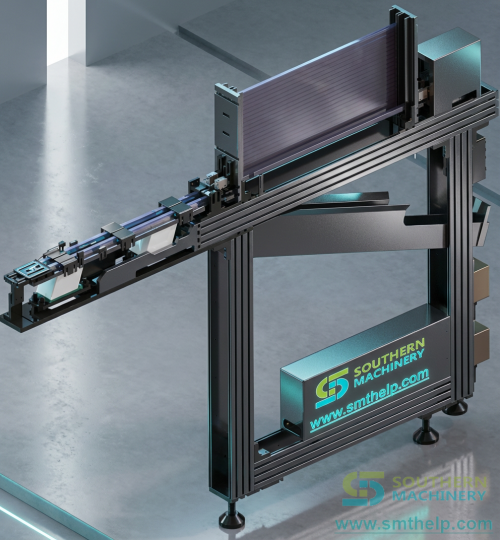
Every component on your board passed through a feeder before it touched the PCB. That makes the feeder the cheapest part of the line with the most expensive failure mode: one misfeed stops a placement head worth six figures, and a slow reel change eats into the changeover window on a high-mix shift. Yet feeders are usually bought on price and a photograph, then discovered on the production floor. A feeder that was run on a machine before it shipped removes that discovery.
The JM-20 style horizontal stacked tube feeder supplies DIP, radial and other tube-packed components to JUKI-class mounters. Below is the qualification it goes through and where it fits in a line.
Why unqualified feeders break quality, capacity, or cost
A feeder that "looks the same" as the original can still cost you a shift.
- Presentation drift becomes pick error. A component sitting a fraction off position or at a slight angle causes a miss or an off-center pick, and the defect appears at placement — not at the feeder.
- Misfeeds stop the whole head. A jam in one slot halts the placement cycle, so a component worth cents idles a machine worth a fortune while an operator clears it.
- Slow changeover caps output. On high-mix work, reel, tube, and tray swaps decide how many jobs a shift can carry. Awkward loading converts directly into lost sellable hours.
- Interface mismatch surfaces late. Mechanical fit and mounter communication vary by brand and model. A feeder that seats but reports incorrectly is discovered during setup, with the line already down.
- Untested spares become shelf stock. Backup feeders that were never verified sit in the cabinet until an emergency — the worst moment to find they need adjustment.
The Feeder Qualification Test
This is the sequence we run before a feeder ships, and the same sequence worth repeating at incoming inspection on your floor.
1. Interface and fit check. The feeder is seated on the target mounter bank and checked for positive mechanical location, correct slot pitch, and clean electrical contact. Setup parameters are entered so the machine recognizes the feeder and reports status — compatibility is confirmed here, not assumed from a part number.
2. Setup-time run. An operator loads tubes, reels, or trays from cold while the clock runs, then repeats it. The number that matters is not a datasheet figure but how long a normal operator takes on the second attempt, because that is what your changeover plan inherits.
3. Continuous feed run. The feeder runs an uninterrupted sequence to the last component in the magazine. Presentation position is watched for drift; misfeeds, skipped parts, double advances, and jams are counted rather than described. Vibration and escapement timing are adjusted until the run is clean.
4. Wear and recovery check. Mechanism, springs, and contact surfaces are inspected after the run, and jam recovery is timed — how fast an operator clears a stuck component and resumes without disturbing adjacent slots. Findings go into the shipping record.
The Vehicle: how the JM-20 stacked tube feeder works
Tube-packed components arrive stacked in a magazine rather than on carrier tape; the feeder keeps the stack moving under gravity and controlled vibration, then presents exactly one component at a fixed pickup position. The JM-20 style horizontal design holds several tubes side by side above a feed track. Vibration walks components along the track, an escapement releases a single part at the pickup window, and a sensor tells the mounter when the position is loaded. Fresh tubes drop in without removing the feeder from the bank — the source of the setup-time advantage.
The same qualification applies across the feeder family we supply: tape feeders for standard SMD parts, tray feeders for large ICs, and bowl feeders such as the BF-2002D dual-deck unit for loose terminals, safety capacitors, switches, and transformers.
| Parameter | Specification |
| --- | --- |
| Feeder type | Horizontal stacked tube (stick) feeder, JM-10 / JM-20 style |
| Component formats | DIP, SIP, radial and other tube-packed through-hole and SMD parts |
| Mounter compatibility | JUKI-class mounters; equivalents available for Panasonic, Fuji, Yamaha, Samsung, ASM, Universal |
| Tube capacity | Multi-tube magazine, stacked loading without removing the feeder |
| Feed method | Controlled vibration feed with single-part escapement at pickup window |
| Position sensing | Component-present sensor with status reporting to the mounter |
| Loading method | Top drop-in tube replenishment during production |
| Body construction | Machined aluminum and steel frame, ESD-safe surface treatment |
| Adjustment | Track width and escapement adjustable to component body dimensions |
| Pre-shipment testing | Interface check, timed setup, continuous feed run, jam recovery record |
Cycle rates and tolerances depend on the component and mounter, so request the datasheet for your specific model pairing.
Where it fits
Feeders are the material-supply backbone of the placement stage. Paste is printed and inspected, mounters draw from tape, tube, tray, and bowl feeders, then reflow and AOI follow; on mixed-technology products, auto-insertion and wave soldering continue the sequence with board handling between stations. Tube and bowl feeders extend the same logic into THT, feeding radial parts, terminals, and hardware directly to insertion equipment instead of to an operator's hands. Sourcing feeders from the same supplier as the mounters and insertion machines means compatibility is verified before delivery rather than negotiated afterwards.
The ROI case
Three effects carry the case. Capacity: fewer misfeeds and stops means more placement cycles per hour, so model your stop count per shift, average clearing time, and the machine rate lost during each stop. Quality: consistent presentation lowers pick errors, reducing rework and scrap on the assembled board. Labor: fast loading and stable feeding cut operator intervention, so one person supervises more machines.
For high-mix factories, minutes saved per changeover convert straight into sellable hours; for high-volume producers, feeding stability protects the throughput of the most expensive assets on the floor. Run the numbers before and after installation — that measure-and-adjust loop turns a feeder purchase into a documented improvement. Treat any figure as a planning benchmark against your own line data.
Your next step
Send your component list and packaging formats, the mounter brands and models in the line, and the changeover times you want to shorten. We will confirm compatibility, quote the matching feeder or spare parts, and propose a custom design where the component is non-standard. Ask for the factory test video or a demonstration before you commit.
FAQ
What does factory testing mean for a feeder?
The feeder is mounted on a machine and run before shipment to verify mechanical fit, communication with the mounter, setup behavior, and feeding stability over a continuous run, with the results recorded.
How do I confirm a feeder suits my pick-and-place machine?
Compatibility rests on the mechanical interface and the communication protocol of your mounter. Send the brand, model, and bank configuration and we will match it — we supply feeders for JUKI, Panasonic, Fuji, ASM, Yamaha, Samsung, and Universal machines.
Which feeder type should I use?
Tape feeders for standard SMD parts, tube feeders for DIP and radial components, tray feeders for large ICs and connectors, and bowl feeders for loose or odd-form parts such as terminals, switches, and transformers.
Can you supply feeders for non-standard components?
Yes. Bowl feeders handle bulk parts, and custom feeders can be designed where no standard format exists. Send the component data and machine details.
Jason Wu
Founder & CEO, Southern Machinery (Shenzhen Southern Machinery Sales and Service Co., Ltd.)
Email: jasonwu@smthelp.com / info@smthelp.com
WhatsApp: +86 13602562576
Catalog & manuals: file.autoinsertion.com | Machine photos: ph.smthelp.com
LinkedIn: linkedin.com/in/smtsupplier | YouTube: youtube.com/c/Smthelping
Comments
Comments appear after approval.