
Wave Soldering Titanium Claws: Stable PCB Transport
Titanium wave-soldering claws are the conveyor part that holds the PCB flat — a 4-step match protocol turns transport defects into a controlled variable.
Aug 14, 2026 · Updated Aug 31, 2026 · Jason Wu
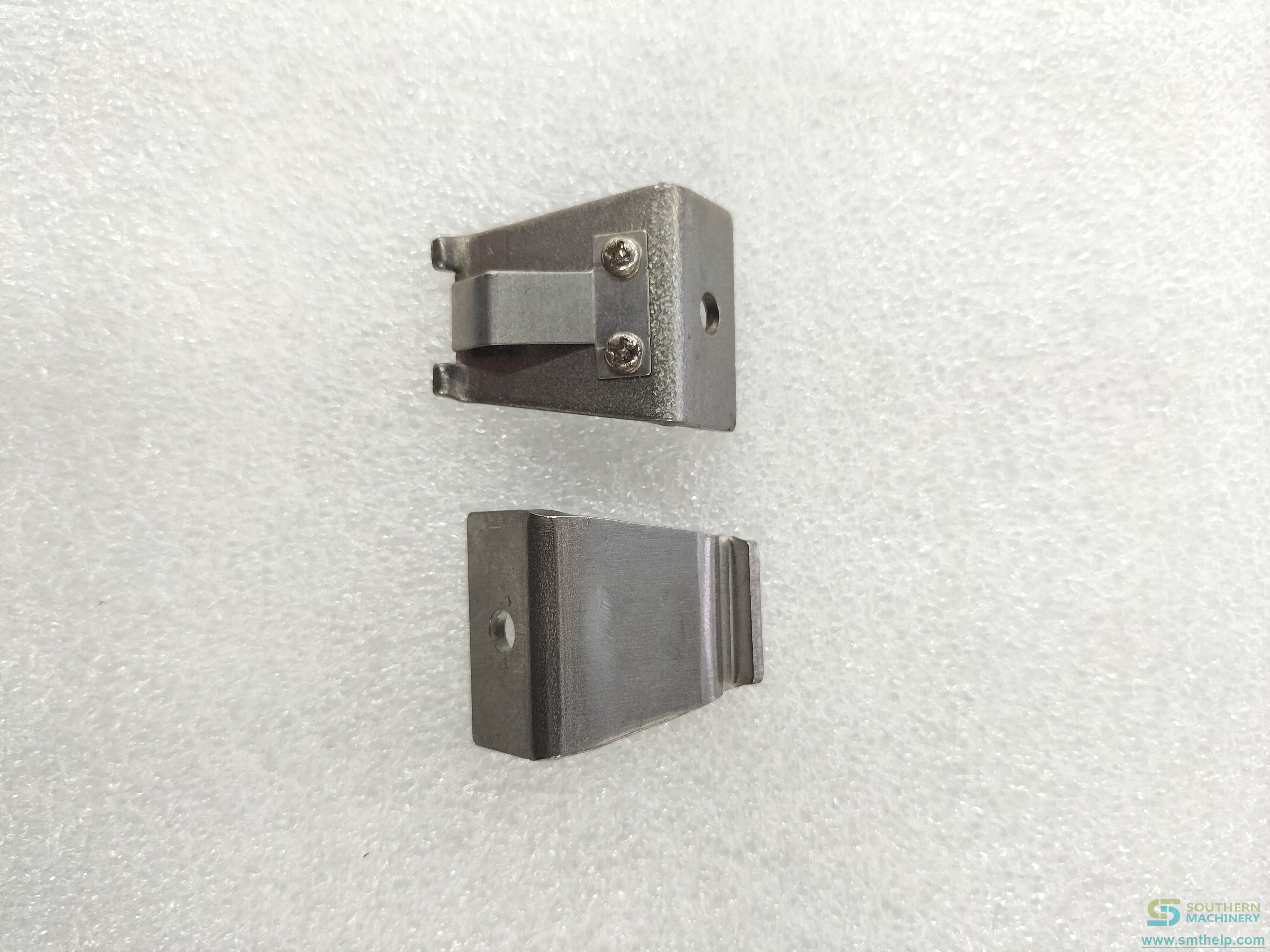
Wave Soldering Titanium Claws: Stable PCB Transport
When a wave soldering line throws bridging, skips or icicles, the first suspects are usually flux, solder and temperature. Often the true culprit is mechanical: the conveyor claws cannot hold the PCB steady through the thermal journey. A board that jitters at the wave leaves solder where it should not be — and no amount of profile tuning fixes a board that is not flat. The claw is the only part that touches the PCB from fluxing to cooling.
Why transport stability is the hidden defect source
Most EMS and ODM teams replace flux, solder and nozzles while ignoring the conveyor. Vibration and sagging change the board's contact with the wave, and defects follow.
- Bridging from contact drift. Vibration and sagging change how the board meets the wave, and excess solder bridges fine leads that were never unstable in the design.
- Solder skips from lift. An unstable board lifts out of the wave at the wrong moment, so leads miss the solder entirely and come out bare.
- Icicles from exit jitter. Inconsistent wave contact pulls solder into points as the board exits, creating touch-up work that a steady claw would have prevented.
- OEM part bottlenecks. Original fingers are slow and expensive to replace, and every day a conveyor waits is lost output that no process tweak recovers.
The Claw-Match Protocol
A named method to turn claw selection from guesswork into a confirmed specification. It stands alone from any supplier and works for domestic or imported wave machines alike.
1. Defect mapping. Record which defects (bridging, skips, icicles, sag, edge-part collision) appear and on which board types, so the claw is chosen against a real failure rather than a generic "replace the worn one". Mapping focuses the fix on transport, not on chemistry that was never the cause.
2. Claw profiling. Capture the machine brand and model, then clear multi-angle photos of the worn claw next to a ruler, and a physical sample where possible. Brand and model give partial certainty; photos raise it substantially; a physical sample gives a confirmed match including bend angles and hole positions.
3. Material upgrade. Specify machined high-grade titanium alloy with burrs and sharp edges removed, so the claw resists heat and flux chemistry and holds its dimensions through the run. Material choice is what keeps the board angle constant instead of drifting as the claw degrades.
4. Batch confirmation. Confirm geometry type, load rating and quantity, then dispatch from stock or build to sample. Confirmation before commitment is what prevents a container of wrong-angle fingers from sitting on the bench while the line waits.
The titanium claw as the vehicle
Southern Machinery supplies titanium claws and fingers for domestic and imported wave soldering machines, with 200+ stocked models covering Jintuo, Nitto, Vitronics Soltec, ERSA, Kaitai and more.
- Material: high-grade titanium alloy, reference drawing titanium 0.078 in ±0.0075, vibra-tumbled with all burrs and sharp edges removed.
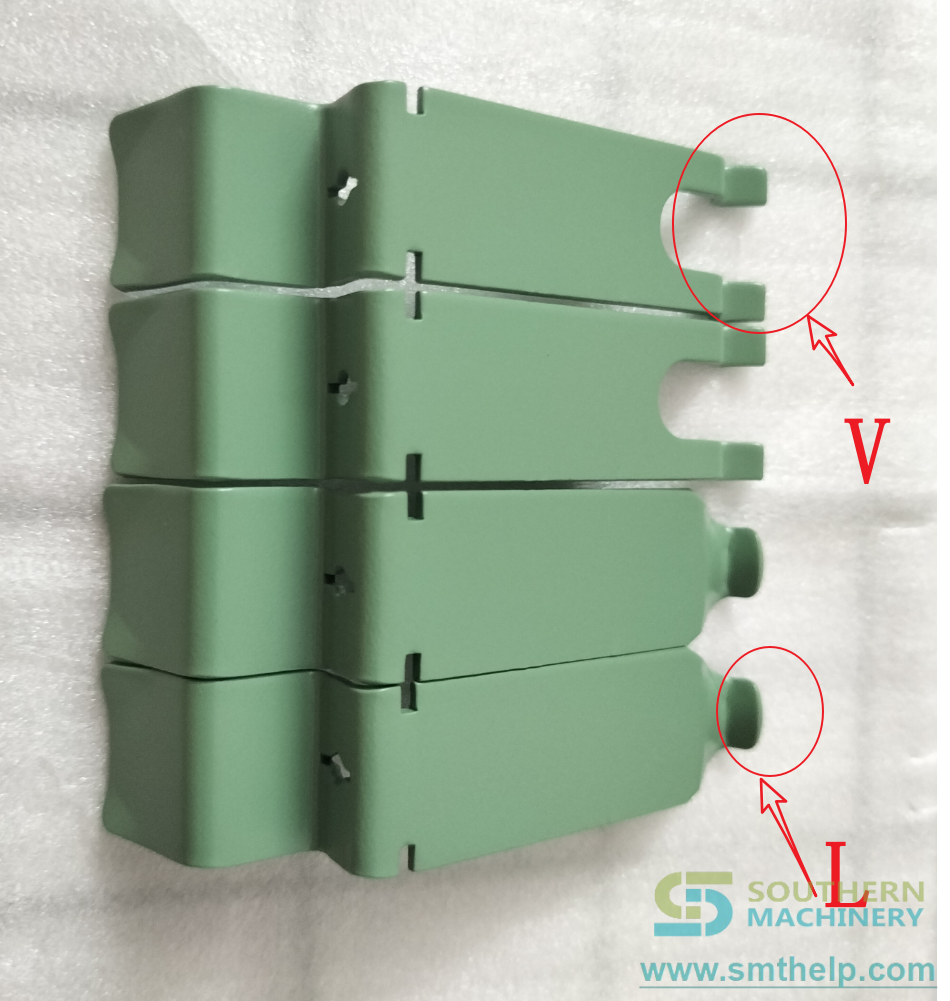
- Geometry types: L-type, V-type, single-hook, double-hook, duckbill, pressing plate, heavy-duty, column, wide and ultra-thin.
- Heavy double claw: multi-part JT10434-series, configurable support rated up to 80 kg, built to hold boards flat through preheat and soldering.
- Reference fittings: Vitronics Dover Soltec L 423210 finger (drawing GSC#5721-1); L-shape C450126-B style verified; ERSA/Kurtz types supplied per quotation.
- Customization: made from a physical sample, clear multi-angle photos, or your drawing, packed per piece for safe international shipment.

The L-type gives maximum edge support where component clearance is not an issue; V-type clears components near the board edge without losing grip. For heavier, larger or thinner boards that sag, the heavy double claw carries the load instead of letting the board flex during preheat and soldering.
As a planning benchmark, stable transport supports first-pass yield by holding board angle constant through the wave — quantify it against your own defect and rework rates before purchase rather than treating vendor figures as a promise. Claw dimensions, bend angles and tolerances are confirmed against your sample or machine model; domestic machines often change claw dimensions between batches, so always confirm the current claw on the conveyor.
The conveyor health loop
Run a quarterly conveyor health loop. Pull one claw per conveyor, check for solder wetting, dimension drift or edge wear, and compare it to the confirmed sample profile; reorder from stock the moment a geometry drifts. That loop is what keeps transport a controlled variable instead of a slow-rolling source of intermittent defects. Southern Machinery's stock of 200+ models means replacements dispatch quickly instead of waiting on OEM lead times, and the 3-step match process (brand/model, photos, physical sample) confirms the spec within 24 hours.
Your next step
Send your wave solder machine brand and model, photos of the worn claw, or a physical sample to info@smthelp.com or WhatsApp +86 13602562576, and request a confirmed geometry and quotation within 24 hours.
FAQ
Why titanium, and why does material quality matter?
Titanium withstands wave heat without degrading, resists corrosion from flux and solder chemistry, and holds its dimensions so the board angle stays constant. A weak or plated claw can deform, wet with solder, or shed particles into the process — all defect sources.
What is the difference between L-type and V-type fingers?
L-type gives maximum edge support for standard PCBs where component clearance is not an issue. V-type is for boards with components close to the edge, providing clearance without sacrificing a secure grip.
How do I identify the right claw for my machine?
Start with the machine brand and model, then send clear photos of the worn claw from several angles, ideally next to a ruler. For full certainty, send a physical sample — the geometry is replicated exactly, including bend angles and hole positions.
What about heavy, large or thin boards that sag?
Standard claws may not prevent warping on heavier boards. The dedicated heavy double claw (JT10434-series) is rated up to 80 kg of support and configurable, holding boards flat through preheat and soldering.
Do you supply claws for Vitronics Soltec, ERSA and Kurtz machines?
Yes. Reference fittings include the Vitronics Soltec L-shape C450126-B and C450001 family (Dover Soltec L 423210 drawing) and ERSA/Kurtz finger types supplied per quotation. Send your part number or drawing for confirmation.
Jason Wu
Founder & CEO, Southern Machinery (Shenzhen Southern Machinery Sales and Service Co., Ltd.)
Email: jasonwu@smthelp.com / info@smthelp.com
WhatsApp: +86 13602562576
Catalog & manuals: file.autoinsertion.com | Machine photos: ph.smthelp.com
LinkedIn: linkedin.com/in/smtsupplier | YouTube: youtube.com/c/Smthelping
Comments
Comments appear after approval.